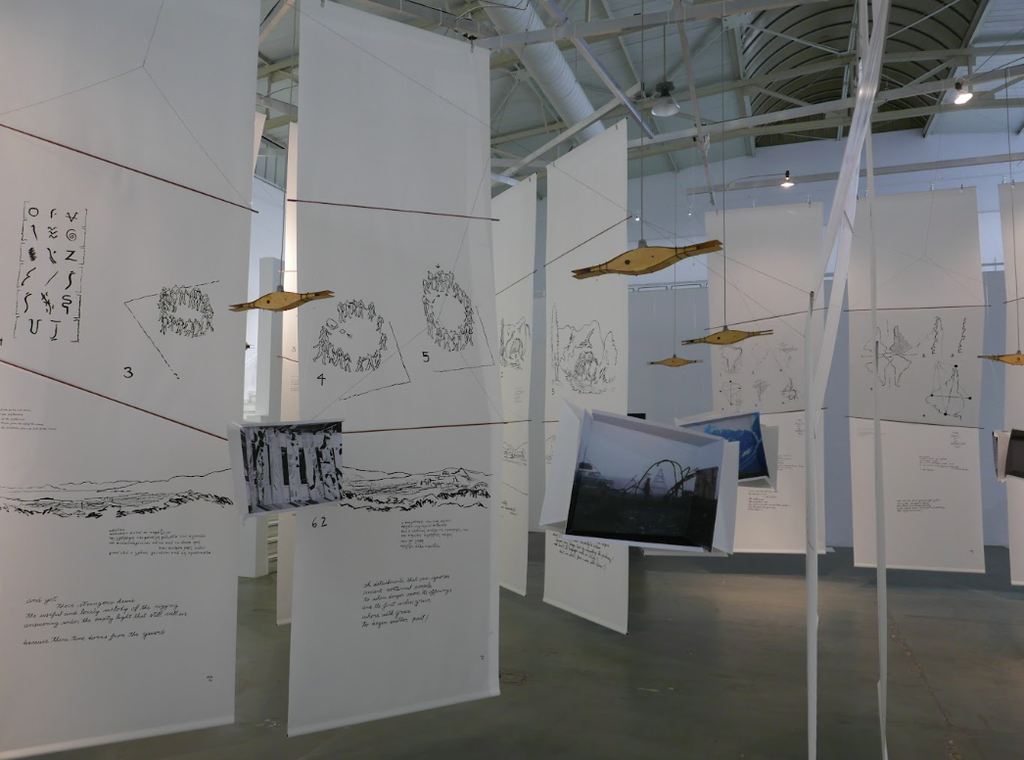
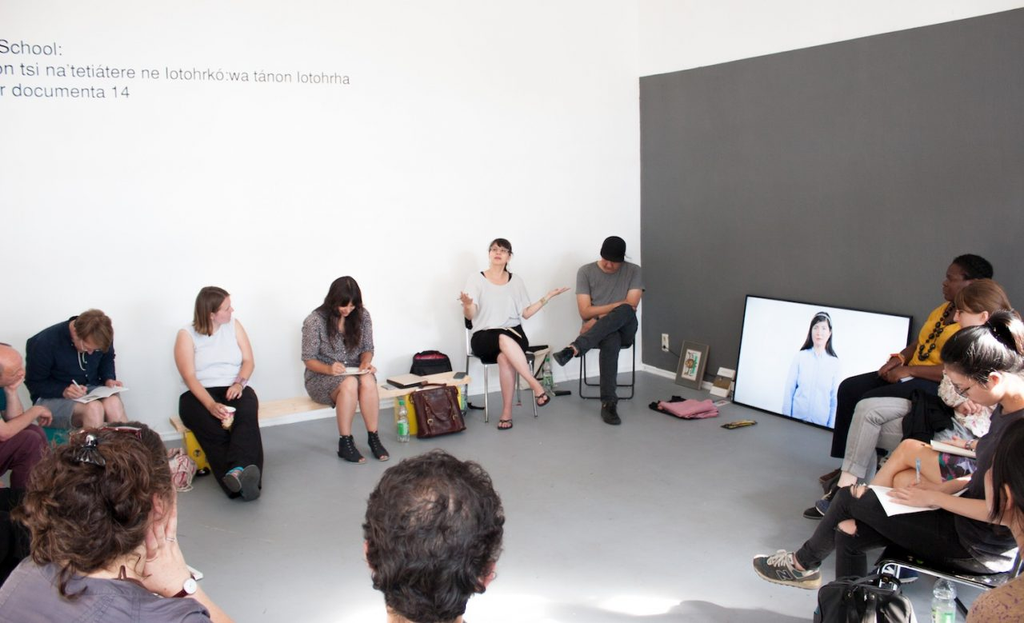
In the first days in Athens, one of the artist education groups, who were showing their work in Athens as part of documenta, gave us an artist talk in front of their work.
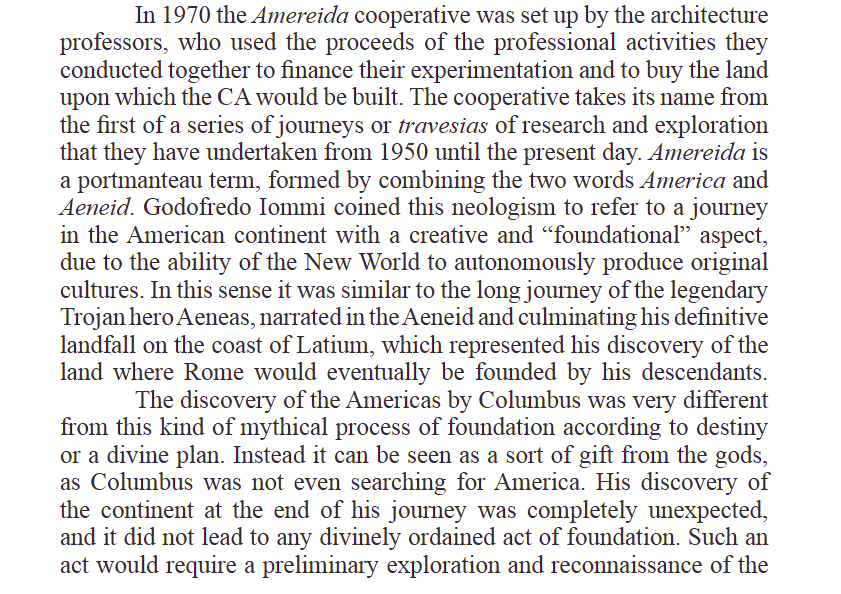
Within this talk, there was a group of words that made me feel very upset – the words that I remember are “the Americas were a gift.”
And right away I almost said something, but I let him finish, and waited till the question-and-answer period. I told him, “I refuse what you’re saying. I refuse to accept your proposition that the Americas were a gift. Our histories, where we come from, say otherwise. We did not gift or give anything to anybody.”
I think this created a position for us during the rest of the gathering. Part of that position…is that there were refusals made by us as a group. I am still thinking through this, but this position of refusal for us was important and productive.
Tanya Lukin Linklater
There is another instance with this young fellow at the workshop who was really frustrated with us sitting around talking. He said, “We’re supposed to be making an exhibition! I’m going to take this charcoal, and just draw on the floor because I’m so violent and radical!” I refused his interruption, saying that a more radical gesture holds the work of these artists in kindness and compassion, because we, as Indigenous peoples, live within a colonial situation that is continuously and relentlessly violent, everyday. I was very direct. I spoke like an old aunty in that moment. He may have been tired of us talking. Conversation is a methodology in Wood Land School, and a form of knowledge production; as Indigenous people we often (but not always) generate knowledge within orality.
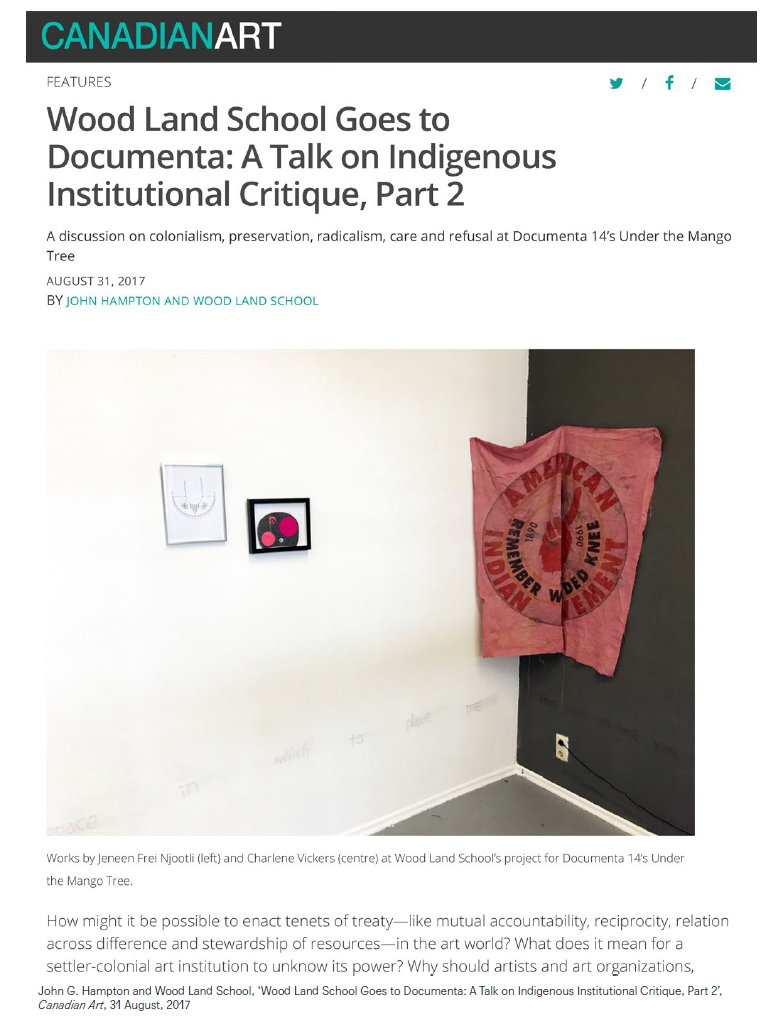
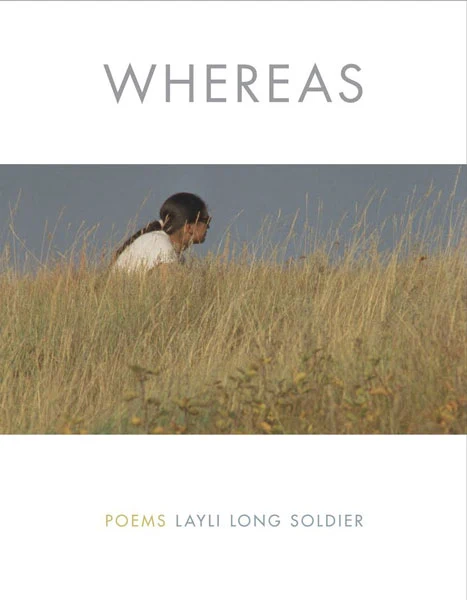
As Wood Land School, we decided to hand-carry works from where we live to Kassel, and we installed them in a modest, provisional space in the Stellwerk. We called this A gesture for documenta. Each of us brought works by artists – some were from previous iterations of Wood Land School in Montreal; I brought Layli Long Soldier’s Whereas, a book of poetry, and read two of her poems in the workshop, as well as a collaborative video by Elisa Harkins and Nathan Young.
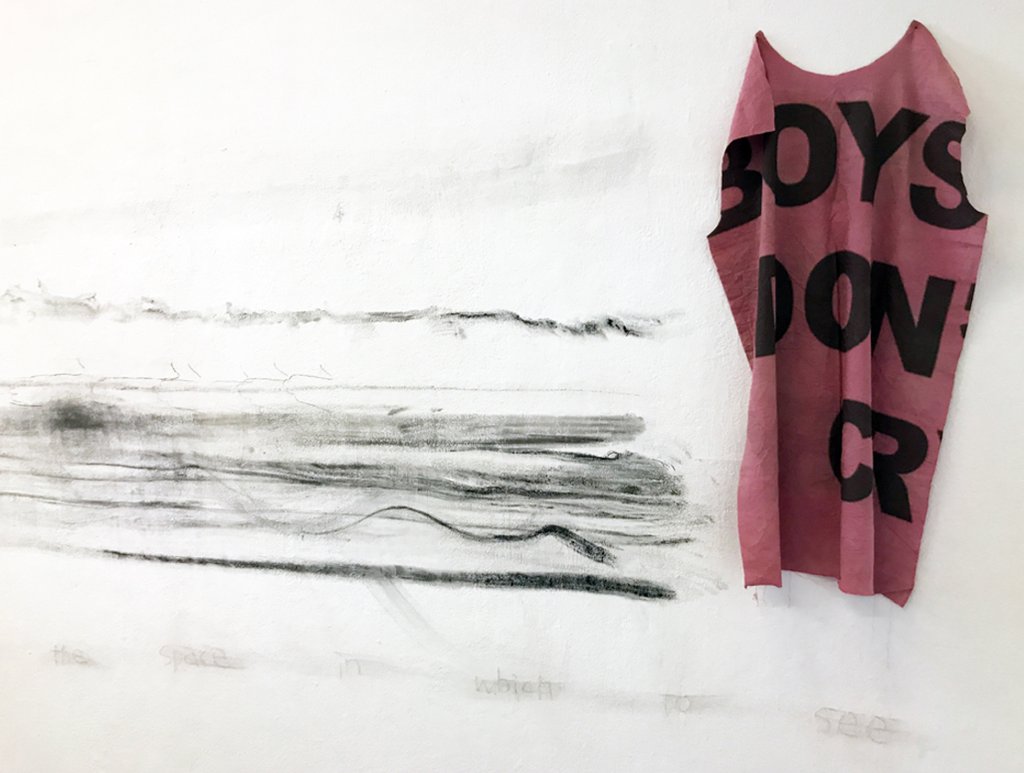
We also installed works by a few artists that will be in the fourth gesture in Montreal, opening September 21…. For the third work I brought to the workshop/exhibition, I think we found a way towards a collaborative production, using the body, intuition and negotiation. I asked that we discuss and decide where we would make a line on the wall. We crushed willow charcoal in our hands, and then placed one or both hands on the wall.
Candice Hopkins
This idea of being-with, to spend the time that it takes, that’s also something that I’ve been thinking about, as well as shifts around nomenclature. Instead of objects, we speak of cultural belongings, what changes when we start to think of art objects – we use that term all the time – as cultural belongings? What I found emerging from that being-withness was the ideology of the things that were brought to Kassel by the Wood Land School. We were starting to manifest ourselves around them. And that’s where some of the discomfort emerged. I think for many people that was incredibly challenging because often, when working on exhibitions, we think of artworks as things that we manipulate and we place and we contextualize. But what happens when you open the space and time up for them to start talking back? For me it was almost like a breach of protocols of exhibition making that then opened larger questions about historical relationships.
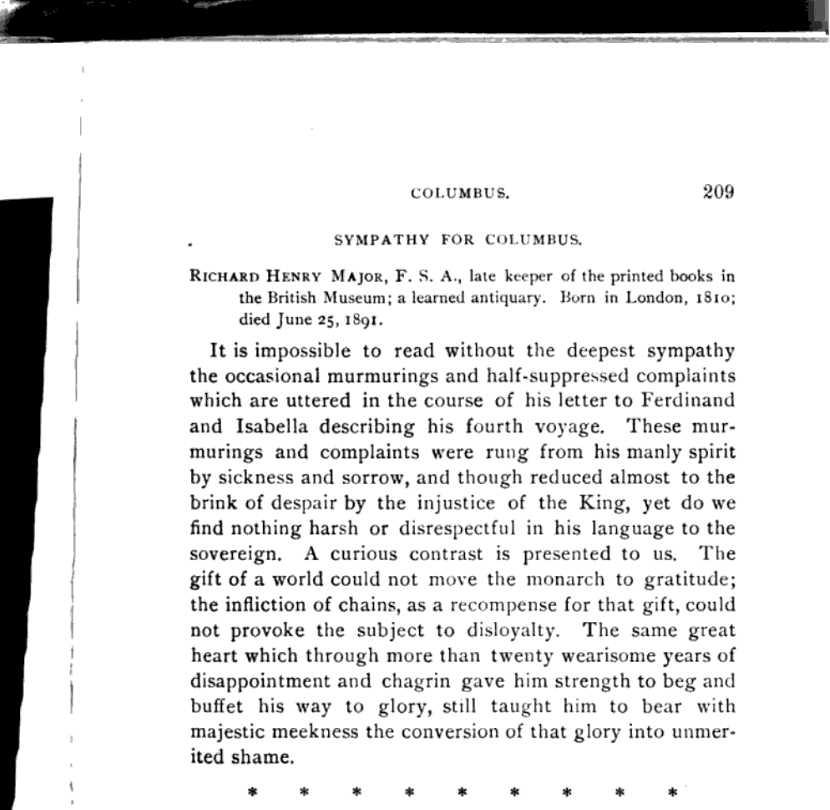
In 1992 there was a short-lived interest in Native art in mainstream art spaces in the United States (as well as Canada), in part because Native artists were seen as the ideal respondents to the 400-year anniversary of Columbus’ landing. While in most cities across the US the Italian explorer was being celebrated, American Indians were among the few dissenting voices. We knew then as now that Columbus happened upon the Americas because of a profound navigational error and almost immediately began killing and enslaving Indigenous Taino and Arawak people, his male crew raping young girls and boys on the various islands at which they docked all before the Santa Maria ran aground on a reef. His crew used wood of the ruined ship to construct a fort – the first colonial building in the Americas – with the ground floor of the building reserved for stores of gold. The Indigenous people were immediately enslaved to labor in search of the mineral. The violence of colonialism has churned ever since.