In this tenth episode of Radio Show Me What Democracy Looks Like , with the US Midterm elections less than a week away and in the immediate aftermath of elections in Serbia, Brazil and Israel, each telling their own stories about representative democracy and its limits, this episode follows the money and looks for value in democratic visual culture, turning to Antonio Vega Macotela’s chilling The Mill of Blood (2017) and accidental Trojan Horses.
Money and Value in Democratic Visual Culture
Antonio Vega Macotela The Mill of Blood (2017)
VIDEO
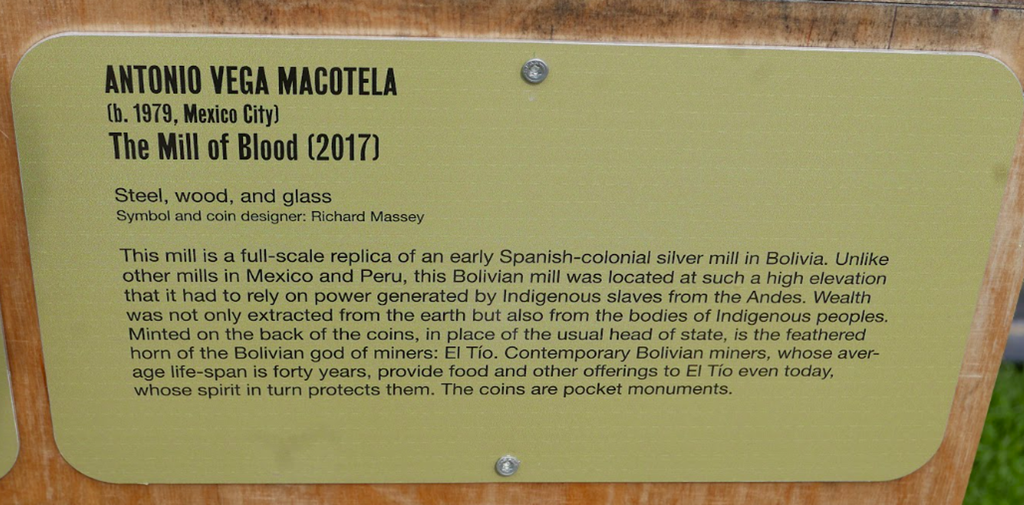
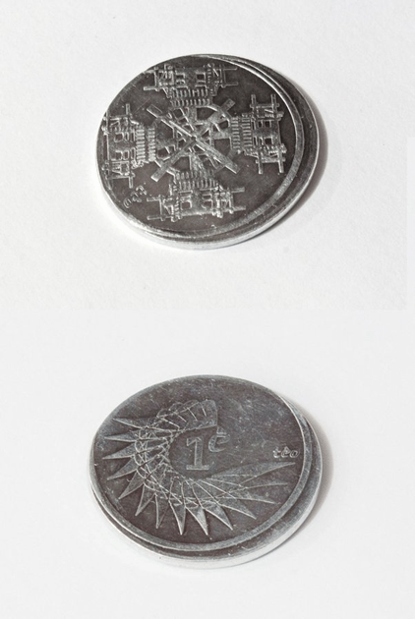
The Mill of Blood is a full-scale replica of an early Spanish-colonial silver mill in Bolivia and was worked by slave labourers. The coins produced in Antonio’s reproduction do not feature the usual head of state but the feathered horn of the Bolivian god of mines: El Tío. Part of the plaque on the installation reads: “Wealth was not only extracted from the earth but also from the bodies of indigenous peoples. […] Contemporary Bolivian miners, whose average lifespan is forty years, provide food and other offerings to El Tío even today, whose spirit, in turn, protects them. The coins are pocket monuments.
VIDEO
Documenta’s Value-Making Machine in Exergue on documenta 14
Musical Outro: Chappell Roan ‘Pink Pony Club’ (2023)
VIDEO
It’s a song about self-acceptance, self-love, community, chosen family, and queer joy.
Footnote on accidental Trojan Horses
When I started the work in 2006, I used this phrase, an accidental Trojan horse, about forms of the revolutionary left that I’ve been thinking, sometimes in their actions, end up opening the door to more right-wing forces, or a more rightist form of the existing forces, instead of the left dream that they’re promising. One of the examples I started with in 2006 is the way that Baader-Meinhof, in its actions, actually could possibly have created an excuse and a rationale for the German state to expand the surveillance state for the first time in a very extended way since the Second World War. Things that were already happening, but Baader-Meinhof provided the excuse. I also looked at the way that ultra-left forces, when they lost the struggles of the 70s in Bangladesh, opened the door for a military and Islamist government. In this way, I said they were a Trojan horse, but I also said they did not mean to be, so that’s why they’re an accidental Trojan horse. Over the last 10 years, both through the films and through conversations with friends, I’ve felt that maybe accidental Trojan horse is too unkind, because it still suggests an intention to take inside yourself your enemy and bring them into the city. Then I’ve started thinking of this idea of misrecognition, where you don’t recognize your ally properly and you make your allies with people whom you haven’t quite understood, which especially is possible in the heat of the moment of what is a revolutionary moment, a freedom dream moment.
VIDEO