Radio Show Me What Democracy Looks Like is a new minus plato? weekly radio show inspired by 34 Exercises of Freedom at documenta 14, held in Athens, Greece in September 2016.
The show has been created for the online class Art Education 2600: Visual Culture: Representation and Society that I’m currently teaching at This Ohio State University.
It could also be called 14 New Exercises of Freedom, Ohio, made during the frenzy of the Midterm election season in an increasingly less free and democratic society in this, the 250 anniversary of the United States of America as an independent, settler colony.
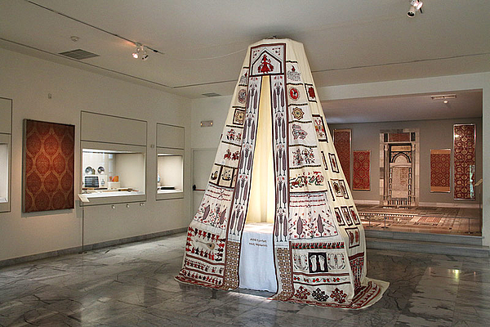
In this second episode, we focus on representations of the individual and the collective in the the visual culture of political campaigns, Mounira Al Solh’s I strongly believe in our right to be frivolous (2012-2017) and what it means to be yourself and be with others.
The individual & the collective in democratic visual culture

Mounira Al Solh I strongly believe in our right to be frivolous (2012-2017)
“The Palestinian cannot just be defined as terrorist or freedom fighter. Any trite, routine image ends up reducing and usurping the humanity of the Palestinian and renders him unable to be seen as merely human. He becomes either the hero or the victim—not just a human being. Therefore I very seriously advocate our right to be frivolous. I strongly believe in our right to be frivolous. The sad truth is that in order to reach that stage of being frivolous we would have to achieve victory over the impediments that stand in the way of our enjoying such a right.”
- Mahmoud Darwish BOMB Magazine 2002
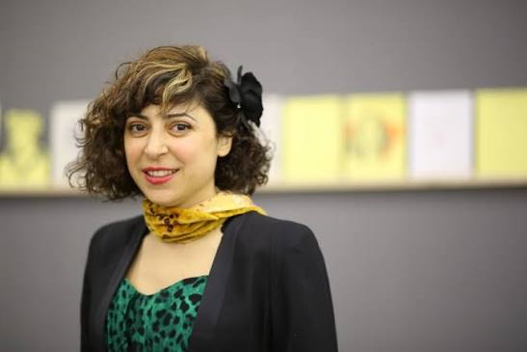
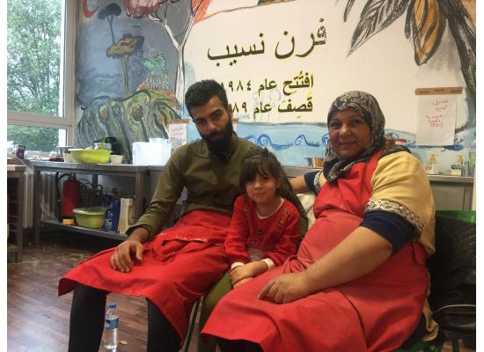
“In 2012, as a gesture of welcome, and an expression of solidarity with the revolution that had started in Syria, Al Solh invited the first Syrians in exile – often public figures, writers, artists and political dissidents – into her studio space. The privacy and intimacy of Al Solh’s studio impacted naturally on the conversations within its space, which initially were marked by hope and even joy, in the spirit of the popular uprising against forty years of Al-Assad’s dictatorship. As a way to document these conversations, Al Solh made portraits of the people she met. These were drawn on yellow legal-pad paper and often included transcriptions of the stories and experiences shared with her. […] [Following the widening Syrian refugee crisis] Al Solh began making drawings of people outside of Lebanon, often connected to her own travel in the Mediterranean area and Europe. […] The intimacy of the artist’s studio was replaced by the crowded surroundings of a bar or restaurant, or the fragile space of a person’s temporary or new home. Al Sohl’s initial gesture of welcome in Lebanon transformed into a networked political geography, establishing trust and building new relationships through each conversation.”
- Hendrik Folkerts in the catalog Mounira Al Solh: I strongly believe in our right to be frivolous, 2018.
Al Solh’s Studio in Beirut & a Boat Ride from Exergue on documenta 14
- In Chapter 2 of Exergue on documenta 14, Adam Szymczyk & members of the documenta 14 curatorial team travel to visit artists & galleries around the world. One of the places they visit is Beirut.
- They visit Mounira Al Solh’s gallery, before going to her studio & then joining her on a walk near along the coast (where her father swims every day) & then on a boat ride!
Musical Outro: Nirvana Come As You Are (1991)
- Listener request from online 2600 class
- Kurt Cobain described this song as being “About people, and what they’re expected to act like.”
Footnote on Being Yourself and Being With Others
I went to school to be bullied because I was so different. I had a different way of thinking. I didn’t believe in the structure of life that was built around us. That wasn’t my ways, and that didn’t speak to my identity. At some point, I lost myself because I just wanted to blend in with everyone. But going on this journey and traveling from community to community [during the Idle No More protests with her father, Kwakwaka’wakw artist and chief Beau Dick] and receiving support and realizing there were other people out there who had the same concepts that I did, that believed in something greater than materialistic value, really inspired me to awaken.
The final day of the journey, which was 10 days, we did a final march from the highway just outside of Victoria into the city, and hundreds of people joined us. We were surprised because a lot of times when we were entering these communities, though they were welcoming, though they sheltered us and fed us, there was a small group of people. But on that last day, hundreds of people walked with us from many different nations, many different cultures from all around the world. When we arrived at the Parliament, there was about 3,000 to 4,000 people standing there waiting, and everyone was full of gratitude and understanding of what we were doing.
After the journey ended, that was when I finally found myself, and I began to believe in myself, and I started to practice my traditions and culture that I had almost forgotten about, and I became who I really am. My English name is Linnea Dick, but my given name is Maladi, a Kwak’wala word which means to find your way on an uncharted course, which I believe means to follow my heart, and it is that which has brought me here to speak to all of you today.
When I was nervous last night at a dinner we had, I was sharing some of my anxiousness with someone who was there, and she said, don’t be afraid, we are with you. She didn’t say we are here for you, she said we are here with you, and I think it’s really important that we all reach out to each other and hold each other up. In my culture, there are many traditions of healing, of spirituality, which empower us and give us a sense of purpose, but there is also a mythology, and in many of our mythologies people believe, they start with people who don’t believe in themselves.
Linnea Dick
In memory of Beau Dick (1955-2017) and Linnea Jericho Watts (née Dick) (1991-2023).