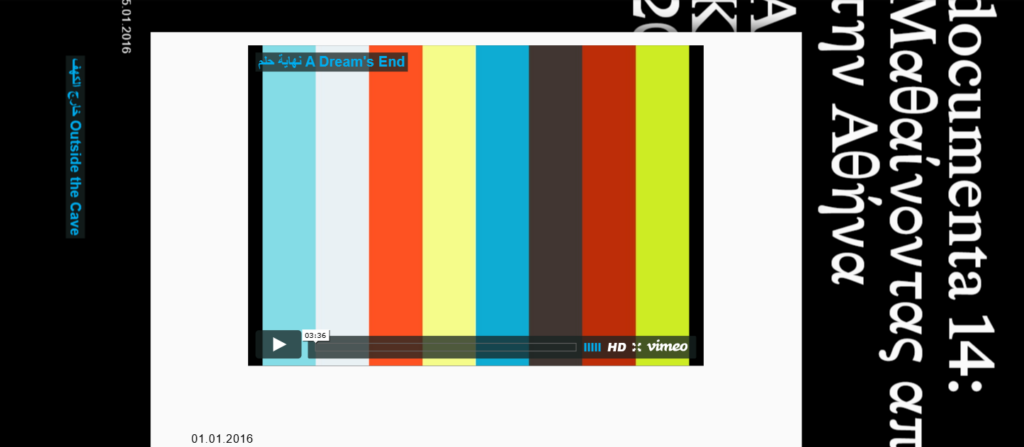
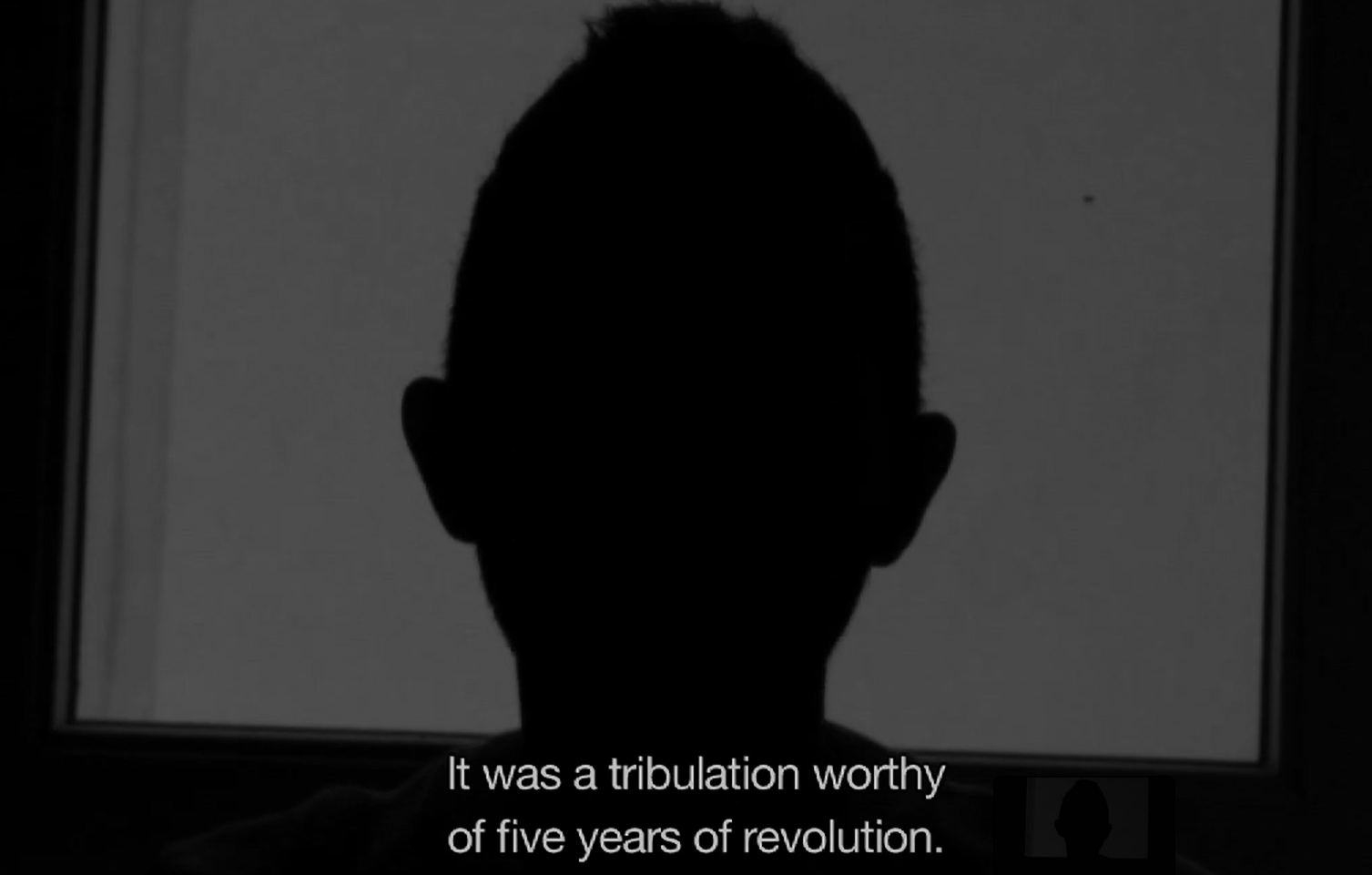
Each week, Syrian filmmaking collective Abounaddara uploads a video onto their Facebook page. Depicting glimpses of life under siege, monologues from victims and survivors, or ironic montages of the grim realities faced in the ongoing catastrophes, the films—what they term “emergency cinema”—aim to shed light on the individuals affected by those events. The videos are short, ranging from a minute or so to under ten, and each one different, be it in content, motive, or style. The anonymous, self-funded, and self-taught filmmakers work from within Syria and without. This recent one, “A Dream’s End,” follows a format visible in some of their other videos. It begins with the silhouette of a man in close-up, backlit against a bright window. As with most of the videos, this one has little context. It begins, in media res if you will, and we hear the man speak. Although the video’s beginning or end might seem arbitrary, the man’s narrative attempts to provide a conventional structure. He describes his decision to leave Syria, the steps he took to find a way out, the arduous journey through checkpoints and across the border, and then shares his disbelief that he might actually be safe. As he talks, the camera, mostly steady, stays focused on his head, framed a second time by the window. Jump cuts punctuate his story like chapters, making the video feel much longer than it is, drawing attention to the details he describes. The videos often focus on the power of testimony—not so much over that of the image, perhaps, as much as a counterpoint to it. The collective’s manifesto argues for the right to self-representation; Charif Kiwan, the collective’s spokesperson, calls their videos “bullet films”—short, urgent, and aimed at breaking through the visual noise associated with media coverage of war and atrocity. His language is suggestive of the instantaneous, a desire to convey all at once, to collapse time. In one interview, Kiwan explains that a new mode of representation requires a new form of temporality. Some sense of this emerges in “A Dream’s End,” where the time of “ending” and “beginning” rub up against each other. Indeed, in Abounaddara’s video archive, begun in 2011 and which has since gained visibility and garnered awards, the tension between completion and continuation generates questions about the practices of viewing the collection, but more importantly also about a viewer’s response to it.
[Starting at the end of 2015, documenta 14 posted the weekly ’emergency cinema’ videos of the Syrian collective Abounaddara on its website and Facebook page. As part of A Curriculum of Imposters (Here & Now, There & Then, On & On), I am reposting these videos, as well as screenshots of the original website posts (using the ‘wayback machine’) and the documenta 14 Facebook page, as part of preparations for the ten-year anniversaty of documenta 14 in 2017. These weekly posts will also engage with a class I am teaching at This* Ohio State University about marketing, communications and social media for non-profit arts organizations, and, specifically, the right (to the) image. At the same time, I am reposting Abounaddara’s work in the year 2026 – the 250th anniversary of the 1776 Declaration of Independence and beginning of the American Revolution – as a reminder about what revoultion means for people, beyond states and their leaders – in Syria, in Greece, in Germany, in the US and around the world]