[The original post contained unauthorized stills and transcripts from the film Exergue on documenta 14, dir. Dimitris Athiridis, Faliro House Productions, 2024. They have been removed on request.]
Edi Hila: Thank you very much for being here for this discussion today on my work, on my paintings. I would like to thank Pierre [Bal-Blanc] and Adam [Szymczyk], who’s not here, for all their kind words that have been mentioned today. I am very glad to see students in this room. I will try to be brief and not delay.
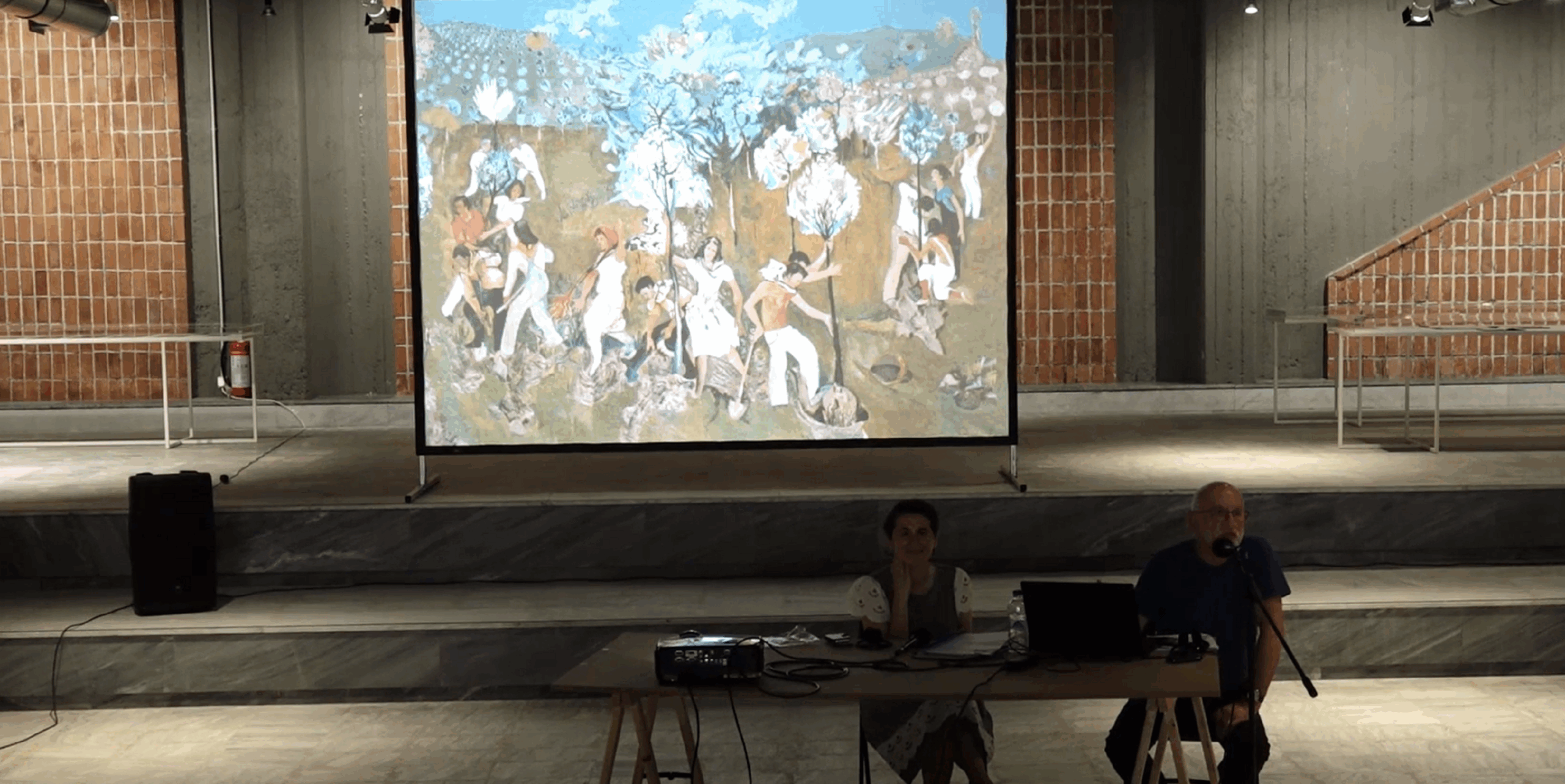
I would like not to take up too much time. As regards the interpretation of my works, I’ve tried to pick out some snapshots that I consider fundamental and indicative, as they also explain the reasons behind their creation. I will begin from Planting of Trees, and I will go on with other paintings that are exhibited here in the Athens Conservatoire and the Hellenic Museum of Modern Art, EMST.
So this painting, as you’ve already heard, is called Planting of Trees, and this is the beginning of my own story. It was a sad story in quite a few cases, and in some other cases, it was also the reason for me to move my painting onwards. And I would like to say a few things about how this painting came to be.
It’s very important, because we need to correlate creation with factors that may be political, may be economical, may be due to social circumstances or reforms. Back in the 1970s, in Albania, there was a dictatorship, as you know, and the dictator decided to create an artificial sense of freedom for artists. We all thought that this was the beginning of a new time, a new era for Albania, where writers, painters, all artists, not just painters, would be free.
But unfortunately, that was not the case. And this illusion didn’t really last long, because very soon, some students from the university, from the School of Fine Arts, were contacted, and they received letters about what their problems were, what their concerns were, whether art in Albania was going beyond the norms of social, socialist presentation and socialistic art. I don’t know if you understand what it means, the line of the party, to have to follow, to abide to the line of the party.
Now, this meant that the first illusion of artistic liberation had come to some as the perfect excuse to move beyond the norms, the socialistic norms, the communistic norms, and this painting was what I did, what I came up with. And then I was ridiculed for this painting. I was told that this was not lively, that there are no feet, that there are no faces, that there’s aggression.
To me, it was all about optimism, about energy, about a new beginning, and it’s about a tree planting. So that symbolizes on its own the beginning of a new life. Perhaps that was the reason that although the artistic society in Serbia has really embraced this work, at the same time, it overcame, it overstepped the boundaries that the political regime had set.
And that, I think, is what caused a riot. Of course, the consequences was that I came under severe criticism, prosecution. I was actually condemned to work carrying things around in a factory that had to deal with raising poultry.
So, in the beginning, it was drama, it was a huge tragedy for me, because I had no idea what would come. Could it be that I was going to face new arrests, that I was going to prosecute it even further and incarcerate it? But now, looking back, I know that this was a very enriching experience. This was a mind-broadening experience.
I had the opportunity to work in a framework, in a place that I wouldn’t have gone otherwise. And it allowed me to infiltrate a new point of view, a social stratum that, at the time, was considered the healthy stratum of society by the political regime. So, to me, that was a period of learning, of becoming more mature in my relations with social problems, but also with respect to positioning myself vis-à-vis life, taking a stance towards life.
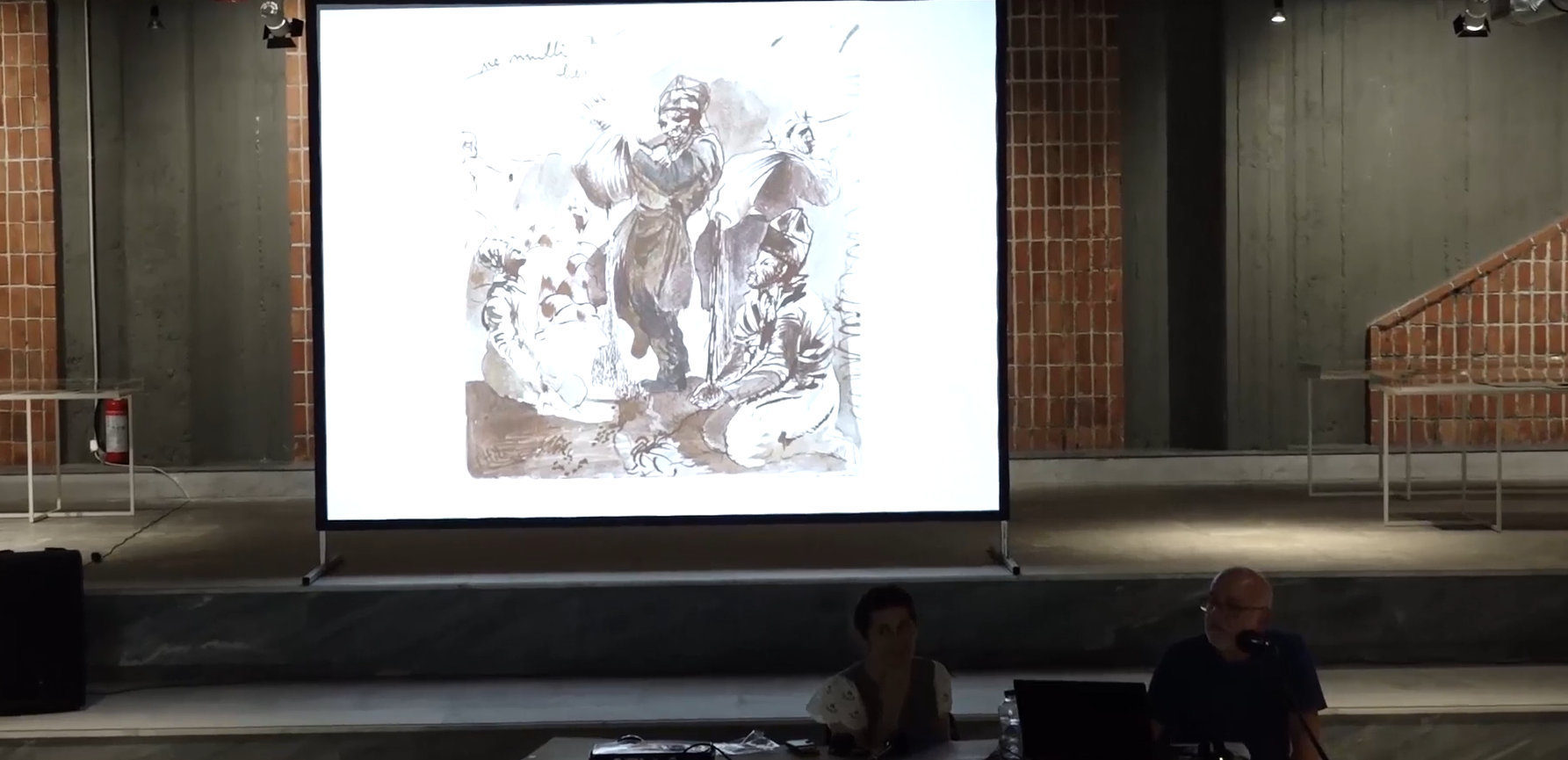
Here, what we see is different. This is people that are very poor, more than poor, and that work overtime, almost every day, in order to make ends meet. This is what the workers’ class, the working class, was all about.
I was considered, at the time, an intellectual, a person of the arts, of the fine arts. And I had to learn from them. That was what the politicians, at the time, felt that needed to take place.
I had to learn what revolution was, what the morals of revolution were all about, what the working class morals and code of honor were. Now, for some of you, these may sound strange, alien, and it may be difficult to grasp exactly the meaning of this entire experience. But, to me, it was a learning experience.
And that was not a personal viewpoint. That was the political party’s viewpoint. I had to learn.
But, to me, these people were friends. They were not just colleagues. They became friends.
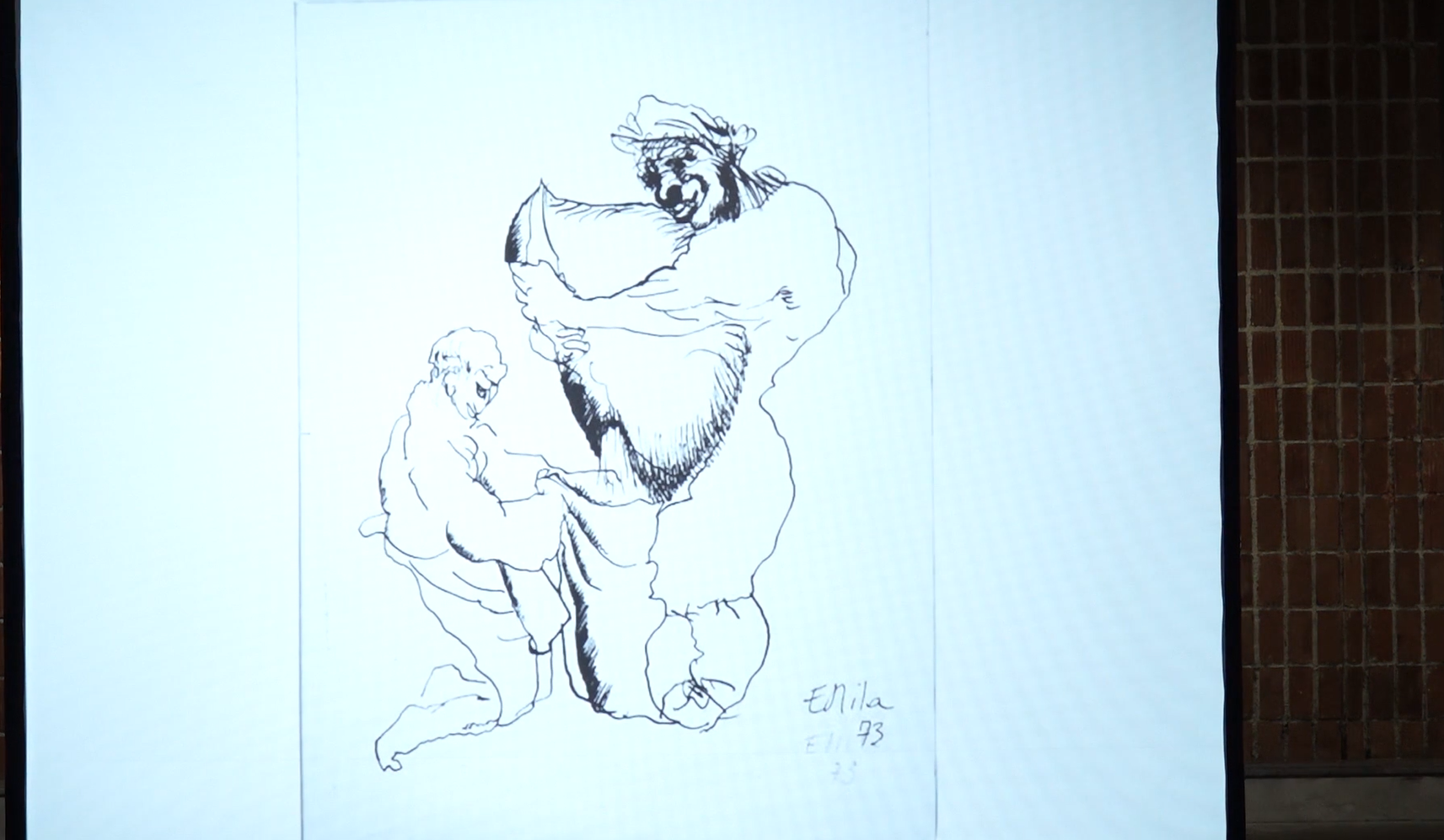
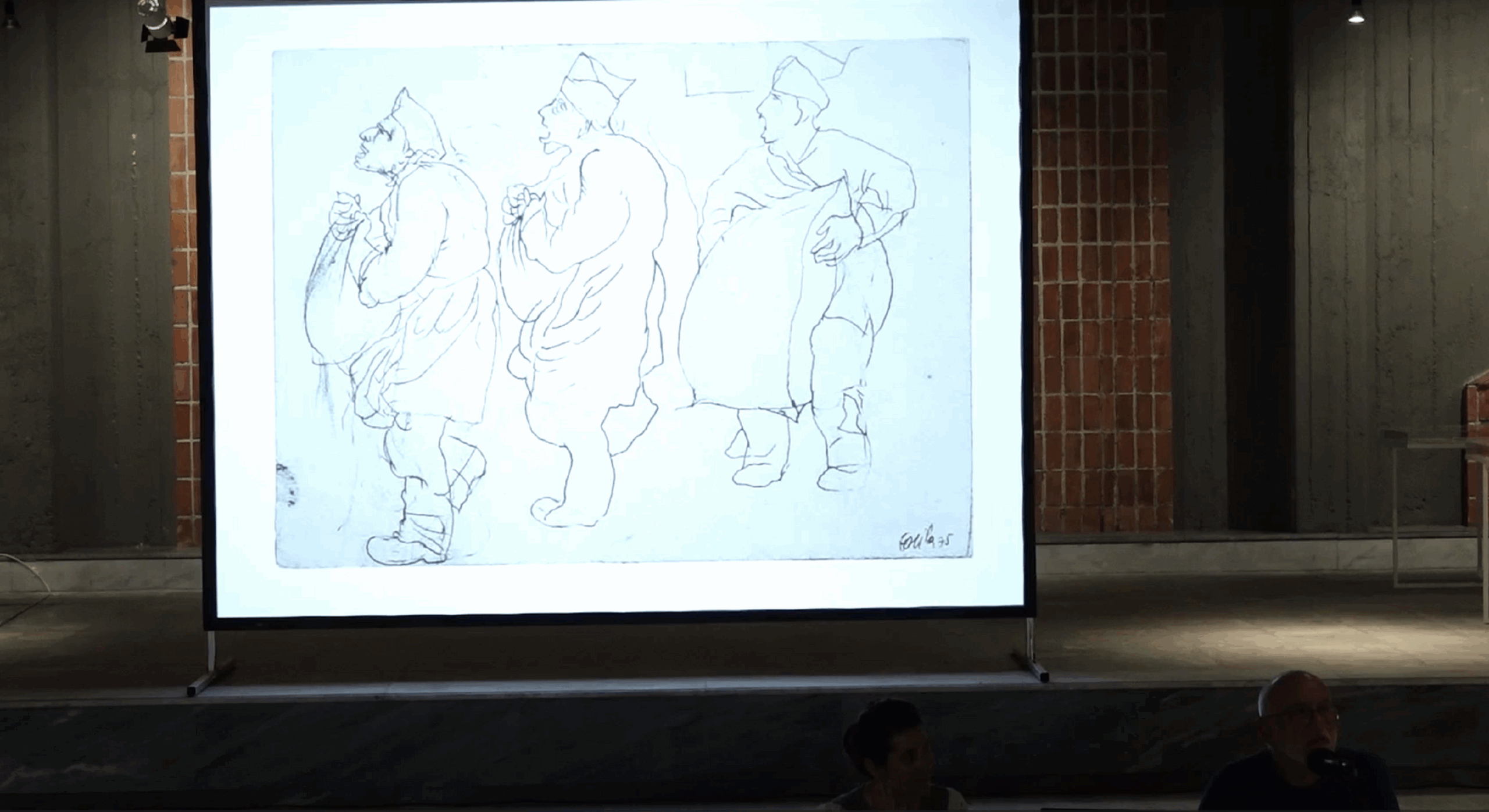
I had to lift the same bags. I had to carry the same weights. I had to live the same life.
And these were circumstances that convey a huge symbolism. At the end of the day, we had to count the sacks that we had carried. That was so powerfully symbolic, because it set forth the framework of reality for the entire day.
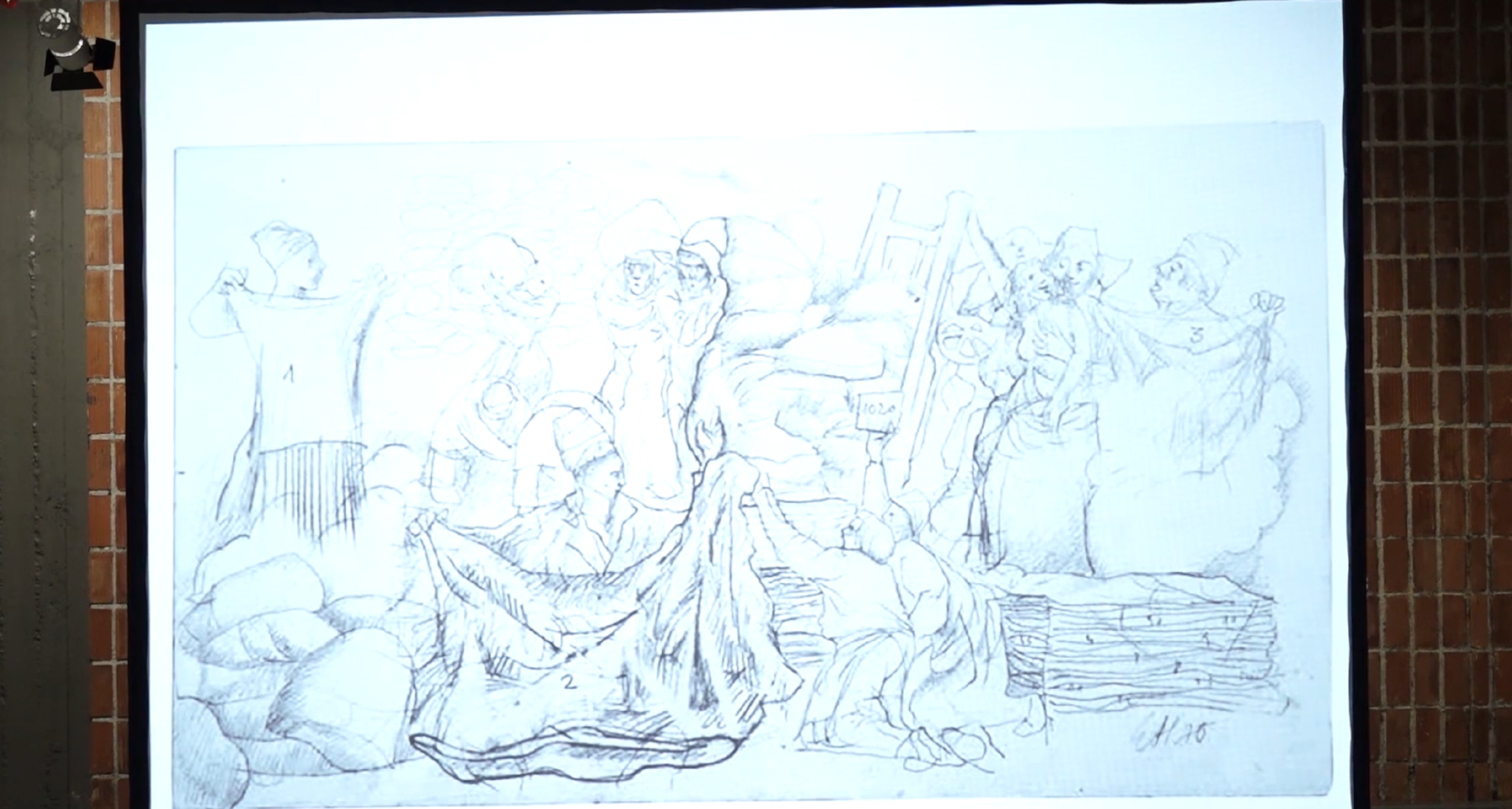
And one of the demands, the basic demands or morals, was we need to save. And what you see here is indicative of what we do in order to save. So, everybody’s gathering foodstuff for the poultry into the sack.
And this is another interesting minute for me, moment in time, rather. It was difficult. It was a tiring time.
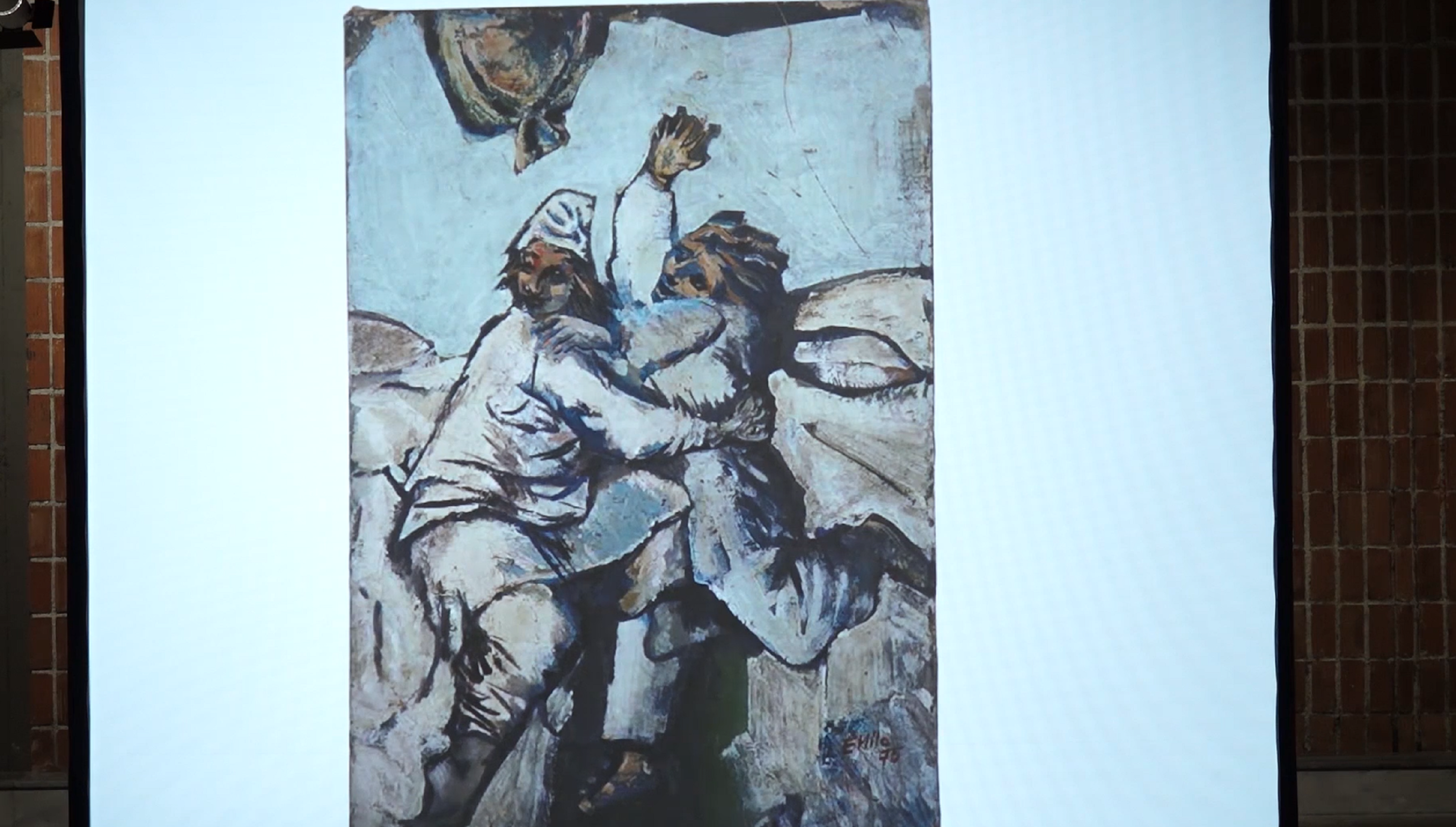
The work was excruciating at times. And very often, it was painful to move, especially going through learning about family stories and personal drama. And yet, it was so enriching as an experience to me.
I cannot call it joy, per se. But to me, it was more of an energy. Energy that was released by our youth.
The youth, we were all young at the time, and we loved life. And this dimension was taken into consideration, and it morphed into the realistic rendering of life. And it goes without saying that here, there’s a situation where, which is depicted overly realistically.
So, it tried to indicate the relationship between the workers and the bosses. Sometimes, the treatment of workers was vulgar. Sometimes, the behavior of workers was vulgar because that was the way they were.
That was their educational background. They didn’t know more than that. But I want to focus on how this can help shape an artist.
And it might sound like a paradox. I had been prosecuted. I had been condemned into working as a laborer.
That was the result of a totalitarian effort to isolate me, not just from life, but from creation. And in this poultry factory, I did not, of course, have the right to do anything else but work there. I couldn’t exhibit my works because I had been sentenced.
But looking back, I understand how fortunate I was, in a way, because I enjoyed total creative freedom. Being isolated, being marginalized, I could put down on paper anything I felt like doing without really being afraid that I’ve seen this at their studio and it’s not in line with the party’s likes. Being marginalized, I was able to create and shape and morph my own reality, something that was much more familiar to me.
And I believe that this is what inspired my works, my paintings. And of course, it was a very honest creativity, a very pure creative rendering, because I never really asked myself, how will I, how should I paint this landscape? My life was as follows. I spent the day working with the laborers, and then going back home, which was a one-hour trip, I pondered.
I planned in my head. And as soon as I reached home, I’d just pick out one piece of paper and pour out on that piece of paper all the experiences of the day. And I think that this is very important.
I wish this could also be something that takes place when artists are not marginalized. Recently, I saw a documentary and I have apologized for my English. It was Turning the Artfield Out.
I don’t know if you’ve heard of it. I hope I pronounced it well, says the speaker. It followed the story of people with disabilities that were completely marginalized from life, completely isolated.
Their paintings, their works were free of the thought, I’ll have to exhibit those, will I be able to sell them? Should I alter them in any way? To make sure that they will be exhibited. And of course, none of them had ever considered things like a biennale. They were innocent.
They were angels. And they were in such good terms with themselves. And I believe that this is fundamental if you’re trying to create.
You cannot have reached the desired effect if you’re not feeling love with yourself. And if I was to interpret in a way that may not be exact what happened, I benefited. I learned and I grew to be who I am thanks to the dictatorship and the totalitarian regime, which is something that’s very difficult to overcome.
Those were the paths I followed, and this is how I processed my own creative thought. It is, however, a trap. There is a trap that no artist can escape.
But at some point, you’ll have to sell a painting. You’ll have to make a name for yourself. And this is in stark contrast with the mental artistic purity that we need to have.
And it goes against what I saw in that documentary and film of J. Coker, if I pronounce the name well. I was fortunate enough to be a person with disabilities for a little while, so to speak. So during the dictatorship, I ensured that I had complete artistic freedom as I desired.
Situations within the factory were intense, and there was an amazing energy. It was an amazing source of inspiration. You could not be indifferent to what was taking place in front of your very eyes.
And I feel sad, because at the time, we didn’t have any photographic cameras. Perhaps it’s for the best that no photographic cameras were there at the time, and I was able to depict reality with my own lens. Please look at the expressions on their faces.
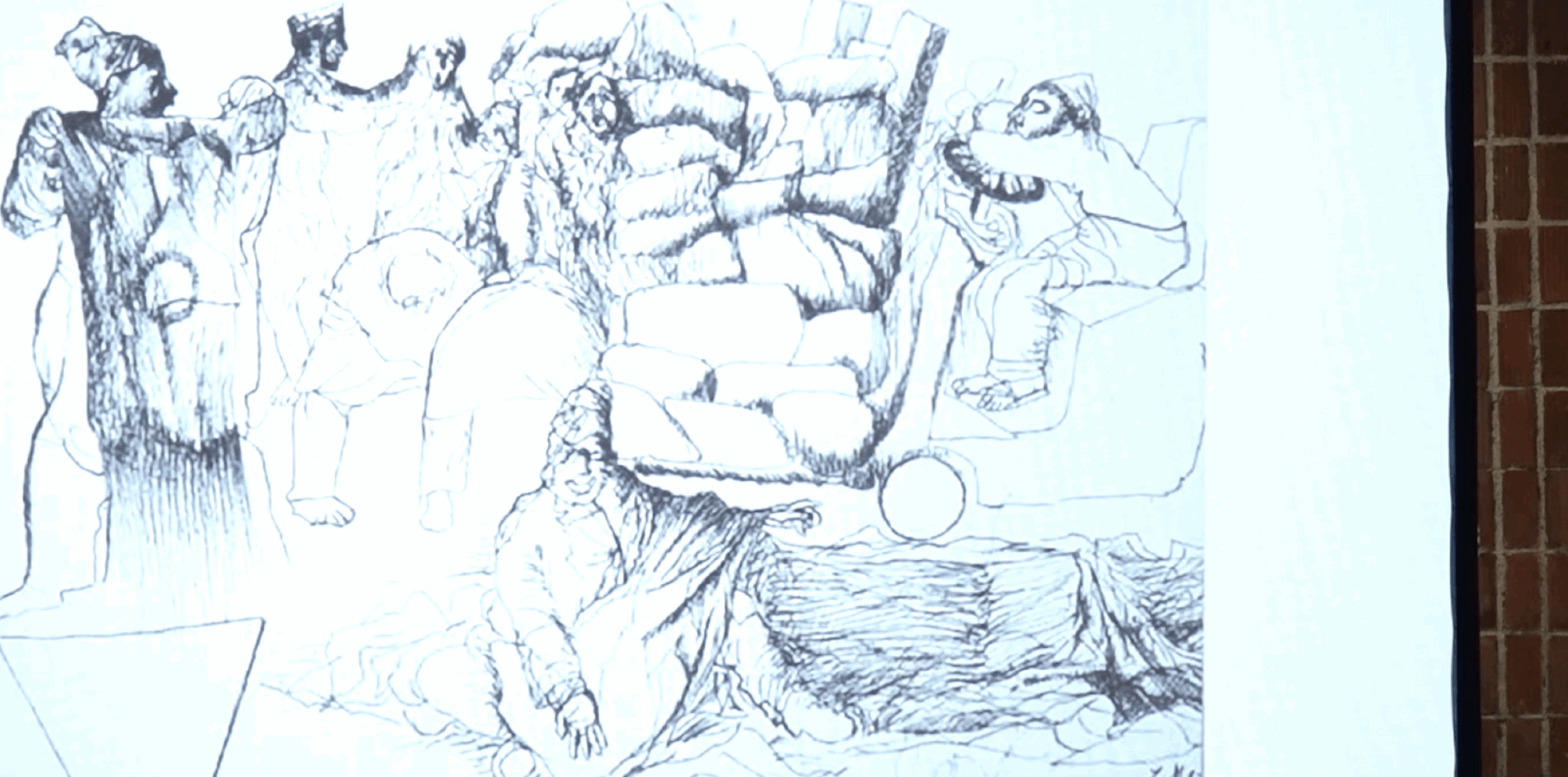
There’s so much strength and prevalence in these women. This is the other side, the other painting. The viewpoint of how within hell there were moments of fun.
Here we’ve got three women that are riding this mini-clerk. It was a wonderful time of joy, of playfulness. And at the same time, the reactions of others, the remarks, the comments, the hitting on them was amazing.
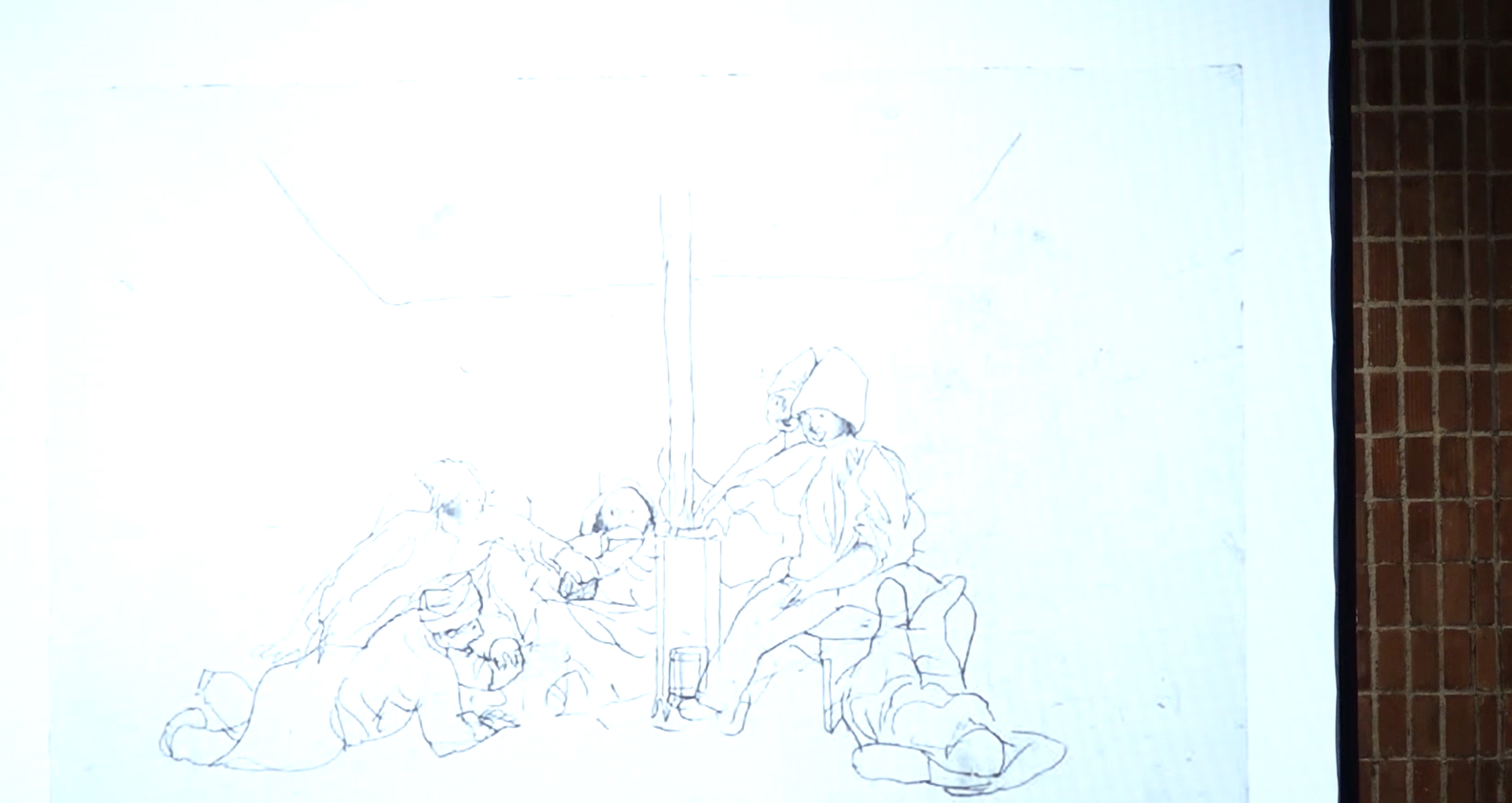
This is one moment of repose, after work, of relaxation. And I would like to show you, but unfortunately, it’s a lot further down the PowerPoint presentation. It’s very difficult, but coming back to this work.
These are the workers on their way to the dining room. It would be amazing to really look into the psychology of these people. It was a wonderful moment to really understand their psychology, their psyche, the outcome of all the events they’d gone through.
In a micro-cosmos, it was an explosion of women’s emancipation. They’re all waiting in line for something to eat, for a snack, for a lunch, within the factory. And all these girls had come from the countryside, to the city, to make a better living, and they would attach themselves to one another.
They were still ashamed, they were still unfamiliar with their surroundings, the factory. And the politics at the time ordained that we need to empower the laborers, the working class. They revolutionized, in brackets, in inverted commas, life.
But what they actually did was that they take youth from the countryside into the city. And what was it that they had to do in the village? They had to feed their chicken and hens. And here they’re in a factory that artificially, massively produces chickens.
It was a transition that impacted their psychology. There was a new class that was created, there was a workers’ class, a laborers’ class that was created. But as time went by… I apologize, Mr. Speaker, for moving forth in this fashion.
So as time moves by, one realizes that this emancipation had a vulgarity in it, a very strong dimension of vulgarity, because it was the outcome of their lack of knowledge, their lack of education. And I’d like to point out the fact that being of a low educational and awareness level, socially, their reaction, the reaction of these women towards life, towards the experiences they were going through, was perhaps inappropriate. So, minutes like this, this is how they reacted to one another.
If we see this as a backdrop of poverty, of difficulty to survive, this is another dimension. It was perhaps an effort to protest, protest against the regime, but, I don’t know, at the same time, the regime had set everything so well in stone that it was very difficult to react, it was impossible to react. The fact that I was working in such a factory, among such people, meant that I had gone against the party’s line, the party’s word.
I had gone beyond the boundaries, and I had to be reformed, and I had to be reshaped into something that was appreciated and accepted by the regime. So, these are all small works that still have a long history behind them. Now, I’ve set this apart, I think that this is the most important, this is a very important, rather, part of my course, propaganda.
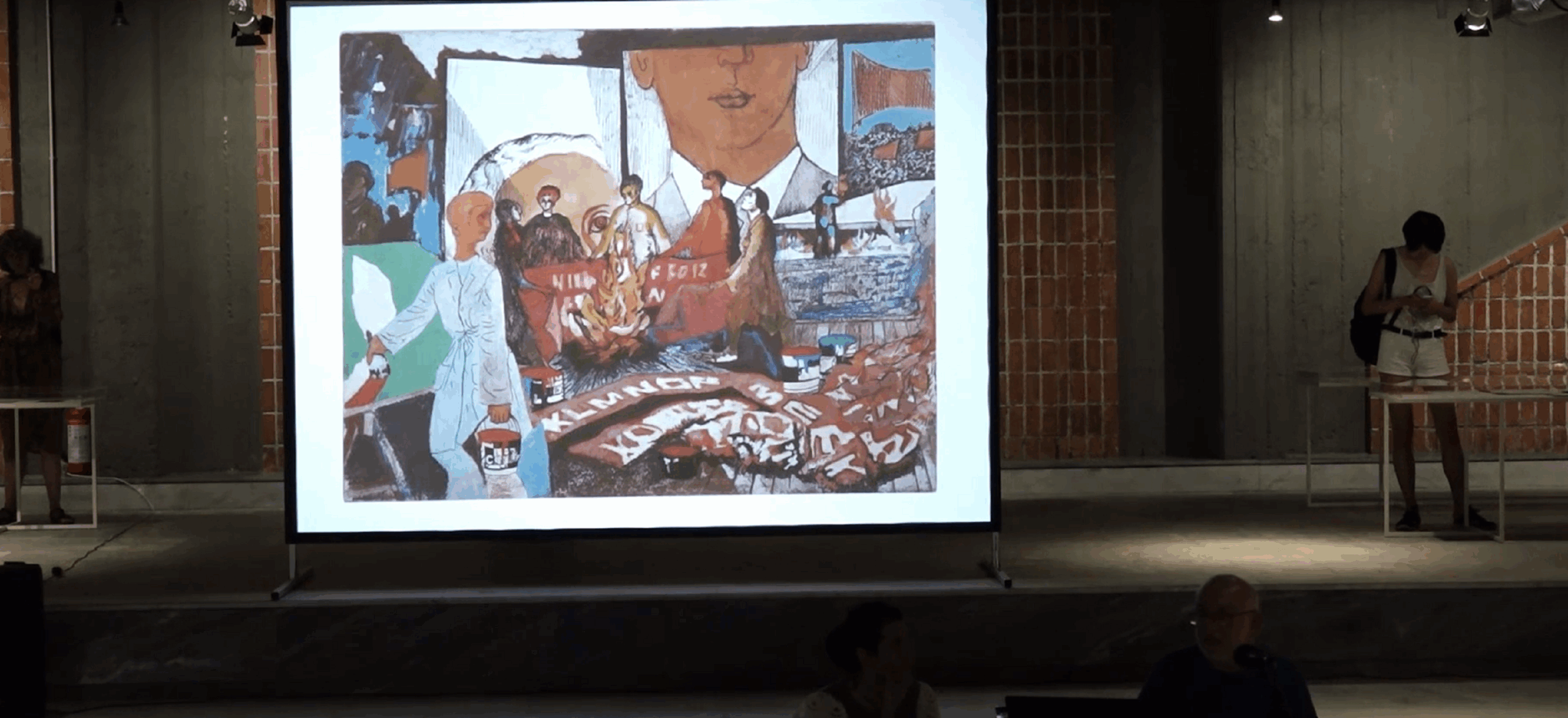
It was a huge part of life then. Anything that had to do with propaganda was totally under control, and there was a huge emphasis that was laid on symbolism. If Goya at some point was asked and commanded to paint a portrait of a king, or if the Flemish portraitists would sell portraits to rich noblemen or rich merchants, in our regime, we were supposed to paint the leaders, our political leaders, and they had to convey a clear message through the paintings, which meant that the painting had to abide by the rules of the political regime.
And one of the most ugly impacts of the dictatorship was that all paintings looked alike. I don’t know if you know, but in Albania, when it was holidays, Christmas, for example, everybody would be eating the same meal, everybody would be watching the same TV show, irrespective, regardless of the fact that people should have the right to celebrate in their own way. That was not the case.
The dictatorship, at the time, ordained, this is how you will be celebrating, you will eat this, you will watch this, you will stay home. I do not want to be political, but this is the framework that influenced me. This is what reality in Albania was at the time.
Here, the person in charge of a factory, of a business, it’s a very grotesque moment. This is how a person in charge, a head of office, a head of service, a supervisor in a factory, this is how they saw themselves, this is how they treated the workers in a very ridiculous way. And this is why this work is so ridiculous as well.
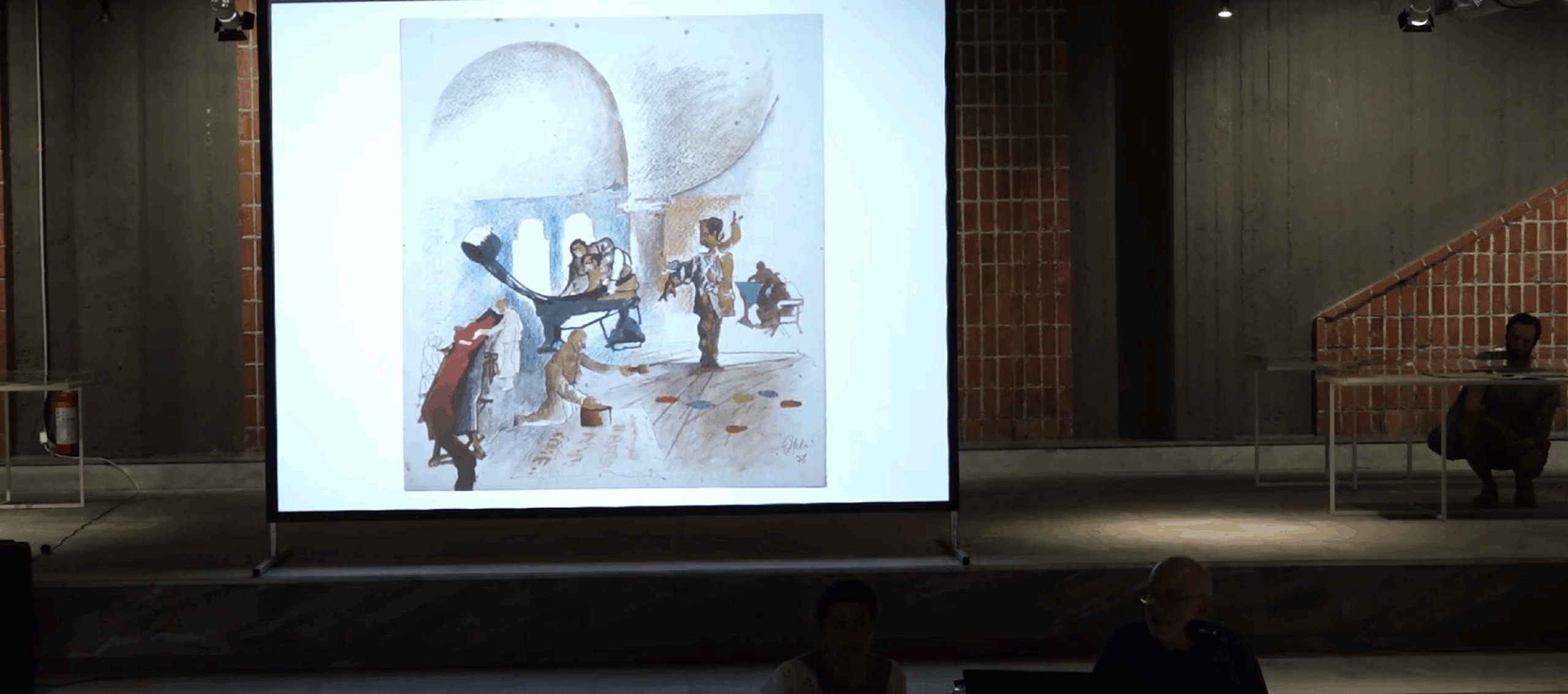
This is why I opted for the grotesque. To me, this is a caricature, it’s not a portrait of the person in charge, because I wanted to point out the ridiculousness of it all.
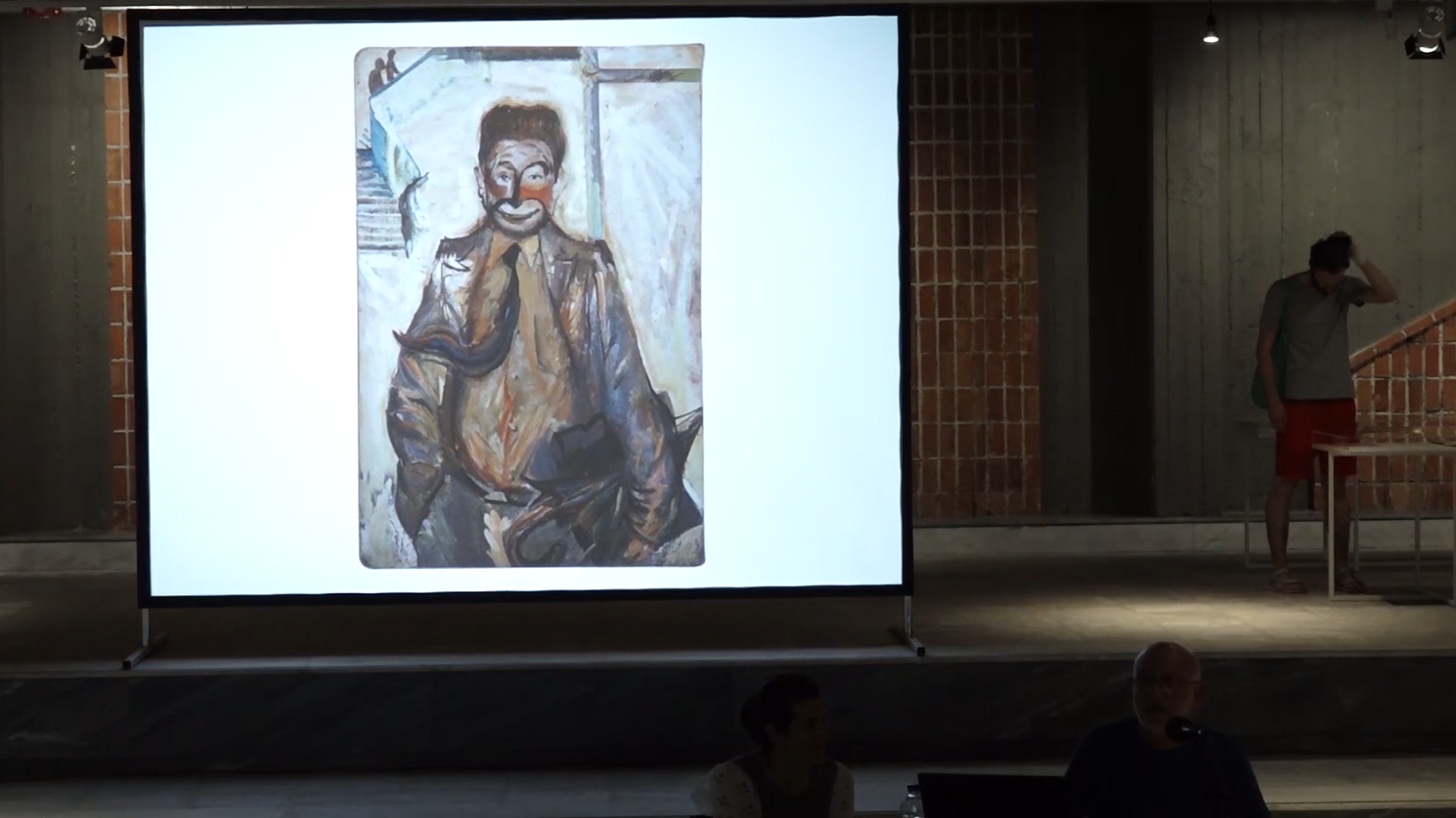
This is a portrait that is within the hall of the Conservatoire. It shows a security agent, a mole. I have kind of changed his form because I wanted to introduce ridicule, I wanted to show that a person that rats on others is distorted, they cannot have a clear person, portrait, personality. It is impossible to go through that period of my life without looking at the political regime. I will be speaking of a few moments that marked my life, I want to convey.
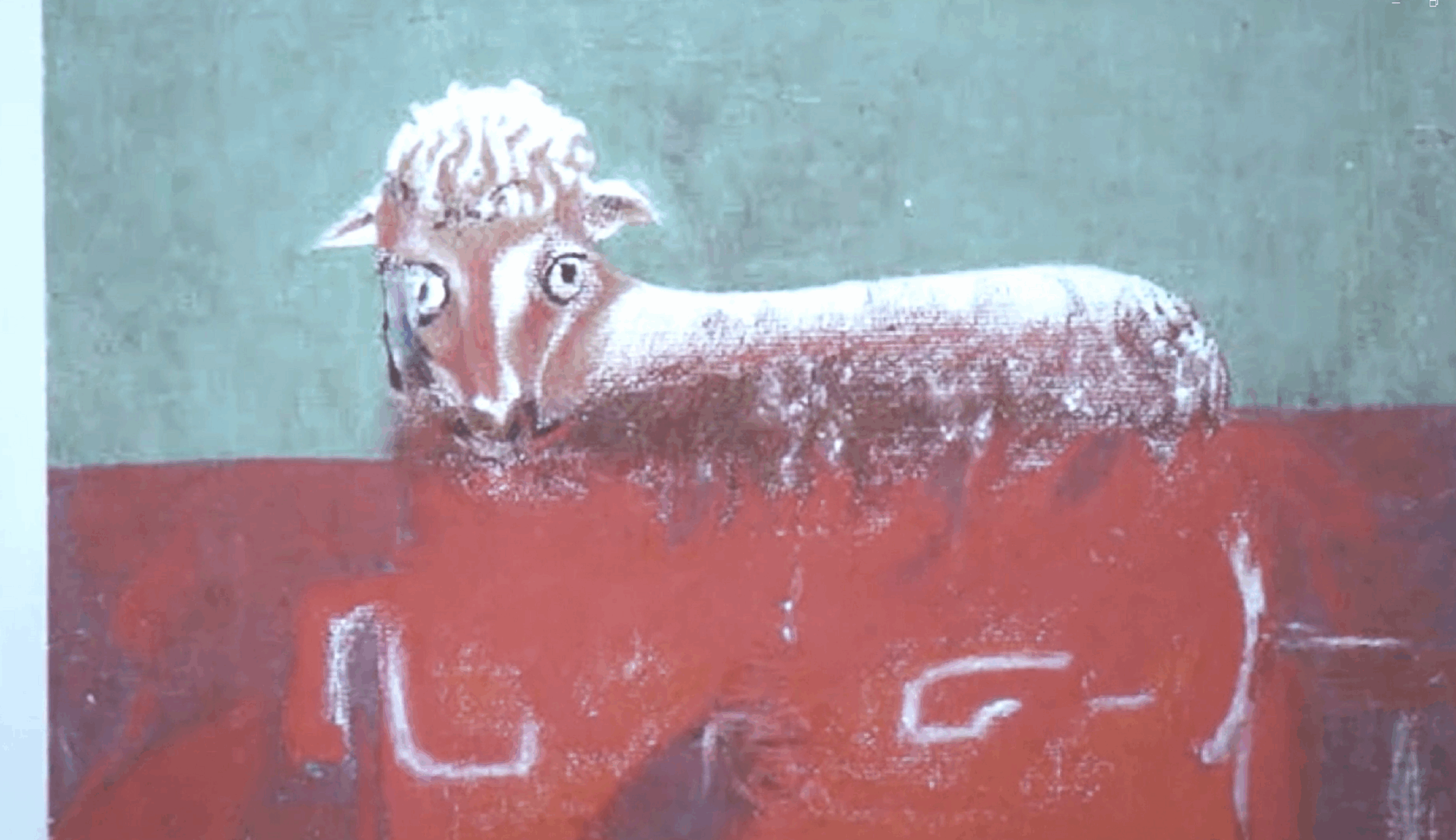
Here, for example, this sheep which is led to slaughter, this highly symbolic image, why did you opt for the sheep? I mean, it has been used often, and that’s why I opted for it. It has been the sacrificial lamb, it has been exactly a symbol of sacrifice, and that’s why I opted for it.
This is a scarecrow, you know what a scarecrow does, it is a contraption that is set within the field to scare the crows, to scare the birds away so they do not feed on the seeds. This is the portrait of a woman who is very imposing, there is a dignity within her, she is sitting at a bench, an armchair, and there is this geometrical object in front of her, or close to her. And that was, that symbolized the need of the artist to become abstract, the need for abstraction.
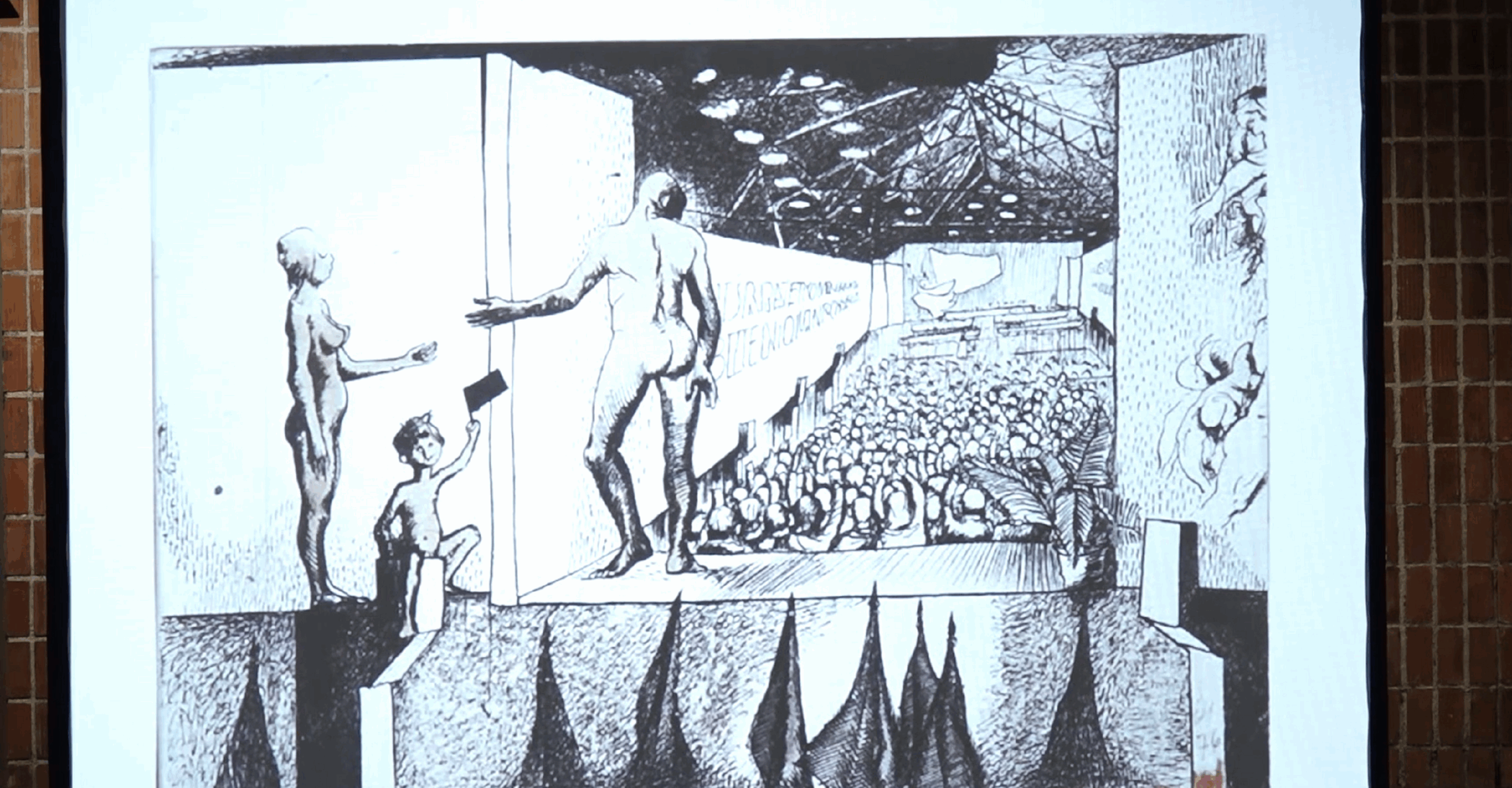
This is a painting that I wanted to create in large dimensions, with strong colors and powerful colors, it shows a congress of the political party, of course at the time I was, as I said before, sentenced to be working at the factory, which meant that I couldn’t go to a communist youth congress. And I was inferior, and I showed that through this painting, that I felt inferior, unable, and not worthy of attending such a huge meeting, such a huge event. It shows a little bit how a person that has been marginalized by society, that has been pushed out by society, may feel.
This is another painting that also has to do with dignity of a person, so this is the relationship between a woman and a man. And it has been created in such a way that it has its own symbolism, and I don’t want to simplify this symbolism by presenting it and cutting it down to words and conditions. It was about a lot of things, it was about the relationships between man and woman, about their political leadership and the citizen, the ideology of my time, the treatment that’s not egalitarian.
But I moved within those borders. This is also a very direct painting, and very interesting and moving, to me at least. I feel that here, this is a universal picturing of psychology in third world countries, with this gap between generations, the older generation needing to understand and make things work with the younger generation.
The younger generation that has moved on, women have been emancipated, so the younger generation here is depicted by a young woman who’s only hiding her breasts with clothing, and next to her is her guardian, her chaperone, the older lady. Now this was a painting that intended to show the psychology, the mentality of the way people felt. So, it’s a person with a disability, and this is a person that has only one leg.
And I was trying to correlate, I was trying to identify with that person as a person that has been removed from society, set up the margins, and was disabled because of it. And this series continues with a more human relationship. I allowed myself to create this framework, and truly to accept rather this framework, this framework that prevailed on my relationship with society and the state, and despite, regardless, and within this framework, look at relationships.
In these circumstances, people may fall in love, people may come together, they may make love, they may have children, a woman may be an excellent cook, and she may bake the most wonderful cake, life will go on, despite the totalitarian regime. These are images from beaches, girls, if the girls, the workers, the female workers at the factory were able to show their energy freely, I believe that this is what would happen. Even when they had, when they fought with one another, there was a female sensuality, even in their fighting, and this is a painting that depicts female sensuality through energy, and of course, within this thematic, there’s not huge margins about what we could discuss on this.
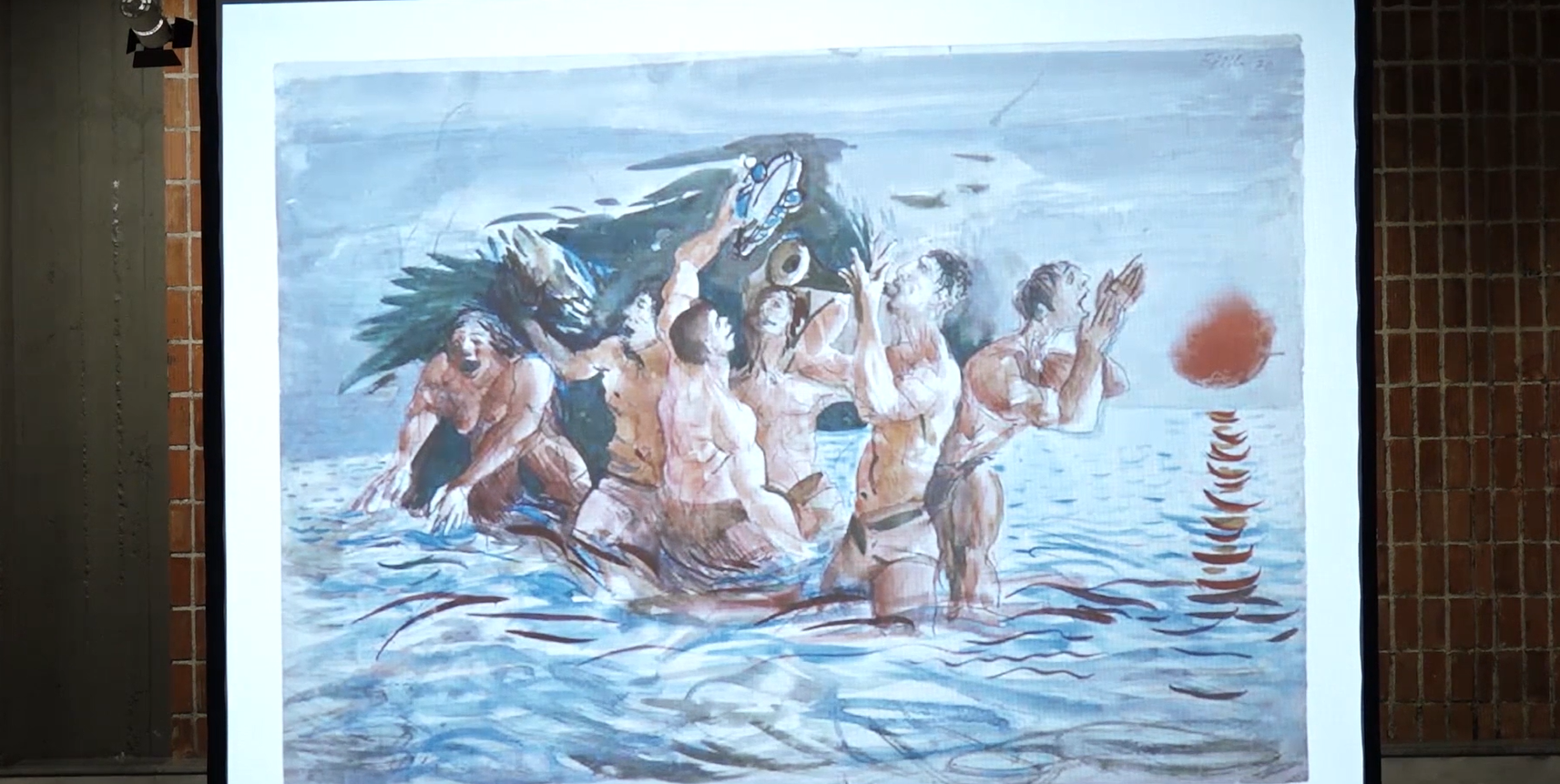
And this is another explosion, a wonderful scene that I experienced, we were at a wedding, and at 8 o’clock in the morning after the wedding, the band decided to just go in the sea, and bathe, and swim, and play, it’s a very expressive, it’s a very strong experience. experience and seen that we could comment on this, on the intensity of overcoming boundaries and moving beyond what is expected and what should be taking place. So this border collar, if things had been different, would be something that I would have done in a much larger dimension.
Now, with respect to this, there’s not much I really can say. Rather, let me move away from fighting and saying that going back and looking back at my progress, I realized that my professional progress, my artistic evolution, was strange in the sense that I was a student of a school that focused on realism, naturalism, relationship between man and life, man and his surroundings. I feel nowadays that this is an aspect that should not be overlooked, that should not be ignored, and that should not be pushed under the carpet.
We can choose any means, abstract paintings, photography, or when we’re discussing painting, and this is my own personal point of view, but it could serve as food for thought or something that we could discuss later on, I feel that a work of art is a work of art and is precious all by itself, and we should realize that and understand that this dimension is fundamental. We should not just stick to the academic understanding of creation, civilization, that has to do more about skill than it has to do with inspiration. We tend to forget that there are demands by our times, raised by society.
I’ve also worked with photography, and using photography as a means, I tried to create a new tone, a new shade, and I think that it’s perfectly okay and not at all bad. When a painter is so intense in his creation, we need to understand that. What is it they’re trying to convey? They’re trying to convey a piece of life, a piece of life that they want to make eternal, to make it override time.
I don’t think that we should ignore that. I know that I’ve taken up quite a lot of our time, and I do not want to speak forever. I’m just trying to interpret my works the way I see them.
To me, it’s akin to a rebirth or a resurrection, going back to these works and interpreting them. But I also wanted to be as clear as possible with respect to socialistic realism and the demands that the socialistic regime placed on artistic creation at the time. And I want to convey that there was a human dimension to it, that I went through looking through a different lens.
And this is how I decided to portray reality as I saw it at the time. We saw a pregnant woman, we saw people gathered together, and this is summer vacations in Kumara, in the south of Albania. Whenever we went on holiday, there was a white ship that would, at 7.30 each morning, would cross the horizon, each and every single day.
And we had even calculated how often it would cross the horizon. It went from one side to the other every seven minutes. And we would see that boat, and we would tell ourselves, if only we were there, if only we were journeying, if only we were travelling.
Let’s not forget that we didn’t have the right to go abroad. I boarded an airplane for the first time in my life when I was 30, and I was the fortunate one, because there were so many of my fellow men that had never really boarded anything. And this tourist boat was very, very important to us.
[This post is part of the experimental radio show called A Curriculum of Imposters: Here & Now, There & Then, On & On that reflects on the creation, production & reception of the exhibition documenta 14 within ongoing learning contexts at a public land-grab university]