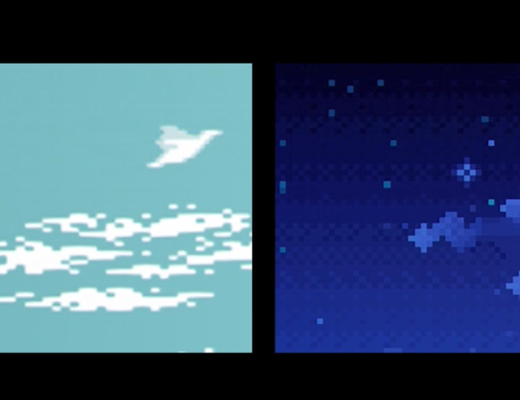
In Pythagoras’ speech in the 15th and final book of Ovid’s Metamorphoses, the vegetarian philosopher of rebirth tells the tale of the phoenix bird (Met. 15. 392-407). una est, quae reparet seque ipsa reseminet, ales: Assyrii phoenica vocant; non fruge neque herbis, sed turis lacrimis et suco vivit amomi. haec ubi quinque suae conplevit saecula […]

On hearing the news of the travel restrictions on passengers carrying large electronic devices in their carry-on luggage from 8 Muslim-majority countries, for some reason I was reminded of an obscure curatorial intervention in the Musée d’Art Moderne de la Ville de Paris.  Between the years of 1993-2003 the then director Suzanne Pagé worked with […]

Recently I have been thinking about the Forum as a model for an exhibition – not only the Roman Forum, but also the Imperial Fora and even Domitian’s palace complex. What would it mean for an audience to encounter performative artworks in the way ancient Romans encountered speeches at the Rostra, ambassadors at the Graecostasis […]

Today at the Modern Institute in Glasgow, William E. Jones opened a new exhibition of his new film work Fall Into Ruin as well as a selection of photographs. The film, which I was lucky enough to see here in Columbus while the artist was editing it, explores his encounter with Alexander Iolas, the Greek […]

I have been reading the Ralph Lemon and Triple Canopy volume On Value, which contains this brief piece by Nari Ward on his work Ultra. I was intrigued by the way that Ward invokes the curious case of Robert Rauschenberg’s 1959 work Canyon (which was gifted to MoMA on account of the fact that it […]

Beyond my recent interest in contemporary ‘conceptual’ dance as a reaction to my back/hip trouble (in that ‘holy’ place!), I have undertaken these investigations for another reason: to place the work of Tino Sehgal in some kind of broader, critical context. (Something similar happened to me several years ago when I wanted to understand Cy […]

When the Eleatics denied motion, Diogenes, as everyone knows, came forward as an opponent. He literally did come forward, because he did not say a word but merely paced back and forth a few times, thereby assuming that he had sufficiently refuted them. – Kierkegaard Repetition p. 131.