Back in December 2019, in the immediate aftermath of Jeffery Epstein’s death following his arrest on new sex trafficking charges brought by prosecutors in New York, I gave a public reading of my book No Philosopher King: An Everyday Guide to Art and Life under Trump (AC Books) in the WexStore at the Wexner Center for the Arts. You can listen to the reading below.
For the reading, I produced a handout for the audience which I also made into a blogpost.
The handout and the blogpost comprised a series of footnotes which I wrote in an imagined, collective voice called ‘Echo & the Sirens’, the final footnote, made reference to the immediate context of the exhibition HERE highlighting the work of Ann Hamilton, Jenny Holzer and Maya Lin in the center’s galleries.
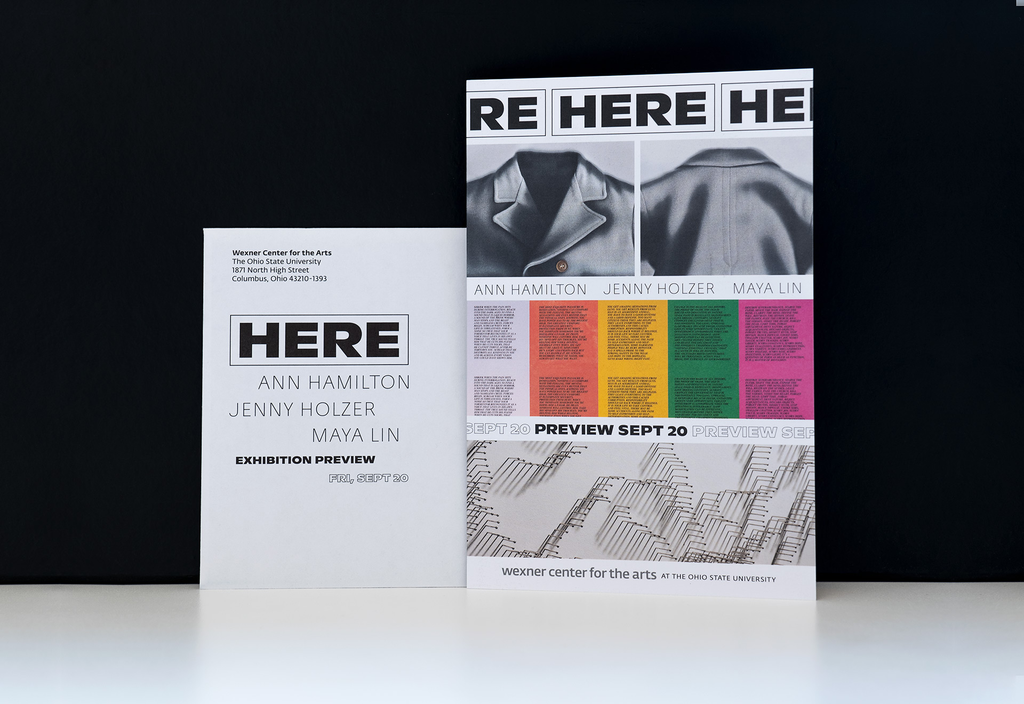
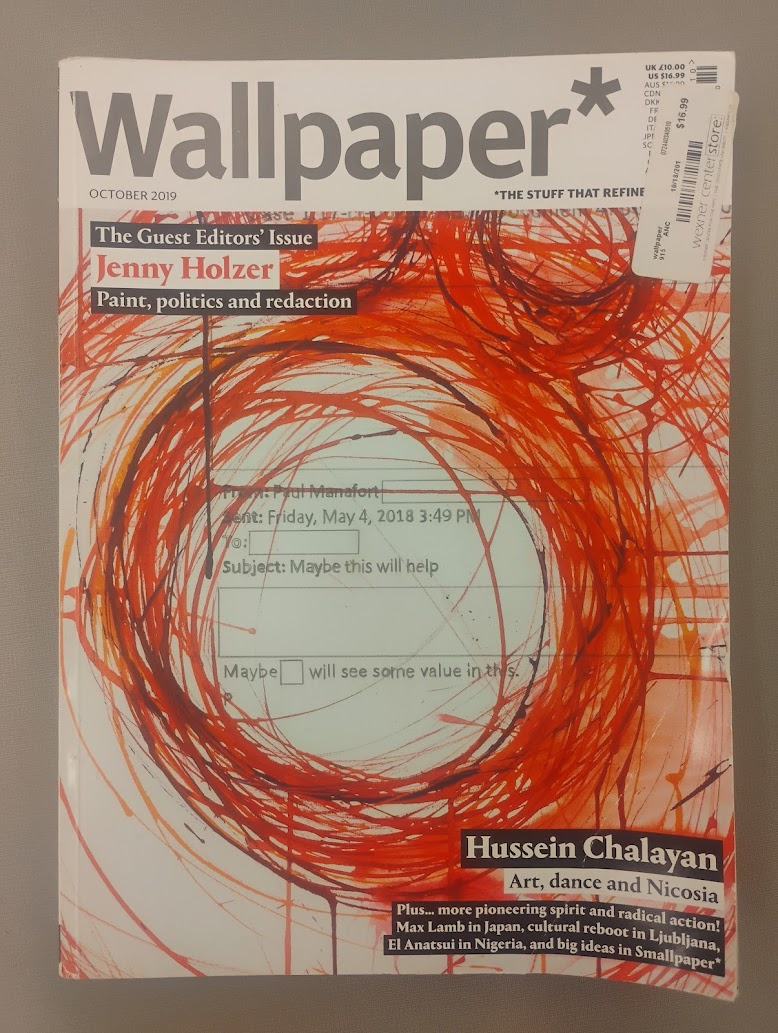
I was inspired by Jenny Holzer’s insert for Wallpaper* magazine when she was guest editor in October 2019, in which she created watercolors out of pages of Epstein’s address book, including the numerous addresses of Les Wexner, who bankrolled Epstein as well as the Wexner Center for the Arts, named after his father.
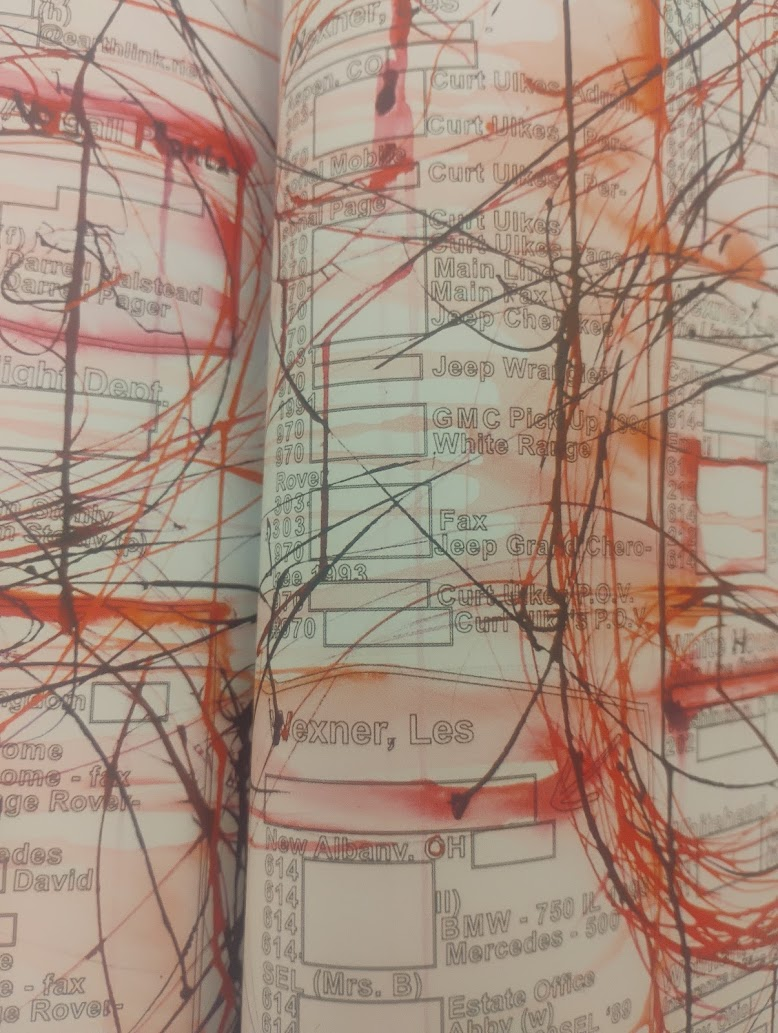
Here is the footnote in full:
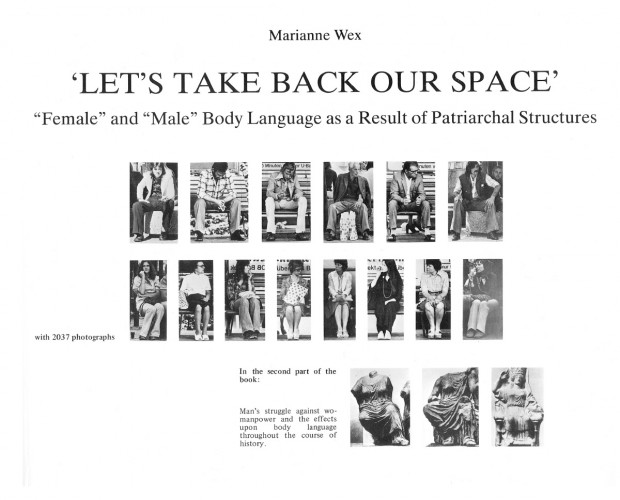
[6] But we are here (HERE) to say something; even if we are whispering it in the small print, and, for once, we are in agreement with what Mr Minus has to say (is he still speaking? Oh boy he can go on!). He once told us that the problem with the Rodin exhibition at the CMA wasn’t just the celebration of a sexual predator sculptor legitimized by misogynistic myths, but the hidden, structural violence of the Cantor Foundation refusing to change the offending title and wall-text. Sure, cultural philanthropy sounds rosy, but not when mixed with cover-ups of sexual violence, historical and contemporary. Here (HERE) you can guess we’re not just talking about the Cantor Foundation, but a moneyman closer to home. As the Wex celebrates the work of our sisters – Ann Hamilton, Jenny Holzer and Maya Lin, it continues to operate as an institution under the Cyclopean banner of a man and his name; a man who, for all his Picassos, generosity and, now, public embarrassment, bank-rolled and protected a sexual predator of the first order. So, we the footnotes, Echo and the Sirens, join forces with Minus Plato in hereby calling for the renaming of the Wex after German artist Marianne Wex, author of the iconoclastic 1979 photobook Let’s Take Back Our Space: “Female” and “Male” Body Language as a Result of Patriarchal Structures (she was brought up in an authoritarian household – her father was a card-carrying Nazi!). Perhaps the first exhibition in the new Wex could include the work of choreographer and artist Alexandra Bachzetsis (also part of d14)? We could call it Fake Muse, Fake Siren, Fake Lover! We could even reconvene the School of Gesture from the d14 aneducation program in Athens here (HERE) in Columbus! This would teach us how to free all bodies and institutions from oppressive patriarchal structures. So, say it with us together, loud and proud:
“Another Wex is possible! Another We is possible!”
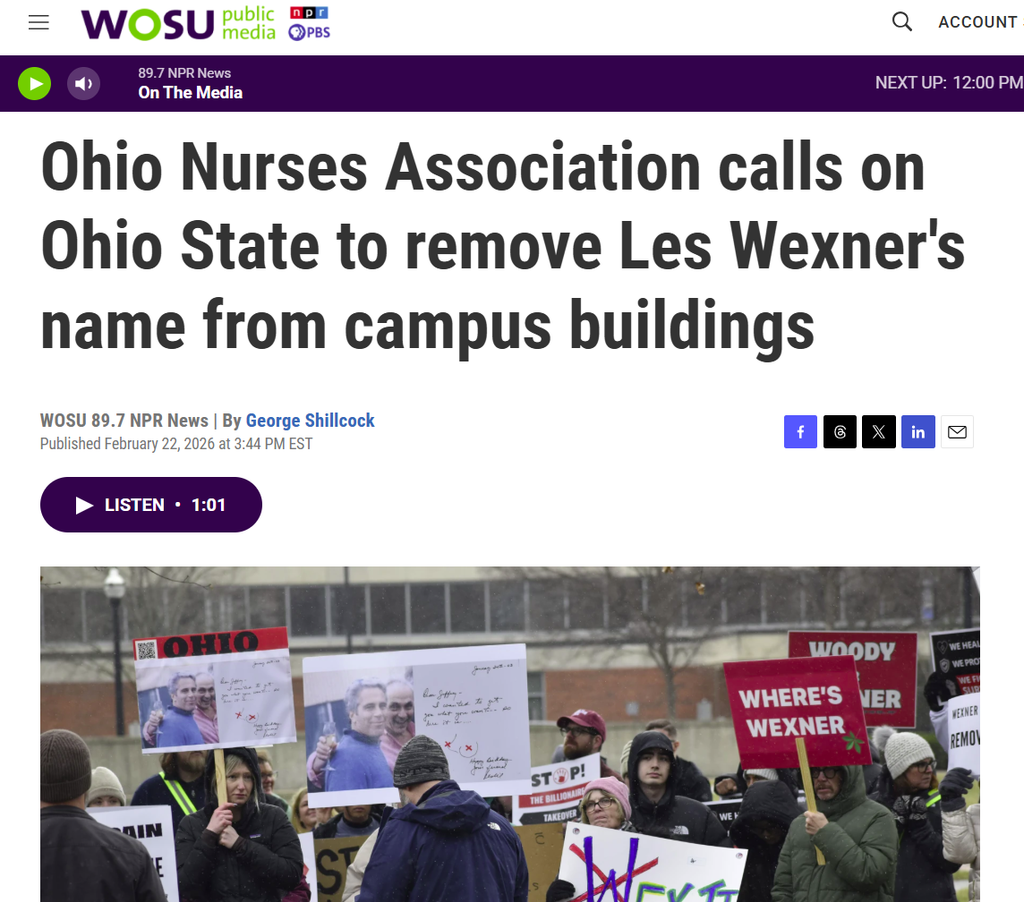
My suggested renaming of the arts center, grounded in the aneducation program at documenta 14 and the work of artist Alexandra Bachzetsis in their School of Gesture, has taken on an urgency in recent days with the shameful news that the upper administration at Ohio State University has dismissed the findings of a university committee after receiving over 500 requests that the school consider removing Wexner’s name from three prominent buildings on campus: the arts center, the medical center and its football complex.
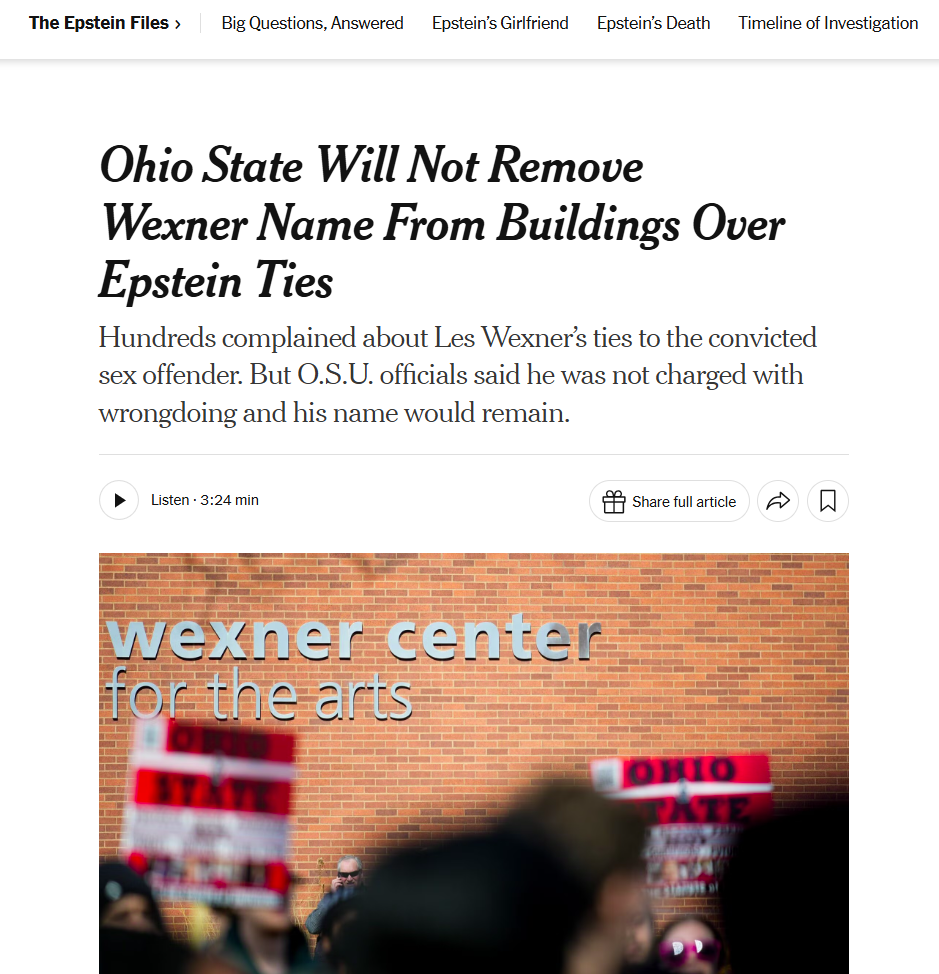
Since the announcement, there has been a surge in online disbelief about this tone-deaf decision by the university that not only fails to heed the ample evidence of Wexner’s complicity with Epstein’s crimes, but also ignores the voices of survivors of abuse, as well as the beleaguered staff working in buildings with his name casting a shadow over their work.
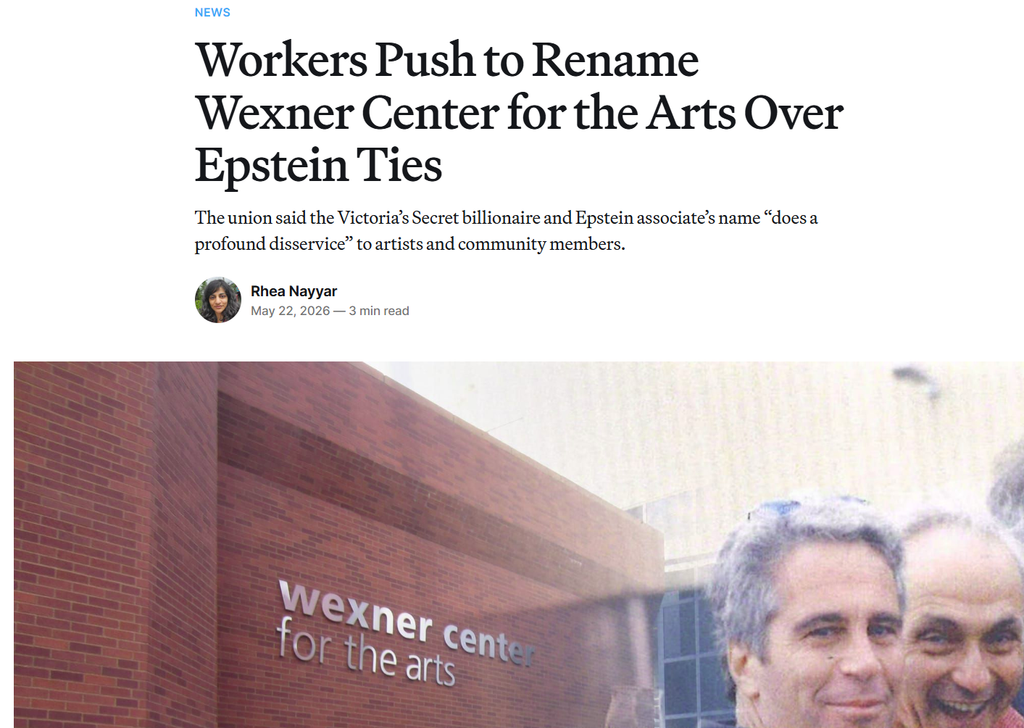
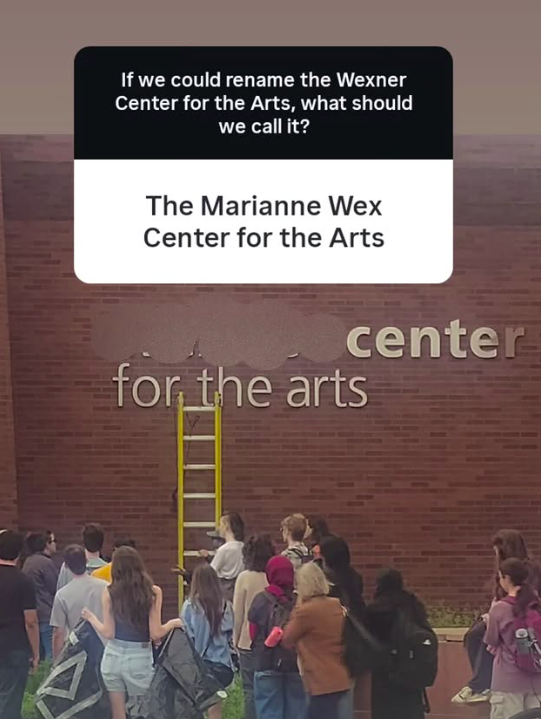
The refusal of the university administration to act has not, however, stopped community members from their own renaming initiatives. For example, see the Instagram account called ‘Save the Wex Film Video Theater’, created in response to a devastating plan to demolish the iconic Film/Video Theater at the center, first reported by the local, independent news outlet Matter News.
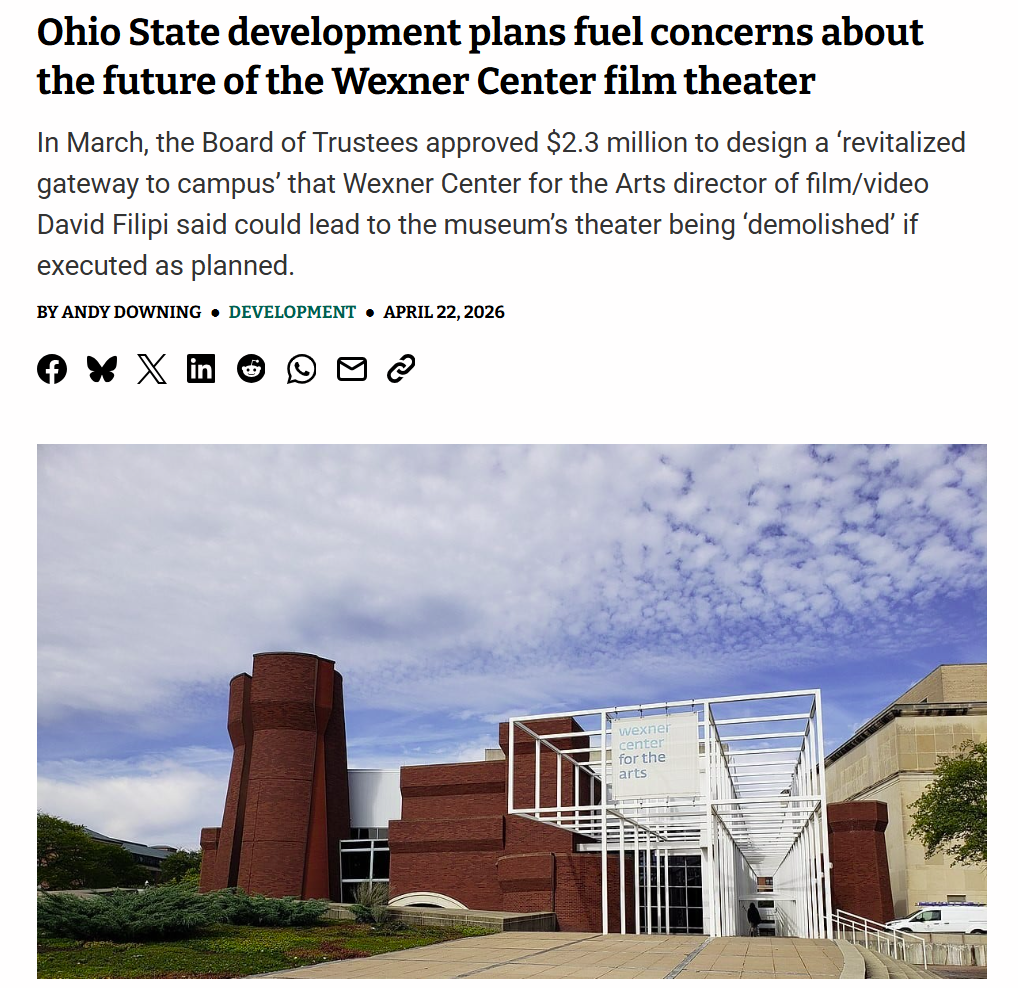
In a recent post, they have made the connection between the planned demolition and the university administration’s shutting down of the renaming process.

The account also started a series of ‘questions’ stories, polling options for the renaming.
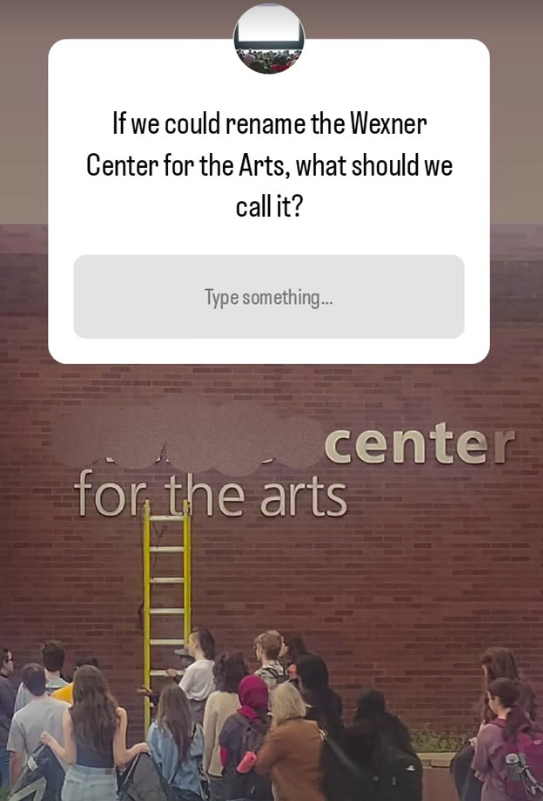
On seeing this call, I wanted to reiterate my suggestion, from my 2019 post, to rename the center after Marianne Wex, not only a convenient name to maintain the center’s branding which already uses the shortened form of ‘The Wex’, but also timely given the current exhibition of Wex’s iconic photobook work Let Us Take Back Our Space at MoMA.
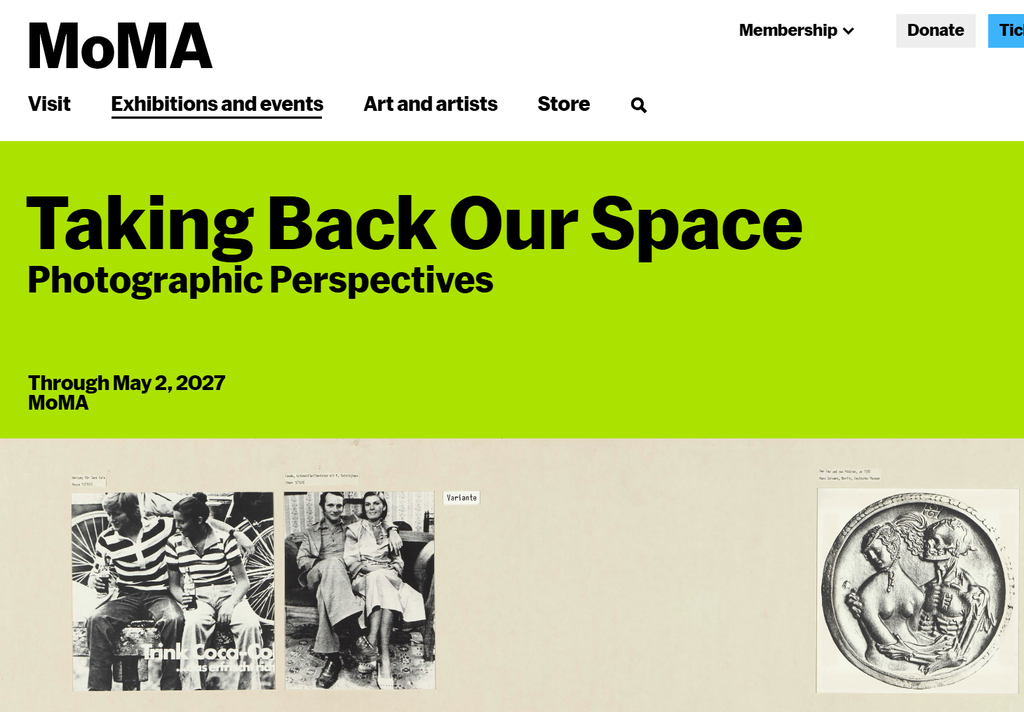
Here is the description of the exhibition:
In 1972, the West German artist Marianne Wex began a visual survey of gendered body language. She picked up her camera and covertly photographed people in her hometown of Hamburg, observing how men and women were socialized to inhabit space differently. She also rephotographed pictures from advertisements, newspapers, magazines, film, television, and art catalogues, pasting the images onto boards organized into categories like “standing arms,” “sitting legs,” “lying down,” and “possessive holds.” For Wex, “these mostly unconscious actions” were “essential parts of our communication.”
Presenting a robust selection, the exhibition also brings Wex’s watershed feminist project into dialogue with contemporary artists Nona Faustine, Martine Gutierrez, K8 Hardy, Yuki Kihara, Joiri Minaya, Paulina Olowska, and Wendy Red Star. These contemporary practitioners reappraise the relationship of bodies to public space from Black, queer, and 21st-century feminist perspectives. In this context, the notion of “taking back space” resonates as a reclamation of physical territory, historical narratives, and the ability to represent oneself.
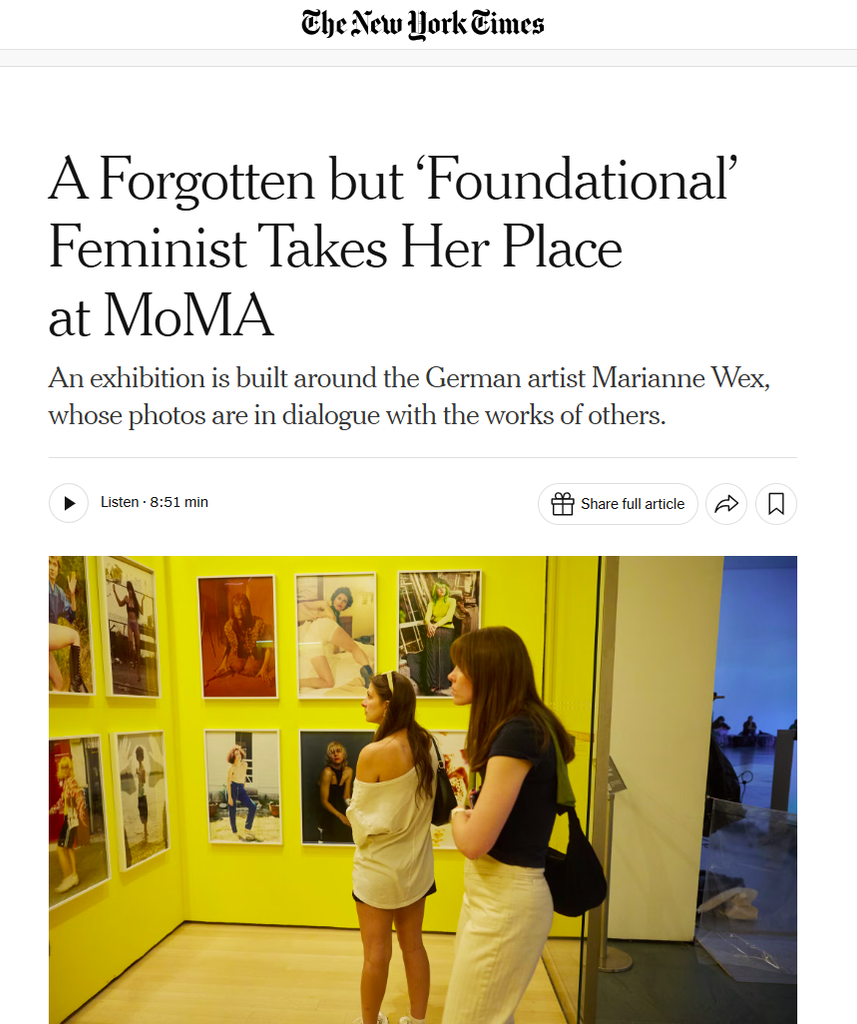
Writing about the exhibition in the New York Times, Rebecca L. Davis notes the significance of the timing of this renewed attention on Wex’s work through the perspective of lead curator Roxana Marcoci:
Here in Ohio, I think we need to take heart from Wex’s work to reclaim space from those who feel entitled to it, whether that is wealthy donors who enable series abusers or university leaders who fail to listen to their communities.
Another Wex is still possible – let’s build it together!