In this eighth episode of Radio Show Me What Democracy Looks Like , we engage with topics of memory, otherness and violence in the visual culture of democracy, Erna Rosenstein’s Night (1993) and vital strategies against forgetting.
Memory, otherness & violence in democratic visual culture
Erna Rosenstein Night (1993)
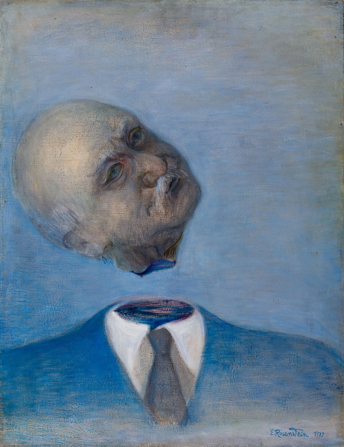
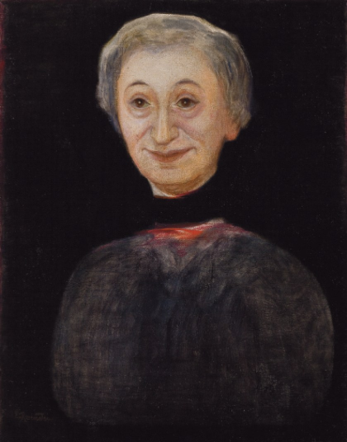
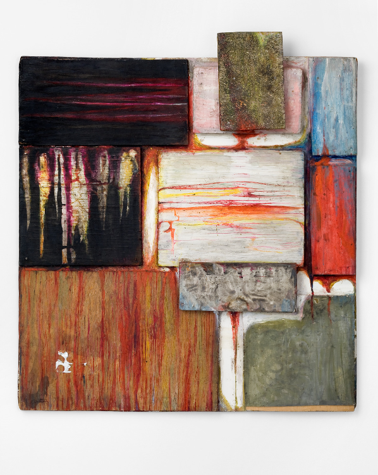
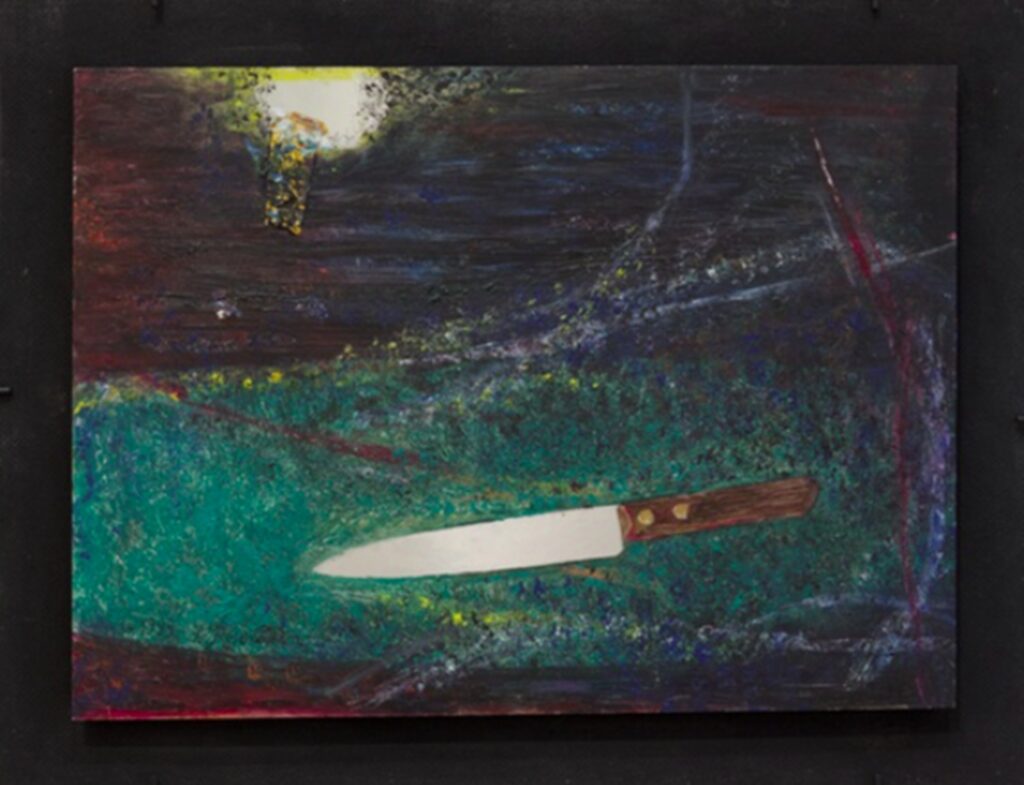
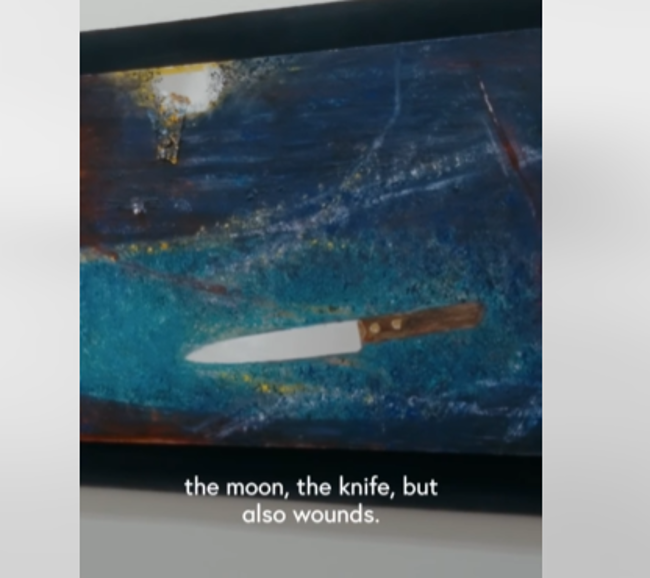
An act of violence casts an ominous shadow in Erna Rosenstein’s Night (Noc) . The knife and the bright green path in the middle of the painting reference the brutal murder of her parents in the forest outside Ogridniki, Poland, as the family fled Nazi-occupied Warsaw in 1942. Rosenstein escaped, but the Holocaust would preoccupy her work for decades to come. In her paintings and collages, she often depicted her parents (sometimes decapitated), using bright hues of red to signify blood or, in this instance, the knife and the moonlit path that constitute the memory of that fateful night. Night (Noc) shows the artist’s collage-like approach to painting, as she creates striking chiaroscuro effects by contrasting dark colors with the exposed aluminum surface. Other aspects of her work visible here are the hyperrealist figurative elements—an attitude to form and deformation that shows Rosenstein’s affinity with the legacy of Surrealism—and the transformation of mundane objects (in this case, the knife) into iconic subject matter. Through her own work and as part of the avant garde Kraków Group, Rosenstein remains a key figure in postwar Eastern European Art.
Memory, Otherness and Violence in the Summer of 2016 in Exergue on documenta 14
Footnote on vital strategies against forgetting
Different commemorative art and memorials for the dead have been installed, some by political parties, the ones most virulently hit by the Junta, the Chilean Communist Party, for example, and the MIR, the Revolutionary Left Movement. And there’s this periphery of small graves, grave sites. Near the exit, a large sign with the name of the dead reminds us that el olvido está lleno de memoria , forgetting is full of memory. And, of course, the ever-hopeful nunca más. So, this is a reflection on part one. After my first visit to Villagrimaldi with Pedro Mata, a friend told me he does the same visit the same way every time. Stands in the same spot, recounts the same events, cries at the memorial wall. Some commentators find this odd, as if the routine makes the emotion suspect. Are the tears for real every time? […] Trauma, like performance, is known by the nature of its repeats, never for the first time. We speak of trauma only when the event cannot be processed and produces the characteristic aftershocks. Trauma, like performance, is always experienced in the present, here and now.For a survivor of torture, going back to the torture camp is a deliberate reentry into a painful memory path. Memory, as we know, is linked to place, one clear reason why that place needs not only to exist, but to be marked for the violence to be acknowledged. These tours, then, give him a way of keeping his past alive, yet under control.
VIDEO