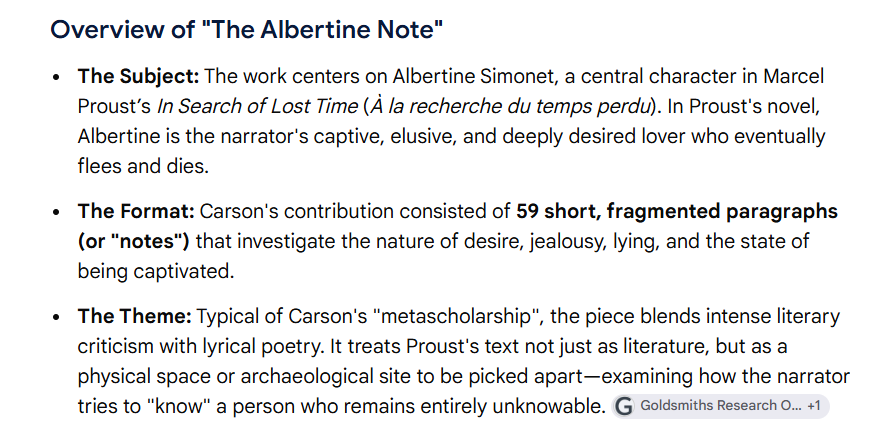
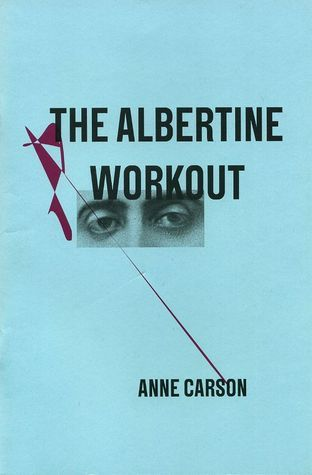
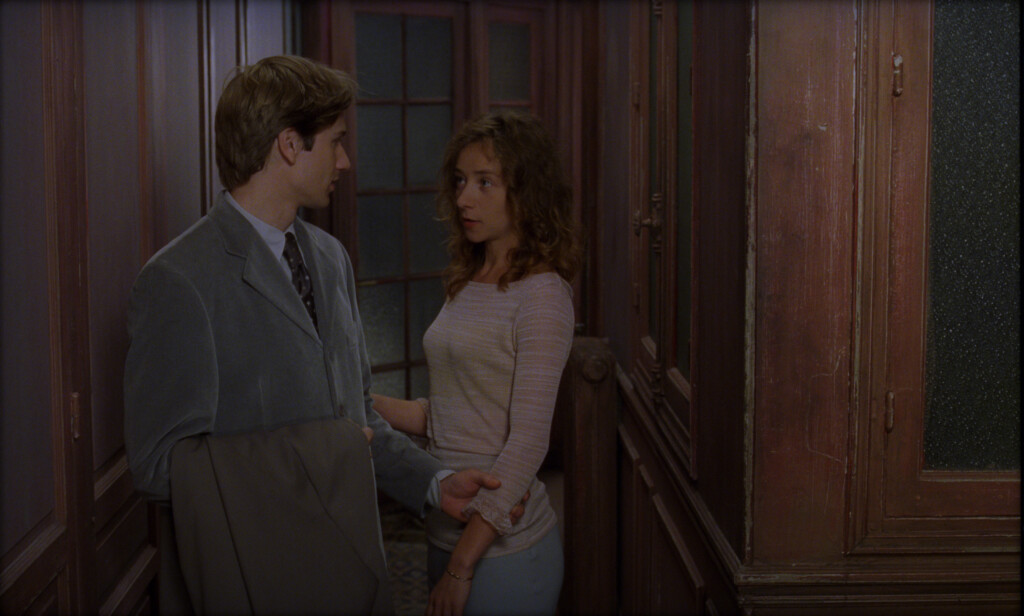
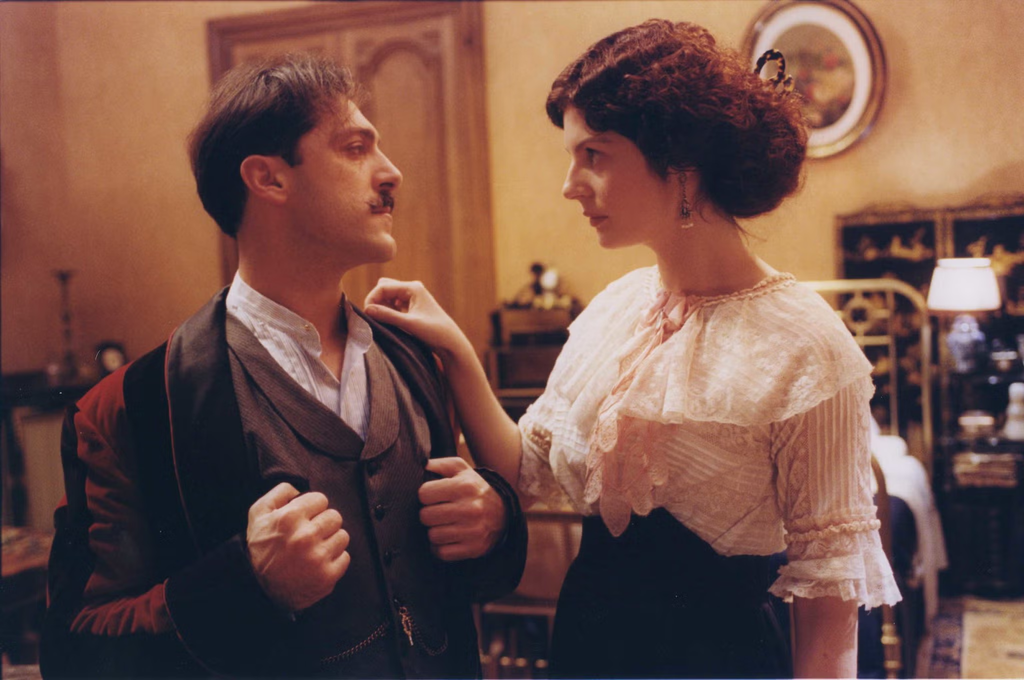
34. Marcel gradually manages to separate Albertine from all her friends, whom he regards as evil influences.
35. Marcel never says the word ‘lesbian’ to Albertine. He says ‘the kind of woman I object to’.
36. Albertine denies she knows any such women. Marcel assumes she is lying.
37. At first Albertine has no individuality, indeed Marcel cannot distinguish her from her girlfriends or remember their names or decide which to pursue. They form a frieze in his mind, pushing their bicycles across the beach with the blue waves breaking behind them.
38. This pictorial multiplicity of Albertine evolves gradually into a plastic and moral multiplicity. Albertine is not a solid object. She is unknowable. When he brings his face close to hers to kiss she is ten different Albertines in succession.
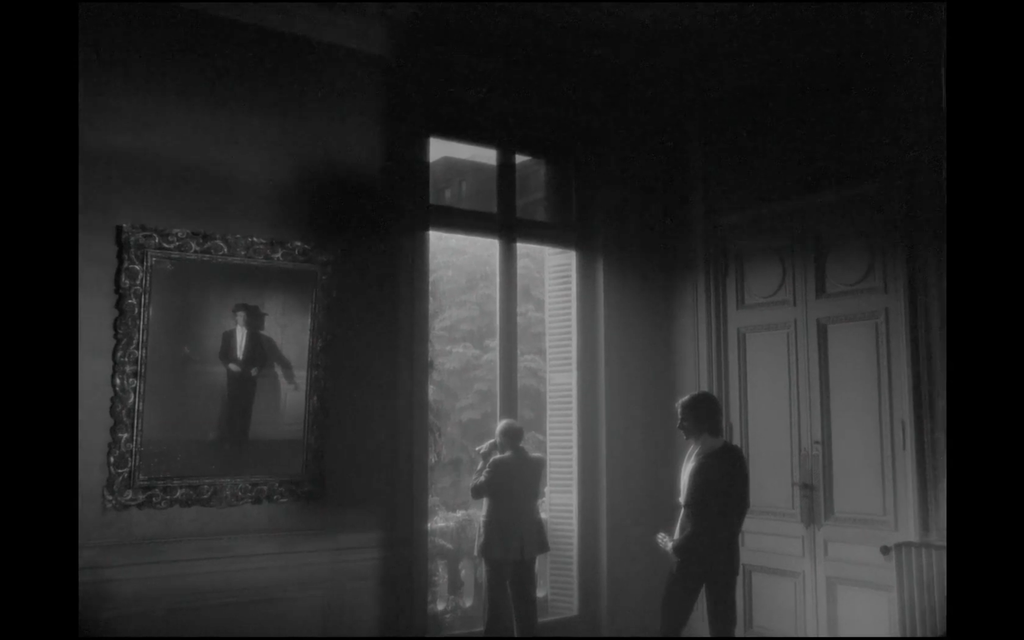
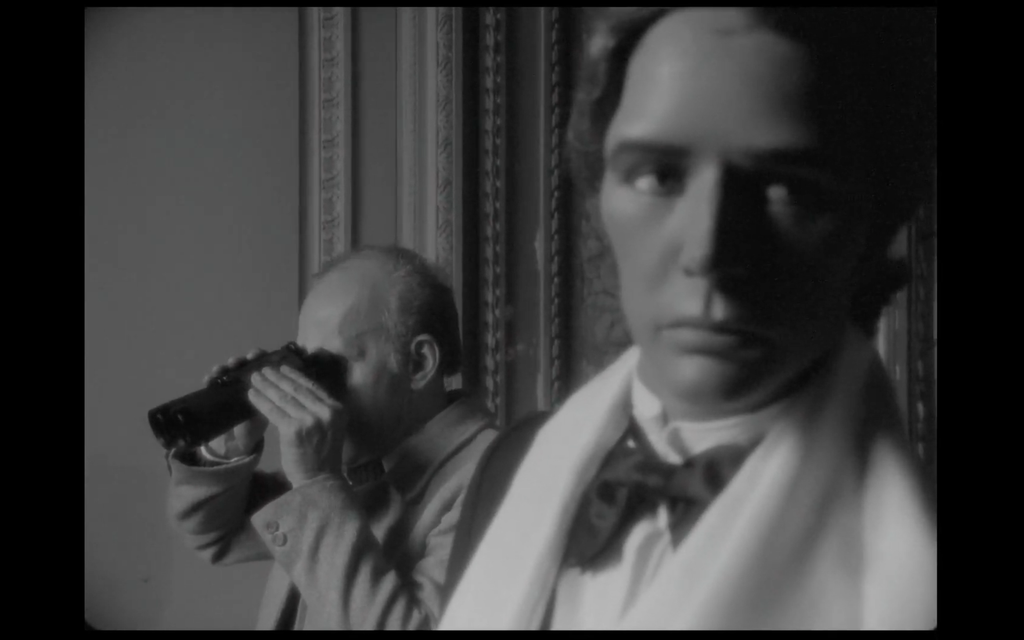
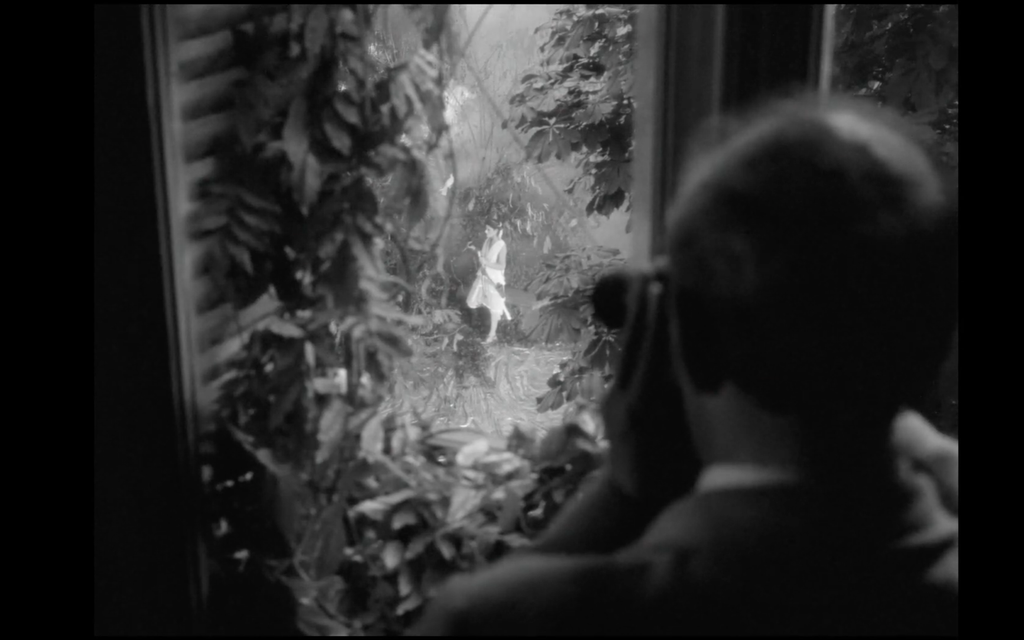
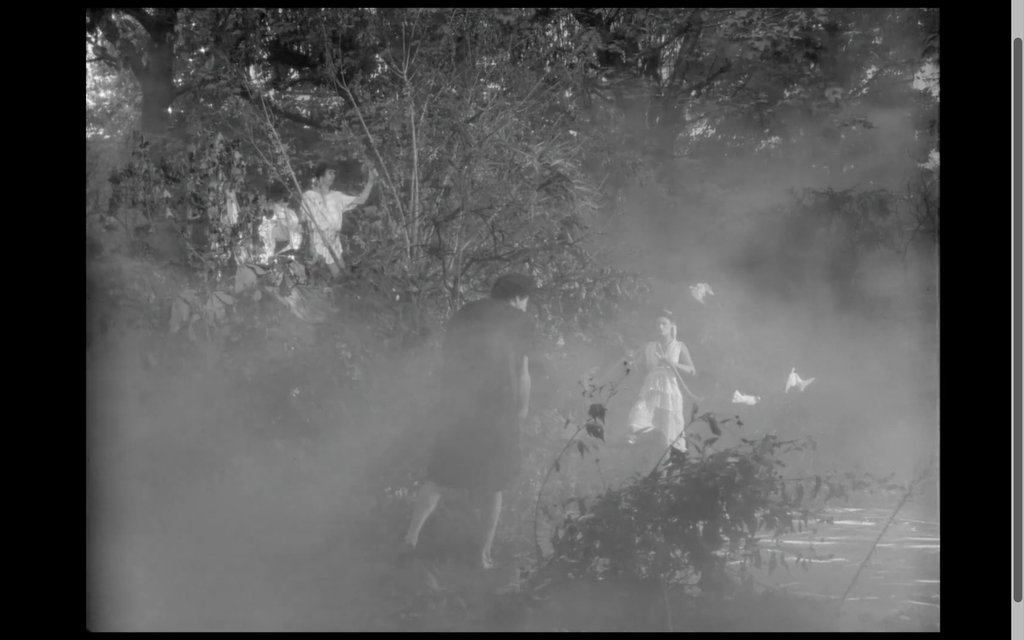
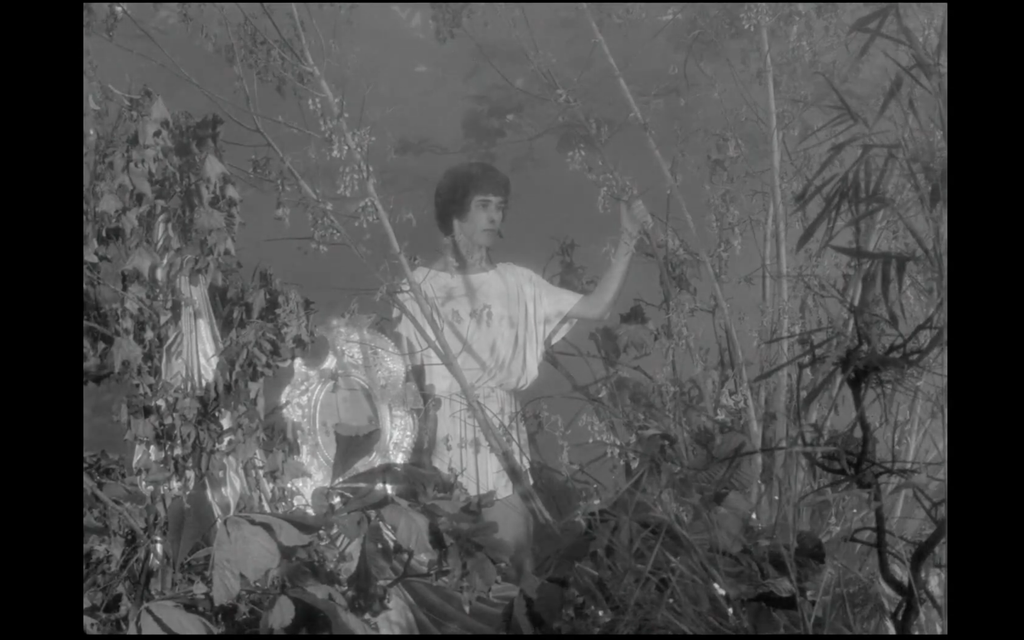
Mutings, Mutations, a Hypothesis & a Gasp. Thinking (out loud, in Athens) about art and institutions focuses on the affective reality of work within the arts. Alkisti Efthymiou discusses her long-running involvement with large-scale cultural institutions in Greece. As a woman, she explores the voices that remain muted and the ones that start mutating in the local arts ecosystem. Expressing the inherent tensions between feminist practices and institutionalized work methods, she talks about exhaustion and identity crisis, and potential lines of flight. Her reflections on the Athenian artistic scene are channeled through The Hypothesis of the Stolen Painting (1978) by Chilean filmmaker Raúl Ruiz.
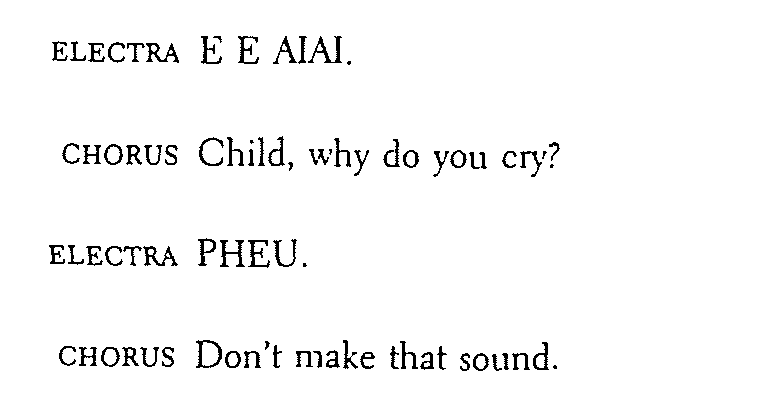
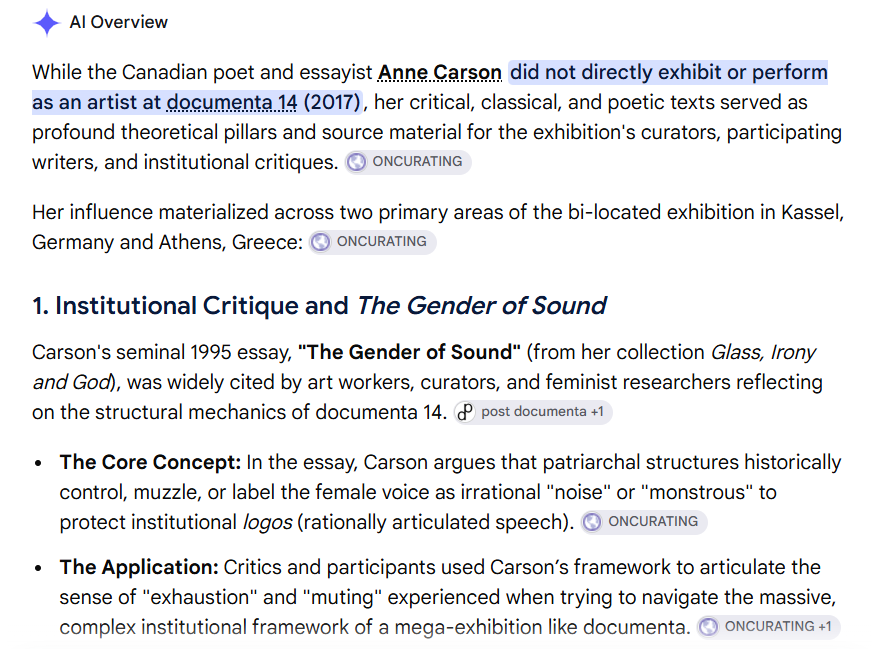
As Anne Carson stresses in her essay “The Gender of Sound,” “Very few women in public life do not worry that their voices are too high or too light or too shrill to command respect.”[2] She gives the example of Margaret Thatcher, who trained for years with a vocal coach to make her voice sound more like those of the other Honourable Members of Parliament and still earned the nickname “Attila the Hen.”
In 2018, long after Carol Gilligan published her seminal study In a Different Voice,[3] masculinities and femininities continue to articulate themselves distinctively. Soundness of mind, moderation, self-control, and temperance in the use of sound and language are all virtues that produce “the voice of reason,” which is still the dominant (and masculine) form of public expression that organizes patriarchal thinking on ethical and emotional matters. Whatever utterance strays off from these virtues is considered less worthy of listening to. To quote Carson again, “What differentiates man from beast, male from female, civilization from wilderness is the use of rationally articulated speech: logos.”[4]
Education itself as a department struggled to legitimize its existence in an institution that has been so traditionally focused on exhibition production. We did invest in programming that attempted to break with rigid hierarchies, but these same hierarchies struck us quite hard when negotiating salaries or justifying our budget. I felt like a tiny cogwheel in a huge machine that would continue to work with or without me, that would continue to work with or without all the marginalized, oppressed voices that the exhibition tried to put forward.
In several official documenta 14 texts, there were mentions of “a multiplicity of voices,” “a chorus of voices,” even “hearing voices.” And I tried to understand why I still felt muted. I missed the voices of friends, of feminists and queers working in Greece, who were rarely invited to take part in the public program, even though its claims were directly referencing them.
One of the main concerns of documenta 14 was how to articulate the unsaid and unheard, how to communicate the silenced, the muted. What space is there, however, within an institution that is run by logos, to break the rational articulation of sound?
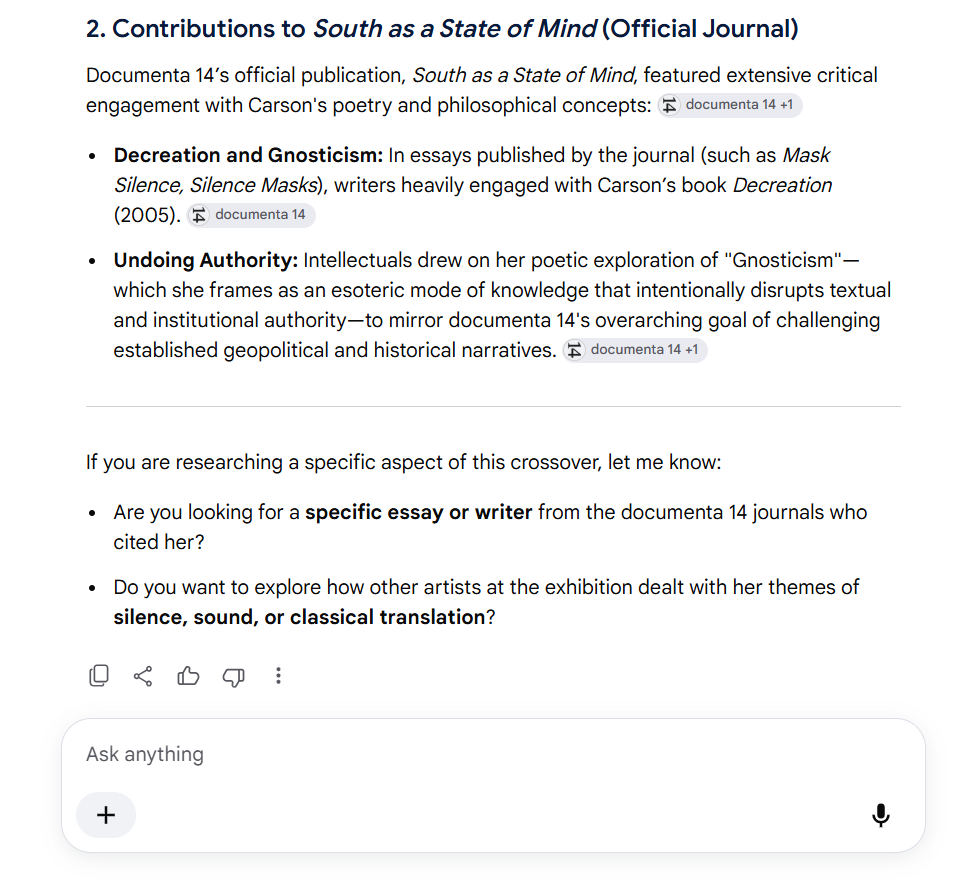
This post was written on October 18, 2026, the day that Anne Carson won the 2026 Nobel Prize for Literature. When I was a classicist, I was lucky enough to meet and collaborate with Carson, specifically in staging her PINPLAY and BRACKO during the exhibition Elliott Hundley: Bacchae at the Wexner Center for the Arts on October 28, 2011. Carson was also supportive in the early years of my work with contemporary artists. I often feel like if more classicists would take the lead of Carson’s engaged, expansive and urgent returns to ancient Mediterranean cultures and its literatures, the discipline would have been one I would have wanted to remain in. Now, as I continue to learn with and from documenta 14 as an art educator, the experience, work and voice of Alkisti Efthymiou in critiquing the exhibition from within and from the perspective of the aneducation public education program, is a reminder for me to remain vigilant and not celebrate the 2017 exhibition as a muthos making it something it was not able to become beyond the logos. Yet in all of this, voice matters more and more as generative AI claims to speak for us.