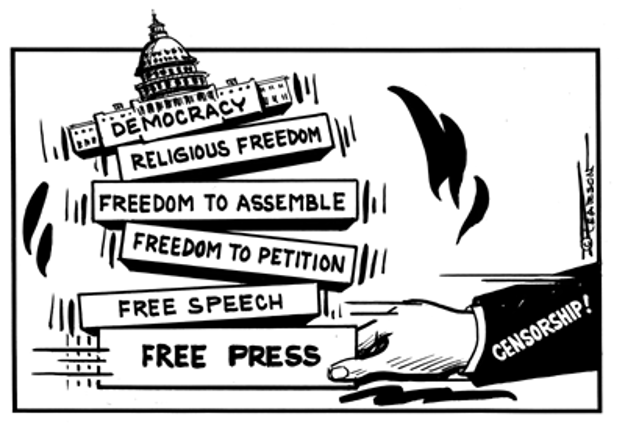
In this fifth episode of Radio Show Me What Democracy Looks Like, we consider representations of censorship, freedom of the press and book bans in the visual culture of democracy, Marta Minujín The Parthenon of Books (1983/2017) and two competing forms of freedom.
Censorship, Freedom of the Press, and Book Bans in Democratic Visual Culture
Marta Minujín The Parthenon of Books (1983/2017)
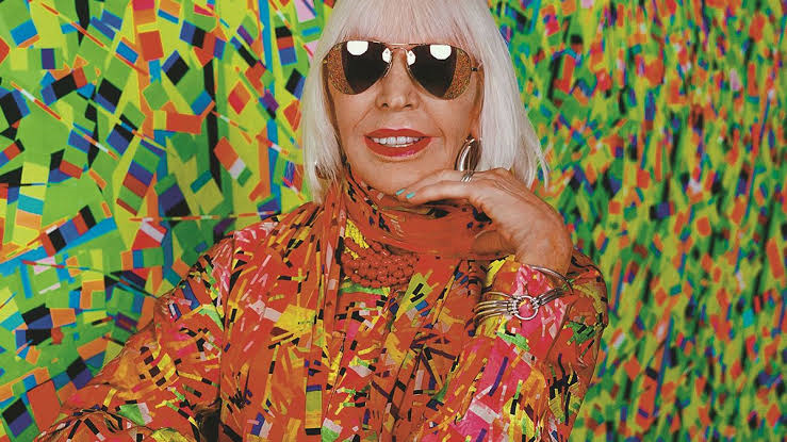
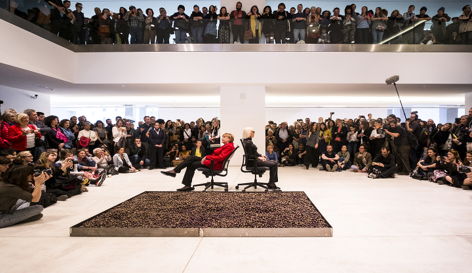
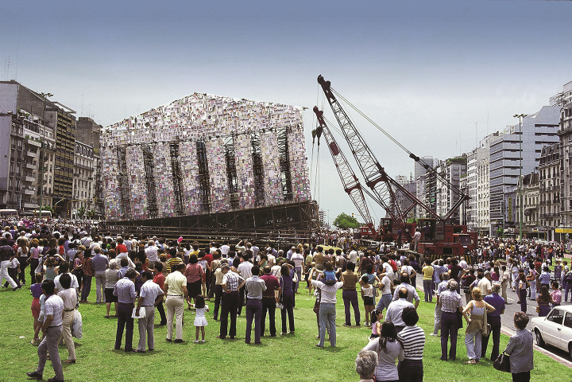

In 1983, the Argentinian artist Marta Minujín adopted the Parthenon as an aesthetic and political archetype of democracy, the latter corrupted in Argentina by a ruling “national Catholic” dictatorship at the time of the fall of the military junta. As part of her La Caída de los mitos universales (The Fall of Universal Myths), a series of large-scale public art projects, the artist’s aim was to collectively erect a replica of the Greek temple from books that had been banned during the military dictatorship. In presenting The Parthenon of Books as part of documenta 14 in Kassel, in 2017, Minujín did not merely intend to stage a retrospective exhibition of a work dating from 1983. Global power relations have changed since then: they no longer feature communist or right-wing military juntas, but rather those of a capitalist junta, one of the facets of which is embodied by the International Monetary Fund. For the artist to intervene in Kassel, Germany, meant updating her practice of subverting questions of originality by using the same archetype (in this case, the Parthenon, as she had already done on several occasions) in the context of a major international exhibition in 2017. As a collective exhibition, documenta 14 not only chose to address the stereotypes of ancient and contemporary Greece (the birth of Western democracy, the current financial and refugee crises) from the vantage point of the German city of Kassel, but as a curatorial project that upheld its aim by inhabiting Athens as its site of reference. In the critical exchange between Kassel and Athens, Germany and Greece, northern and southern Europe, Minujín chose to restage a presentation of the Greek Parthenon on the Friedrichsplatz, the city’s main square, at the center of a unified Germany transformed every five years into a “documenta Stadt”.
- Pierre Bal-Blanc
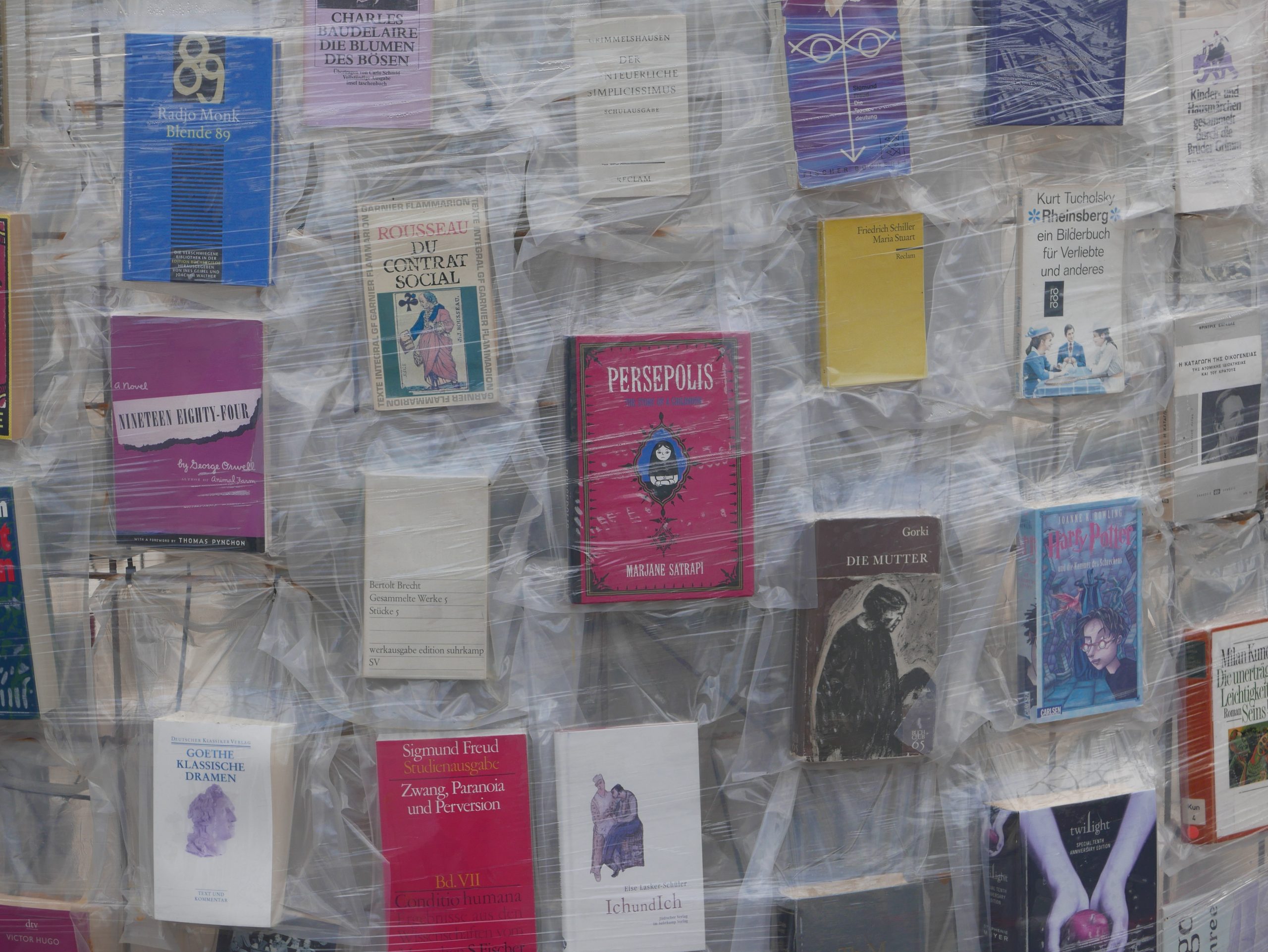
The Worth of Books: Marta Minujín for the Material Matters Library, Aneducation
The Cost of Books: Marta Minujín in Exergue on documenta 14
Musical Outro: Billie Eilish TV (2022)
Footnote on Two Forms of Freedom
There is a difference between a practice of freedom that allows to invent, to inaugurate models that are models of management, of relationship to yourself and to others, to yourself and to the common that you build with others, that you don’t find common, that
you build it. That’s what we do today. And then this other logic, that of capitalism today, that of neoliberalism today, that demands you to be more and more efficient. How do we differentiate the two freedoms? First criterion, the simplest one, probably. In the logic of capitalism, freedom makes you your own capital. You are a homo economicus. Man or woman, you have to manage what you are. Think of students. I have students, I am a teacher. They think, if I go abroad and I learn languages, I will have more capital on my curriculum to eventually find a job. English, everyone knows it, it’s not capital anymore. So you have to learn Chinese better. Chinese and Arabic, for example. Two rare languages. And there you have capital to put on your market, on the market. You become something like a value on the market. You transform yourself into merchandise. This freedom, of course, we don’t want it. The difference between the two freedoms, first, is that the freedom of resistance, of reaffirmation, the freedom of subjectivation in the Foucauldian sense, is not quantifiable in economic terms. You cannot translate it into economic value. And I think that this refusal to quantify what you are is an absolutely fundamental element. The second criterion is this freedom of subjectivation that concerns you in your relationship with the invention, in your relationship with yourself, but also in
your relationship with others. And there is never a relationship with yourself without a relationship with others. Never. This freedom that you have and that you practice is not only not quantifiable, but it increases your ability to act.
- Judith Revel