On December 30th 2023, I visited artist David Harding at his home in Glasgow. Among the things we spoke about, he told me the story of the poem called ‘The Last Lauch’ by poet and classicist Douglas Young. As town artist in Glenrothes from 1968 to 1978, Harding used some of the pavement and road building budgets of the civil engineers to cast three poems into paving slabs, which were then placed at bus stops and telephone kiosks around the town. Harding typed the poems out and sent them to each of the poets to ask for their permission. Sydney Goodsir Smith and Hugh MacDiarmid both immediately replied and Harding would later bring another slab with his poem to MacDiarmid’s house near Biggar and his wife Valda instructed him to set it in the ground at their doorstep, without delay! But Harding read some weeks after sending Young the letter, that the poet and classicist had died. He also read in Wilfred Taylor’s a piece in ‘The Scotsman’, which described the funeral service in North Carolina, where Young had been teaching Classics, that the poem that Harding had selected, ‘The Last Lauch’ was also read.
Without Young’s permission, Harding realized that he wasn’t able to proceed with the paving slab engraved with Young’s poem, until he received a note from Young’s wife, Clara. She enclosed a letter that Young had written to him the night before he died. He wrote that he was delighted that Harding should use the poem and in a piece of ironic and knowing humor, he wrote, “They cast Pindar’s odes in tablets of gold and hung them in the temples, so why not have the Fifers walk over mine!”. Young typed out the way he preferred the poem laid out and, as David notes on his blog, importantly, spelled.
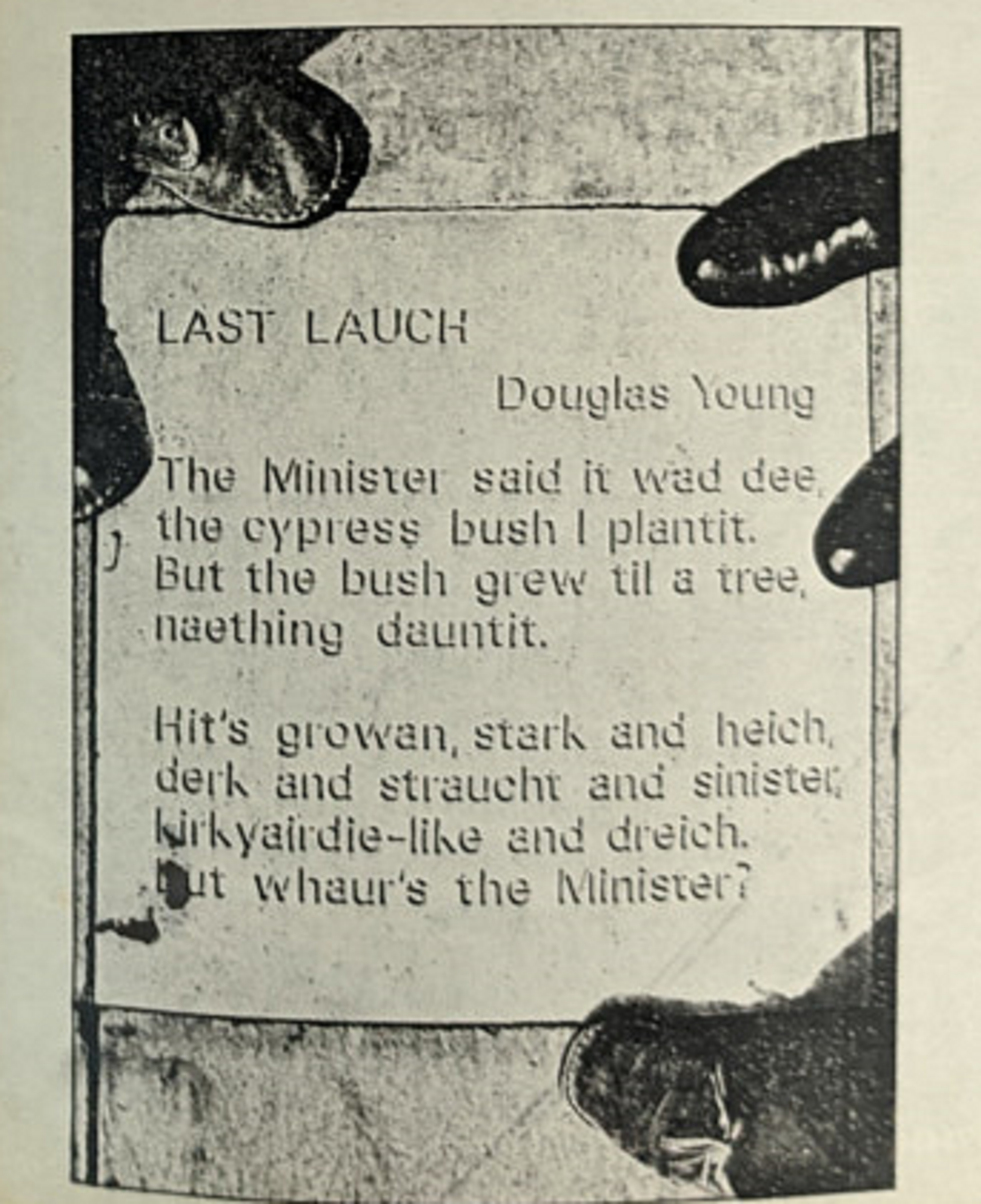
This is the story Harding told me and while you can read this and so many other stories on his blog, there is no substitute to listening to David tell you a story, his voice will remain ringing in the ears of all who knew him, as will the way he spoke with a smile in his eyes. Luckily, we have a recording of David reading Young’s poem as well as the other two poems, here.
While I didn’t know David long, I did get a glimpse into what it would have meant to have spent extended amounts of time in his company. When I think of all the students who he taught, whether in Nigeria, Devon or Glasgow, I have no doubt, amidst the grief they must feel now on the news of his passing, they also have myriad memories of the tales he told and the lessons he shared in art and life.
I haven’t yet seen David’s paving slab with Young’s poem in Glenrothes. The year before meeting David, my son, Eneko, and I went in search of his work there – without a map that he’d later share with me.
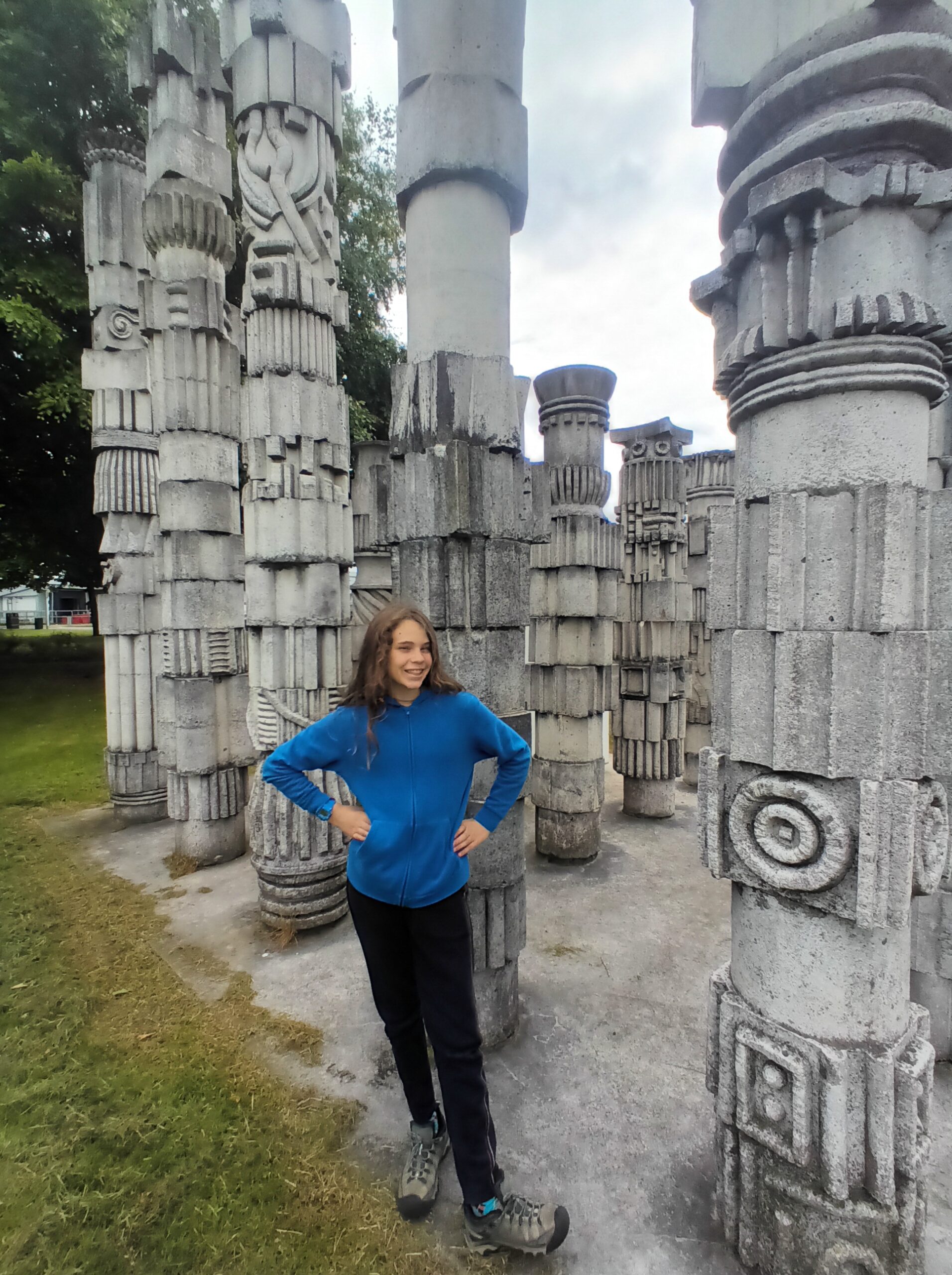
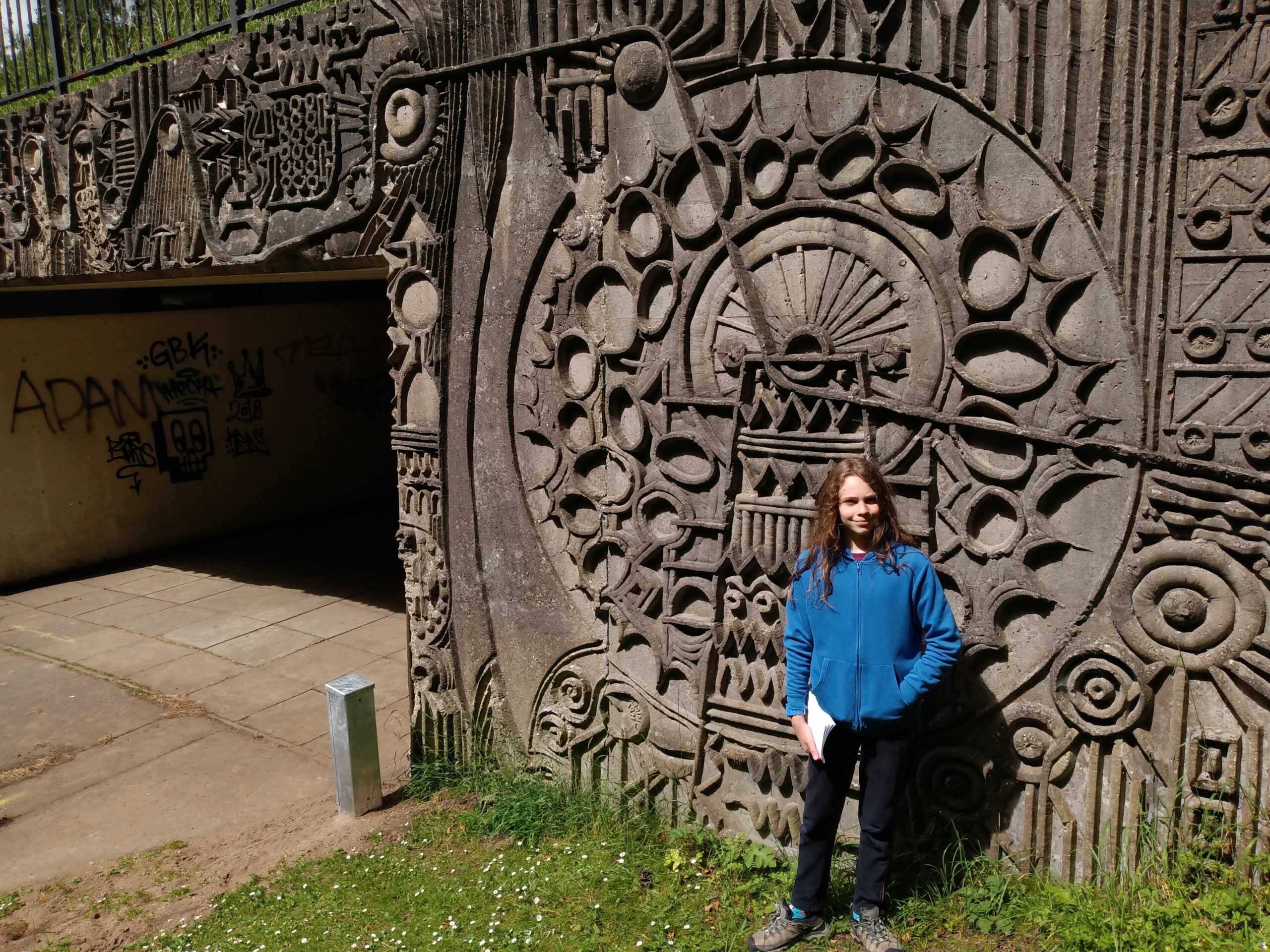
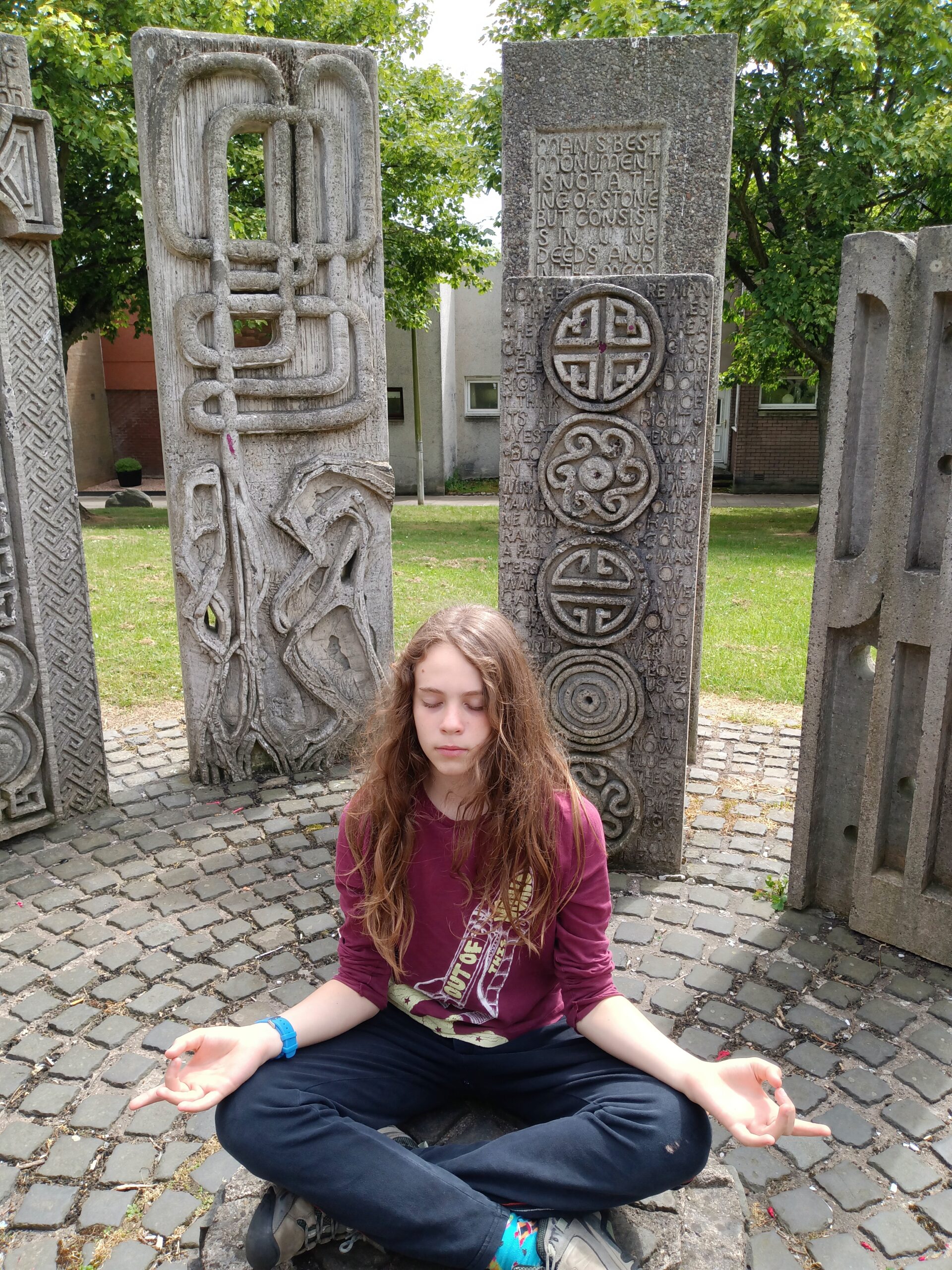
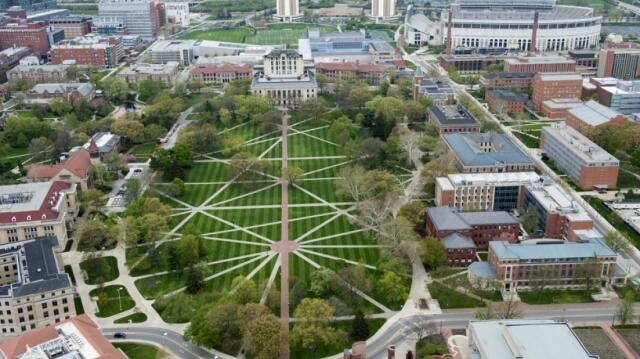
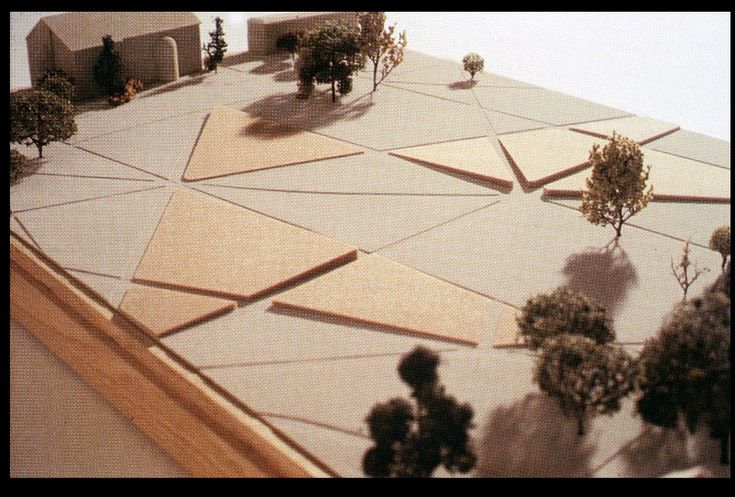
While Eneko and I found some of David’s works, we failed to find the one I was most interested in finding: a poetry path with a poem by Alan Bold, build over a desire line – the impromptu paths made by people in a community, creating a shortcut to save time in their busy lives. As someone who teaches arts education at Ohio State University in Columbus, Ohio, desire lines are part of my daily life, since everyday I walk across the Oval – a green space in the heart of campus, which has intersecting pathways, originally created from the desire lines made by students. There is a famous story of the artist Robert Irwin winning a competition to create an artwork for the Oval, in which he proposed adding metalic wedges on the sides of the paths, to create an undulating effect as students and faculty walked to classes, but the then University President Gordon Gee vetoed it because he asked ‘Where is the art?’. Irwin, whose work was grounded in ideas of perception and interventions in space, felt that this response was a triumph for his work and philosophy of art!
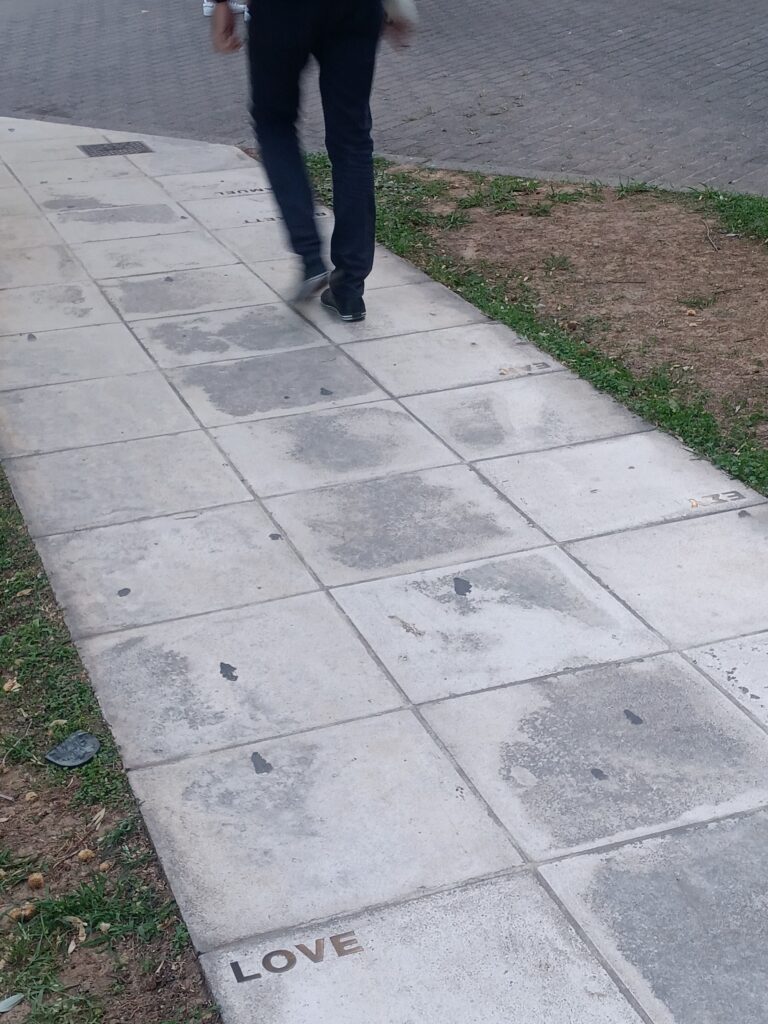
Anyway, coming from the paved desire lines of the Oval here in Ohio, I remember visiting Harding’s path in Kassel, Germany for the 2017 documenta 14 exhibition – an exhibition that changed my life, turning me from the academic field of Classics to Art Education – which he made from a desire line near the art school in the park there, with lines about love from Samuel Beckett’s ‘Cascando’. This experience had stayed with me, and only later would I see the path’s twin in Athens (a work that David told me he was much happier about than the one in Kassel), and this made me all the more want to see their older brother in Glenrothes.
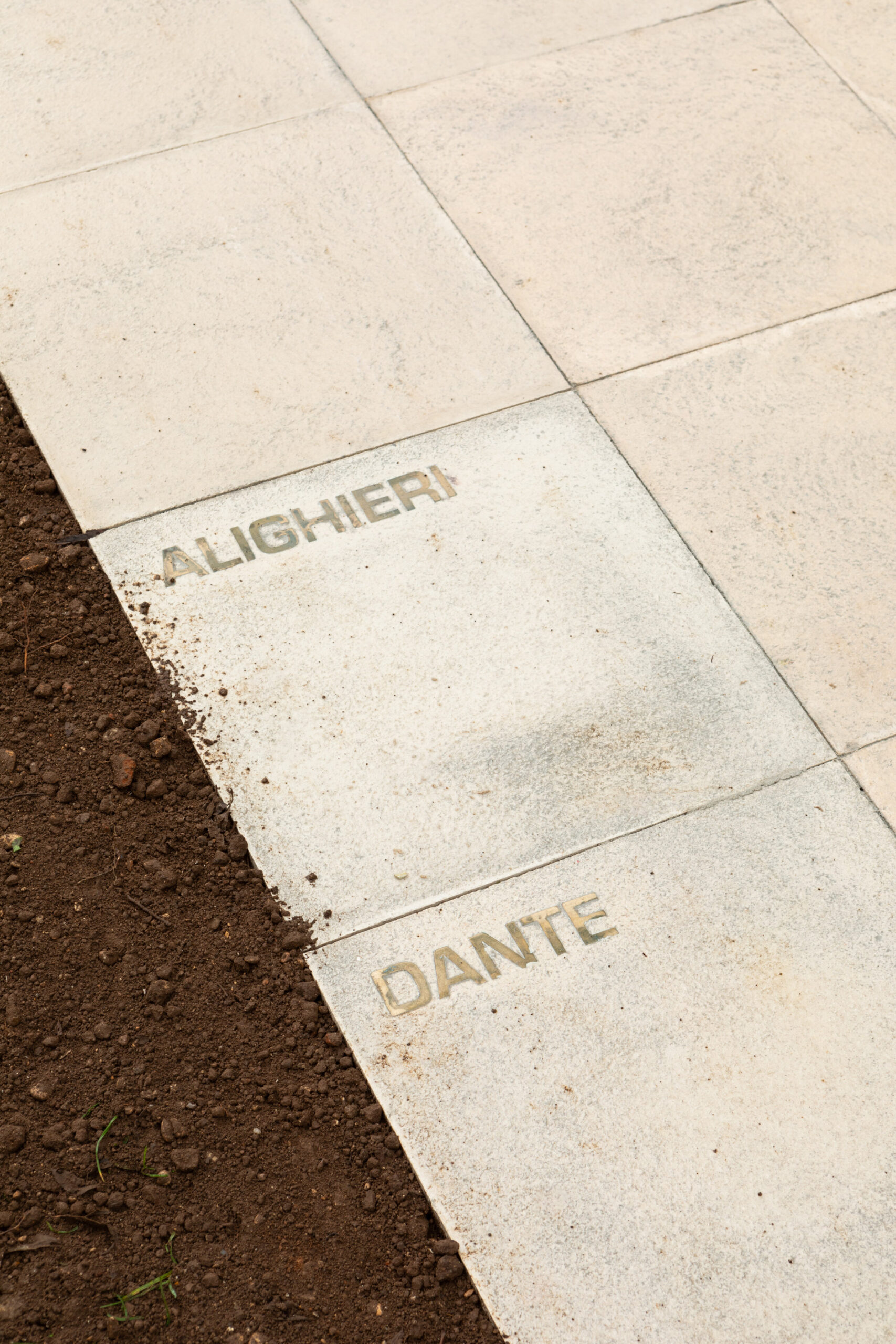
I will visit this path next time I am in Scotland and also, when next in Rome, I will walk the path David made as part of his numerous collaborations with fellow artist and educator Ross Birrell, who I have to thank for introducing me to David, and also for sharing a secret buried beneath the path in Athens. This path in Rome also focused on love, this time from a line of Dante’s.
But now, after David’s passing on Saturday, we can no longer walk these paths with him. So, if you click on the Soundcloud link above or are listening to this already, let’s come together and hear him walking it and speaking it from the past.
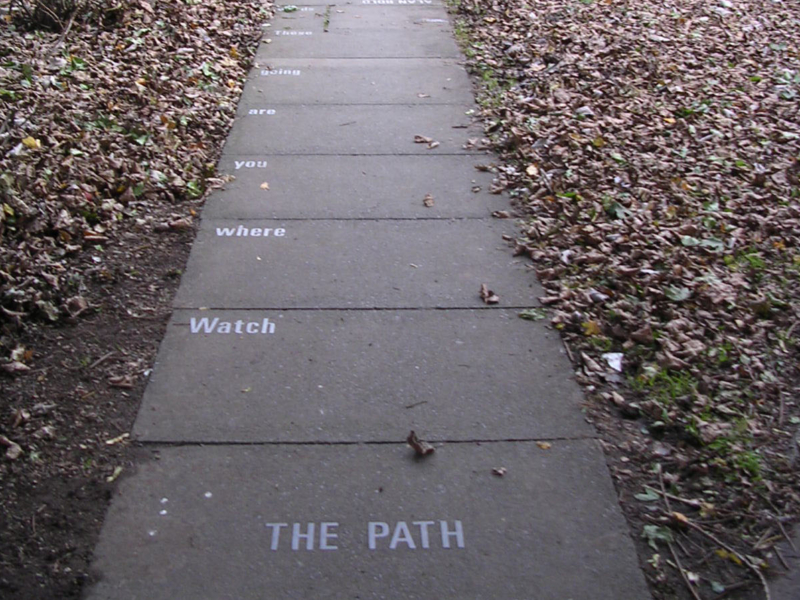
The day after speaking with David in December 2023, on New Year’s Day, I posted on Instagram the story he had shared with me, along with the following three images and the concluding text:
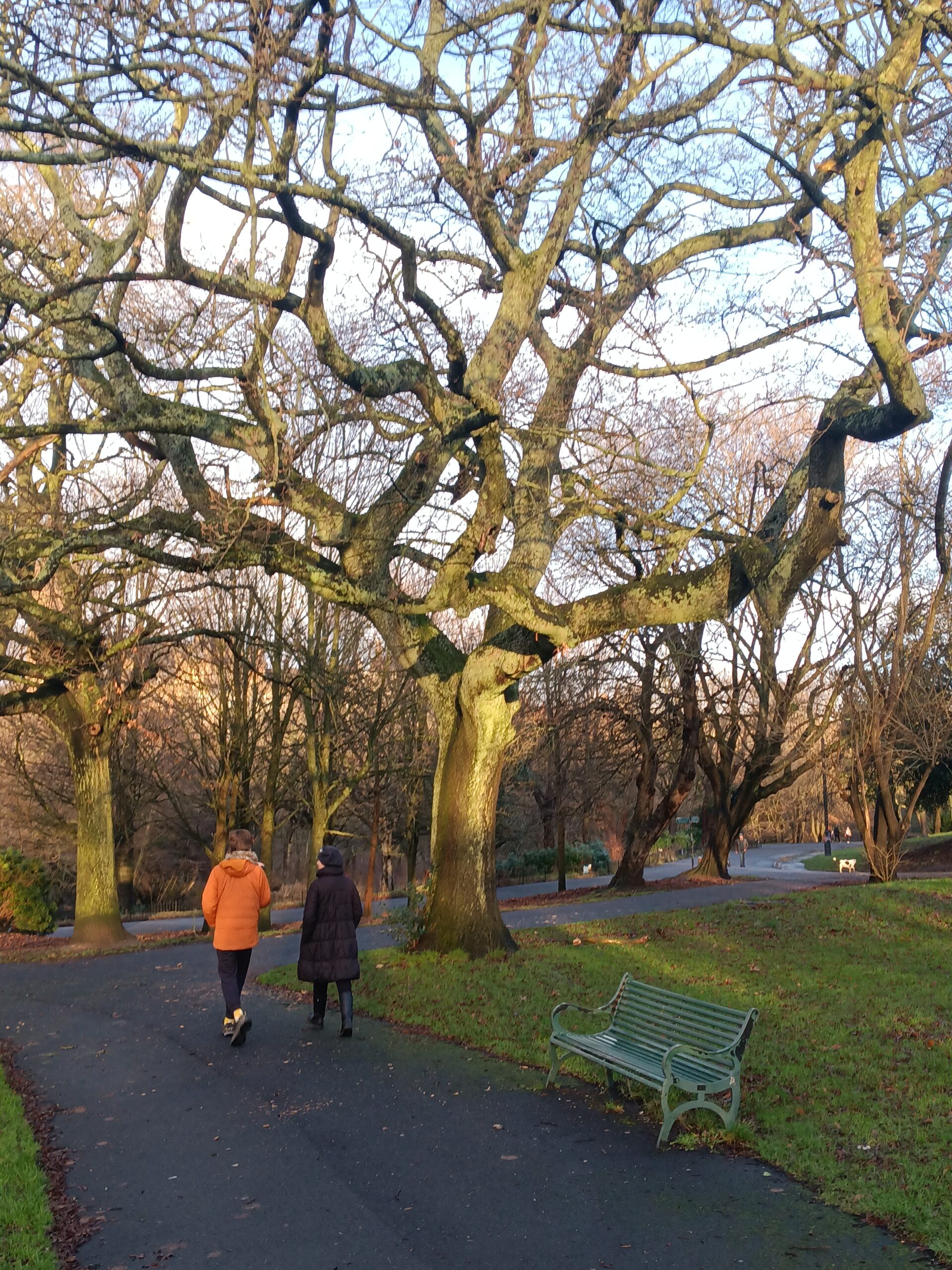
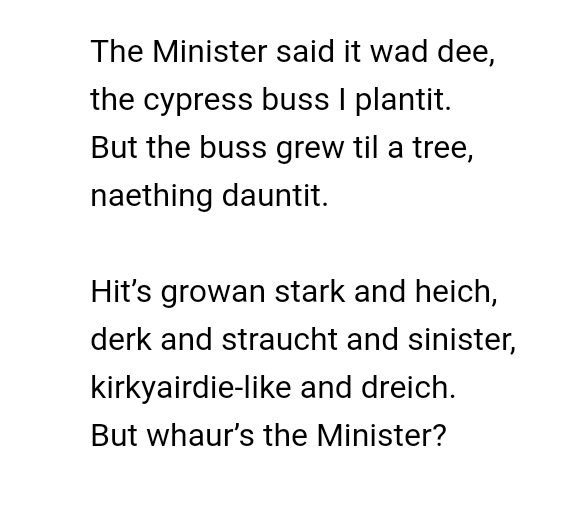
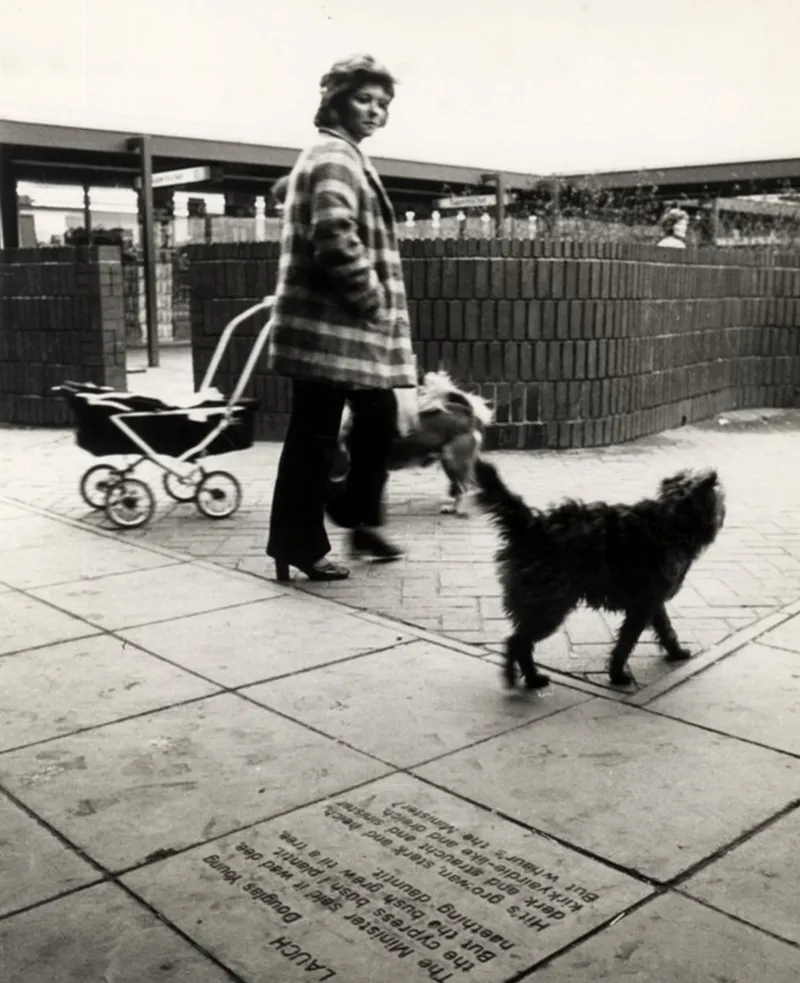
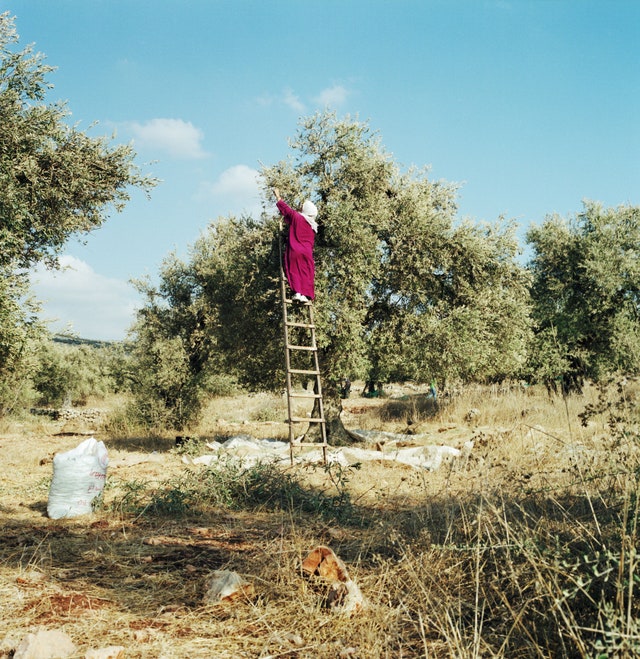
The reason I wanted to share Harding’s story today on New Year’s Eve 2023, is because the message of the young tree’s resilience in Young’s poem against the skepticism & authority of the Minister, who’s short life & trumped up power is eclipsed by the thriving tree, is one we can all learn from going into 2024. There is so much anger & violence in the world, & brutal efforts to silence & kill efforts to live full lives, especially for Palestinians, both in Gaza & the West Bank, & in the diaspora, that the lesson of the tree & it’s irresistible growth beyond human life & hostility, is key to our own flourishing. From Young’s tree in Harding’s paving slab to olive trees in Palestine, in 2024 we need to keep growing in a living solidarity, undaunted by deadly & despairing attacks, from Ministers & other regimes of power.
On sending it in an email to David and Ross, David replied
Oh, that’s lovely Richard.
Happy New Year
Let there be wisdom and peace
David
Ps bush not buss!
All those year’s later, David was still proofing Young’s poem and still playing the teacher! As artist Alec Finlay wrote in David’s memory, echoing Young’s words, as well as a touch of Horace’s exegi monumentum poem: Harding’s greatest, most enduring work is us.
We all walk in David Harding’s desire lines now, in the shade of trees in Glenrothes, Athens, Kassel, Rome, Columbus, Ohio or wherever you may be listening to or reading this. May he always remain walking by our sides, accompanying us in song, having the endlessly lasting lauch.

PS – this is the second time that I have mispoken the title of this series, calling it ‘A Curriculum of Insistence’, no doubt the concept & practice of insistence, developed by Tanya Lukin Linklater is on my mind today as I remember David Harding’s profound impact on my own work in place-based arts aneducation.