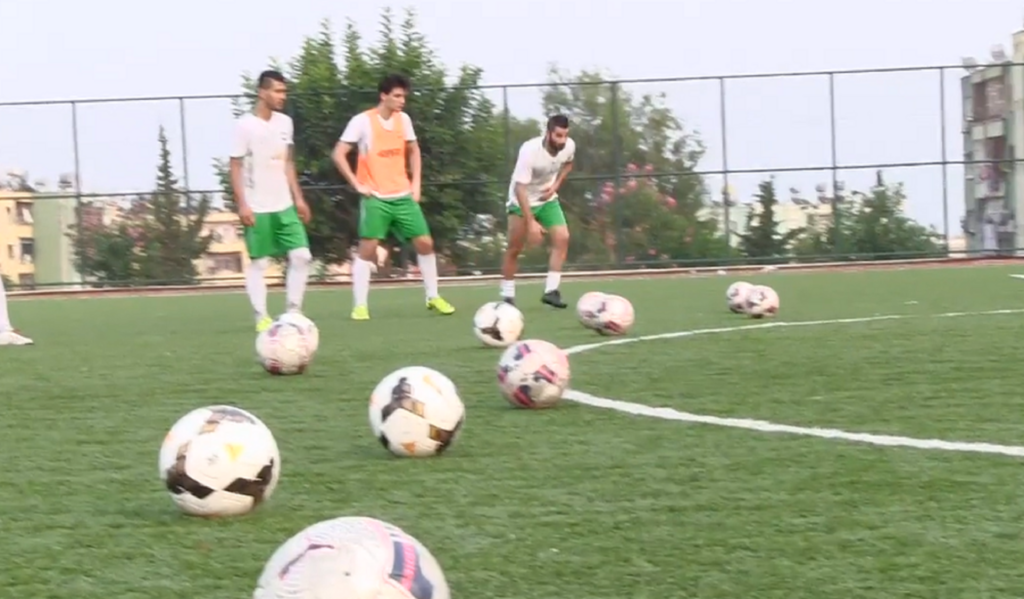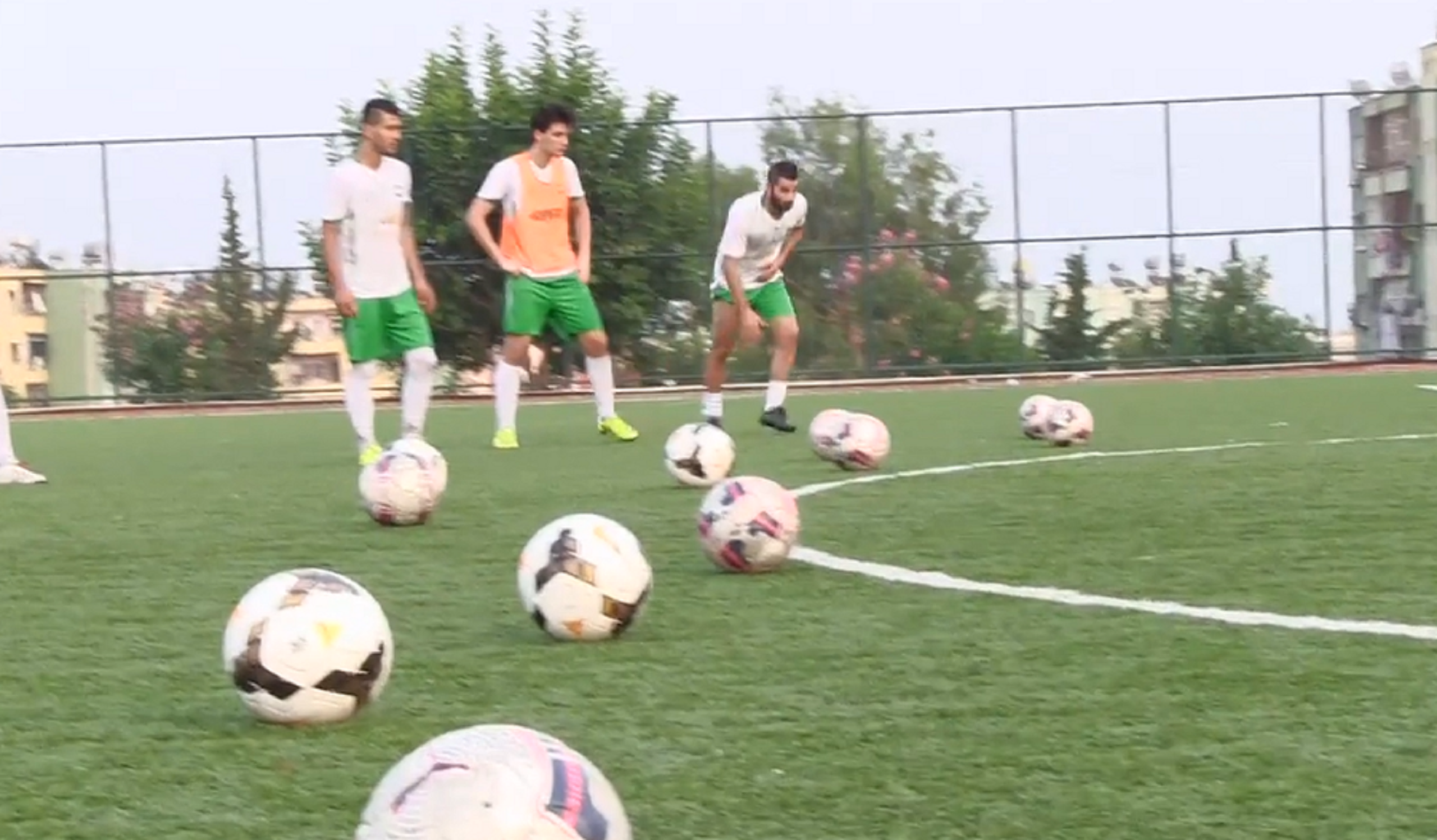
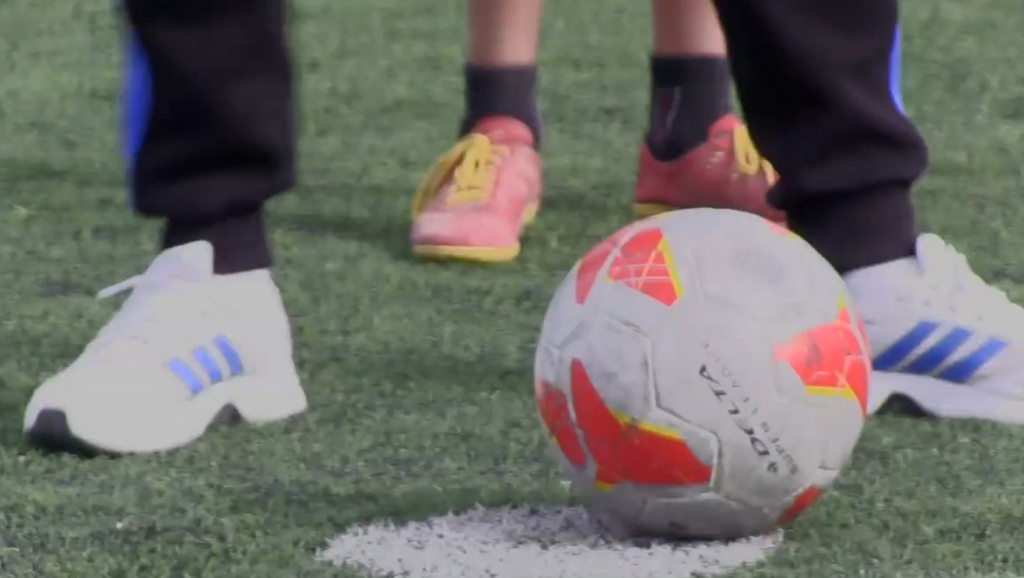
The Team is perhaps Abounaddara’s most coherent use of the serial format. In October 2015, the group premiered this 12-part mini-series with a short trailer, subtitled ‘The Syrian Free Team Story’. Released weekly, each episode features an opening sequence backed by music – a football team practicing on a pitch and ending with a cheer: ‘Free Syria. Free! Free!’ What follows is an interview with one of the 11 players, each episode filmed in the same locale – a cramped room that could be in a hotel or apartment. Playing off the reality-TV talking-head ‘confessional’ format (‘11 players, picked to live in a house …’), each athlete tells a brief anecdote about his life before, or as part of, this national football team. As each one sits in his practice gear to address the camera, it feels as if we’re set to hear a post-game interview. But what is said is completely unexpected – and the matter-of-fact way in which it is told, equally so. One player was shot in the shoulder during a battle; another was called to a prison hospital to recover the body of his dead brother; another was abducted and interrogated by Daesh after they took over his town. One confesses how, risking execution as a soldier for the government, he loaned rounds of ammunition to a teammate’s friend, who was fighting on the opposing side. The players tell of the complications of being on a team comprised of both rebels and government soldiers, but ultimately demonstrate that there are allegiances which transcend political ones. The Team resists showing Syrians as victims primarily by treating them, above all, as footballers. The series is exemplary of how Abounaddara creates a body of work that takes shape collectively but maintains the integrity of individual stories. And perhaps, from that success, we can extrapolate how the power of an accumulation of different individuals can resist a seemingly endless sectarian conflict.
– Christy Lange, ‘Emergency Cinema’, Frieze, March 18, 2016