Episode 1: The House
Three Athenians (let us call them Bia, Alexis and Nina) live together in a tiny house on the outskirts of Kassel. They are here to work at Documenta, the exhibition that this small German city hosts every five years. This year the curators have divided the exhibition between Athens and Kassel and even though the Athens half is now closed, the three Athenians have been brought to Kassel to continue a performance that they started in Athens in April. Back then, they were all in Athens (with a fourth Athenian, Eirene, who is no longer part of the group) and when the Kassel half opened, two of them, Alexis and Nina, moved there. When Athens closed, all three of them left Athens, not to return until mid-September. They work six days a week, performing for the many cultured visitors who come to Kassel to see the latest trends in contemporary art. The three Athenians are part of the latest trends in contemporary art. Even so, life is very hard for them in Kassel. They spend all of their time preparing for their one-hour performance – which requires hours and hours of careful thought and intricate planning – and they miss Athens, where they have comfortable lives, family and friends and well-paid jobs. Right now, they especially miss the freedom of being able to leave Athens to go to a Greek island with all their wealthy friends – it is the summer after all. But perhaps worse of all is their living arrangements here in Kassel. Due to the small budget, Documenta could only offer them the smallest house you have ever seen. It is more of a cabin or some kind of stone tent in the middle of a field. It is really hard to appreciate just how small their house is, but let me try to give you some idea.
The kitchen seems spacious enough but the living room doubles as Alexis’ bedroom, his single bed, doubles as a tiny couch. They can just about endure this cramped life when its the three of them, but when they have guests, they are better off leaving the apartment and working in a nearby cafe.
Here they look happier, don’t they? But if you look carefully at Bia – on the right – you can see that she injured her arm. Do you know how she did it? It was the tiny house’s fault. Alexis opened the door of this room/kitchen/living room too quickly and hit Bia as she was getting out of the shower, since her bedroom doubles as her bathroom.
When asked to draw a floor-plan of their house, the pained expression on Nina’s face says it all. She doesn’t even have a room, she has to sleep in the corridor between the front door and the bathroom/Bia’s bedroom.
When I visited them in Kassel I told them that their apartment reminded me of one of Apostolos Georgiou’s paintings, which were on display at the Leder Meid Apartment as part of documenta 14. For example, I thought that Bia’s bedroom/bathroom looked like this painting.

And their kitchen/living room/Alexis’ bedroom made me think of this chaotic and cramped scene.

The only window in the house, in Nina’s bedrrom/corridor, reminded me of this work, in which someone seems to be falling out of it, so squeezed he is for space.

When I shared my idea about their house and Georgiou’s paintings, Bia scowled at me angrily and said, “But this is our life, not some pretentious art work. We miss our big Athenian houses. We can’t live like this!”, almost bursting into tears, while nursing her sore arm. She was right of course, but I must admit that I found something quaintly creative about the way the three Athens lived in their tiny house on the outskirts of Kassel. That is why I decided to follow their everyday lives in this radio play Three Athenians in Kassel.
Episode 2: The Routine
It is the start of a typical day for our three Athenians in their tiny house in Kassel.
While it is barely light outside, Nina, Alexis and Bia sleepily crawl out of their minuscule beds – well, Alexis and Bia do, as Nina had to give up her bed as it didn’t fit in her corridor space of a room.
Every day our three Athenians, while spending most of the day (and so of the night as well) preparing for their one hour performance for documenta 14, also work to make ends meet. Kassel is not like Athens where they all live comfortably and have rewarding and stimulating jobs, so the type of work they have to do is often menial and tedious.
For example, every day, from 7:30am to 1pm, Alexis works in a piano moving company, with this back-breaking work leaving him exhausted for the rest of the day.
Bia’s job initially seems much more bearable. She is employed by a local sports car rental company. Given that people in Germany are too poor to own sports cars for themselves, companies like the one Bia works for rent out a range of fast cars for an hour at a time. To make the experience all the more thrilling and exciting, these companies also send along with the car one of their assistants – their official title is ‘screamers’ – who sit in the car with the renters, and fling their heads back, laughing and screaming, as they simulate the first-time exhilaration of the speed and joy of the car ride. Here is Bia on one of these rides, feigning to enjoy this fleeting and artificial experience of freedom for her paying fellow passengers.
Nina works for Beuystours, a government-run tour agency that shows wealthy foreign visitors those sites in Kassel touched by the work and artistic philosophy of German artist Joseph Beuys. Here she is waiting to lead her first tour of the day.
Their first stop is one of the streets names after Beuys.
Then they head to the Neue Galerie where one of Beuys’ most iconic works is installed (sadly on this day, her tour cannot go inside the installation as, for some reason, it has been blocked off by the curators of documenta 14).
Nina spends most of her time on the tour wandering around the town, pointing out to the Beuys-loving crowd any number of the 7000 oaks that the artists planted for documenta 7 in 1982. Here is one of them now.
After Nina finished her last boring Beuys-tour of the day, Bia her final joyless joy-ride and Alexis has stopped moving pianos, the three Athenians usually meet in a cafe for a modest lunch and to work together on their upcoming performance for documenta 14. Typically Alexis is always late and Nina and Bia, exhausted from their morning’s labors, have to wait for him.
After the manual labor of moving and lifting pianos all day, Alexis likes to unwind by exercising his mind by visiting one of the many museums in Kassel. He doesn’t really like contemporary art (which makes documenta 14 a very difficult and frustrating experience for him), so he tries to find somewhere to get away from it all. His favorite place is the Museum für Sepulkralkultur, which is entirely dedicated to the culture of death, from burial customs and memorial symbols to more everyday experiences of mortality. Here is Alexis enjoying one of their morbid exhibits.
He especially likes to meditate on the differing burial cultures housed in the museum.
And he also achieves a state of tranquility looking at paintings of the dying and their grieving families.
On this particular day, something at the museum makes him later than usual for his daily meeting with Bia and Nina.He found out that documenta 14 had infiltrated his favorite museum with some contemporary artworks that at first seemed only tangentially related to his beloved death-drive. Yet, suddenly, he came across two works, among all the death-masks and tombs, that gave him a great idea for that day’s performance. The first was the poster for Sanja Iveković’s Monument to Revolution, which he had seen in the flesh back in Athens.


The second was a series of crumpled posters for Collective Exhibition for a Single Body, which he completely missed at the Archaeological Museum of the Pireos, again back in his beloved Athens.


On seeing these two poster-works, Alexis, realizing that he was late to meet his fellow Athenians, ran to the cafe to tell them about his idea.
Breathless he arrived at the cafe and told Bia and Nina that their performance today should be more traditional, inviting the audience to speak or perform at a microphone while everyone else watched and listened. This would make everyone happy that they had attended something – that they could say that they were there. Then, after the performance, they would all make posters advertising these individual performances, which, even though they had already happened, the seeing of them would make people feel better about not having been there. “It’s like they somehow escaped death, don’t you think?”, Alexis excitedly shouted, “They missed it in real life, but the poster makes them feel like they didn’t, so its like some kind of minor afterlife! What do you think?”
Nina and Bia didn’t say anything, but just looked at him bemused and confused, still annoyed at him for keeping them waiting.
Episode 3: The Day Off
Our three Athenians work six days a week in Kassel, from Tuesday to Sunday, studying, preparing and performing for documenta 14, while also enduring their tedious day jobs to make ends meet. Their only day off each week is Monday. You would think that they would relish the break from their arduous routine, but they are simply too exhausted to do anything fun. So, what do they do? They sleep – all day long. Even if it is a special occasion (e.g. a birthday) or if they have guests visiting, they simply can’t manage anything else. As you know their house is too tiny to be comfortable, so on Mondays they leave it in search of suitable places to take their well-deserved rest. There are many contemporary artworks at documenta 14 that double as places to sleep, but their favorite is Angelo Plessas’ installation Eternal Internet Brotherhood/Sisterhood 6, at Gottschalk-Halle in the University of Kassel. Here they can each lie on a couch under the psychedelic canopy and rest their bodies and their minds. They are rarely disturbed by visitors, as not many of them deviate this far from the main sites of the exhibition.

Even though they spend all of their day off asleep, during that time our three Athenians have some extraordinary dreams (perhaps it is because of Plessas’ inspiring work?). More often than not, they dream of each other, of themselves in their former lives, rejoicing and free back in Athens. Let us peer into Nina’s dream to see what is happening.
Like most dreams, Nina’s begins with some mundane event associated with her every day life in Kassel. Here we see her crawling on the floor of Alexis’ bedroom/living room/kitchen after spilling some wine.
But then, before we know it, we are transported to some fabulous otherworldly space. (Well, it seems other worldly to us, but this is in fact the expansive garden and lake of her mansion back in Athens).
We see tables being set up, ready for a lavish party (perhaps this is Alexis’ birthday party?).
Nina dreams of Bia reading her favorite novel, waiting for the others to arrive.
As an artist, Nina dreams about her own art, here making a sketch of Bia.
The guests arrive and the party begins.
Everyone is happy; everyone is free. The Athens of Nina’s dream is so idyllic and so far way from the destitution, struggle and poverty of Kassel.
As the dream ends, our three Athenians wake in Plessas’ installation. Returning to reality, their daily routine continues for the next six days of work and performing. But before then, let us remember them in the party of Nina’s dream. Enjoy your day off and happy birthday Alexis!
Episode 4: The Report
Every day, directly after their performance, one of our three Athenians has to meet with a documenta 14 official in their tiny house to deliver a report, mainly focused on the numbers of people who participated that day. Today it is Nina who is responsible for this somewhat tedious bureaucratic procedure. Here she is, in the kitchen (which for this meeting has been cleared of Alexis’ bed and the living room furniture, so for once it actually looks like a kitchen – they even have a table!), making the documenta 14 official dinner. I know, it seems strange, but this meal has been included in the reporting process and has something to do with hospitality and ‘giving back’ to the crisis-stricken people of Kassel who are employed to work for documenta 14.
The documenta 14 official starts asking questions: How many Greek visitors were there? How many people took photos during the performance? How many people in this room were wearing a colorful necklace? How many people in the room were wearing glasses? How many people were wearing black? How many people were barefoot? How many people do you personally know inside this room? How many people thought that this experience gave them value for money?
To all of these questions, Nina, looking at her notes taken during the performance, is able to give specific, number answers. However, something else happens with the next question – let us listen in to their exchange:
documenta 14 official (d14O): How many people liked the performance?
Nina (N): I don’t know
d14O: Did you not ask?
N: Yes, we did
d14O: Well, how come you don’t know how many?
N: There were many, but we lost count
d14O: Ok, let’s try another way. How many people felt instrumentalized?
N: Many, but again I don’t know the exact number
d14O: Well, think, was it the same number of people who felt instrumentalized that didn’t like the performance?
N: Um….perhaps
d14O: Ok, Nina, you need to try harder, we need these numbers for our records. Surely you can manage to count during the performance? It is not that hard. Look, how many empty bottle are there over there?
(The documenta 14 officer points at the corner of the kitchen/Alexis’ room/the living room):
N: Well, let me see, 14…or is it 15. Wait, maybe 17?
d14O: I see (writing something in his notebook). What about the number of reindeer skulls in Máret Ánne Sara’s Pile o’ Sápmi at the Neue Neue Galerie?

N: What? But how could I…
d14O: But you have seen the art work, right?
N: Yes, but…

d14O: So you simply didn’t pay attention? Am I wrong? You were there, present in the exhibition, looking at this artwork, but you were, at the same time, somewhere else, not present, because you cannot answer my question. Am I wrong?
N: No, but, yes, anyway, who cares?
d14O: What did you say?
N: No disrespect, but these are such, how can I put it, communistic questions.
d14O: (visibly shocked) What on earth do you mean?
N: I mean that all these questions about numbers, they are detracting from the individualized experience of art…
d14O: No, no, they are not, they are important, significant and symbolic questions. The answers will help us to see, if we even have these answers, to have data to process if your performance helped the collective subject emerge. As you know, any collectivity starts with the individual, as Marx and Engels wrote, the conditions for the freedom of all starts with the freedom of the individual. Without the numbers, we simply don’t know what we are doing. Anyway, you need to do better next time, ok?
N: Ok, but…
d14O: Now, I have to go, but I have one final question and this one is vital – the creative director asked me to ask you this specifically, so I need the right answer. Ok?
N: Sure, I’ll see what I can do
d14O: If you had single out the most engaged participants in the performance, the ones who asked the best questions and made the most significant observations, and who, perhaps were wearing red, how many were they?
N: (not speaking, but gesturing the number with her fingers)
d14O: Good, very good, that’s a relief. Thank you for you report, Nina. I’ll be back the same time tomorrow. Oh, and thanks for the lunch, it was delicious.
Episode 5: The Research
When our three Athenians in their tiny house are not working at their tedious day-jobs, spending their days-off sleeping and dreaming and delivering their mind-numbing reports to documenta 14 officials, they are preparing for their daily performances. Of course, we’ve yet to find out precisely what these performances are, but we’ll save that for a later episode. Today we will discover how our three Athenians go about conducting research as part of their preparations for each performance. There are two main stages to their research – let us call them ‘witnessing’ and ’embodying’. Here is Bia doing the ‘witnessing’ research in a cafe near their tiny house.
She looks like any other student working on her thesis, right? But if you were able to see the screen of her computer, you would realize that she was watching 14 different video feeds from around the world, some showing archival footage, some live action. (Her screen looks a little like Michel Auder’s The Course of Empire at the Former Underground Train Station, KulturBanhof).

Through this ‘witnessing’ research, Bia is giving herself a daily cross-section of the global media so as to see (although not really understand) how single actions, events and situations coalesce into a collective experience. Watching a slide-show of ancient Greek vase paintings, footage of a volcano erupting and the ins and outs of the lives of beavers in a nature documentary, all hone her ability to extract information from these disparate sources and make generalizations about what they mean when brought together as a collective whole. (It is this kind of skill that the documenta 14 official was testing Nina in yesterday’s episode).
The next stage of research for the performance puts this ‘witnessing’ into action, as our three Athenians attempt to ’embody’ what they have just seen. For example, here are Nina, Bia and a friend (who looks suspiciously like the documenta 14 official!) embodying the positions of figures on an ancient Greek vase from the ‘witnessing’ session.
Here is Bia embodying the moment of burning tension and irresistible pressure before a volcano erupts.
And here are Nina and Bia embodying the ins and outs of beaver behavior, performing some some kind of mating ritual by baring their teeth.
These two stages of research – witnessing and embodying – prepare our three Athenians for the most important hour of their day – the performance. But let us leave that for another episode.

Episode 6: Blood of my Blood
It started like any other night for our three Athenians in Kassel, but it would end in tragedy. Sitting in their cozy house, Nina and the documenta 14 official were doing some ’embodying’ research after finishing off their report, while Bia with immersed in some ‘witnessing’ research she had to catch up on from earlier that day.
Bia was watching 14 simultaneous episodes of Game of Thrones, which was driving her slightly crazy as she hated this overrated show. At the same time, Nina and the documenta 14 official were, as far as we can tell, embodying a documentary about ancient comic and tragic masks, contorting their faces into humorous and miserable caricatured shapes.
All was calm in their tiny house when suddenly they received a video-call from Alexis on Bia’s computer. He looked terrible, his mouth was bloody and he was shaking as he spoke:
“Fellow Athenians, I need your help. I have been kidnapped by a group of Neo-Viennese Actionists who are using me as a piece of meat for some kind of art-performance, blood-letting ritual at the Tofufabrik. They told me they were outraged by this old factory for a vegetarian meat-substitute being used as a venue for documenta 14 and wanted to make a statement about the importance of killing and eating meat in human culture, even resorting to cannibalism. They have tied me to a bed in what looks like a hospital room at the back of the building, you can find it if you look for this sign on the door.’ He turns his phone around to show them the sign.
“Hold tight, we’re coming to get you!”, shouted Bia, her mind still spinning from so much blood and violence of her Game of Thrones witnessing research.
“Wait”, Alexis implored, “You can’t just walk in here like that, you need a strategy. My captors have timed their bloody ritual for a party, ironically held by documenta 14 as part of their weekly club night To The Floor.” Alexis held up a poster of the event:

“You need to come, dressed up for a night out and pretend that you are here for the party. Dance a little and then try to find me. It is the only way not to be discovered – you have to look like you’re actually enjoying yourselves, otherwise they’ll know you’re here to save me. Please come quickly!”
“Ok, we’re on it”, Nina said, already slipping on her best dancing shoes.
A few minutes later, Bia, Nina and the documenta 14 officer arrived at the Tofufabrik.

It was already light outside as entered into the dark space.
The music was pumping and they immediately hit the dance-floor, trying to blend in.
While the music was blasting, while Bia and Nina were doing their best to present to dance, their valiant friend, the documenta 14 official, looked around to see any clues as to where Alexis was being held.
He saw a group of people huddled in front of a screen, watching a sinister film called Commensal by Véréna Paravel and Lucien Castaing-Taylor. It seemed to be part of the terrifying ritual lying in wait for Alexis as it showed the making of a manga-style comic about cannibalism.

He saw a door in the corner of the room, grabbed Nina and Bia, and the three of them surreptitiously danced over to it. This was it! It had the fake hospital sign that Alexis had shown them in the video.

They opened the door, slowly, and stepped inside.
To be continued…
Episode 7: The Conquest of Universal Harmony
Last time on Three Athenians in Kassel:
Alexis has been kidnapped by a group of Neo-Viennese Actionists who want to sacrifice him at a former Tofu factory to attack documenta 14’s reuse of this key site for the meat-substitute industry. Bia, Nina and the documenta 14 official have to go to a club night in the same building, pretending to dance and have fun, as they secretly look for their endangered friend. Finally they find the door to the room where Alexis is being held, holding their collective breath, they enter…
“Mmmm, this is tasty”, says Nina, “Can you pass the salt?”, she asks, chewing heartily.
We are suddenly back in the tiny house of our three Athenians, where they seem to be having dinner. They have a guest, who we shall call Gustave:
“This is delicious. Thank you for inviting me. So, you wanted to know how I became a Neo-Viennese Actionist and how I was involved with the group who were planning to eat your friend?”, he asks, slicing into a slab of tender meat on his plate.”Well, let me tell you”. Gustave stood up and with a look of anguish on his face, began to tell his story:
“So, it all started back in France when as a Political Science student I went in search for alternatives to global capitalism and joined up with a group called The Children of Jean Journet. We preached a utopian brand of socialism with the aim of generating social harmony. One of our group was a cannibal, as he believed that eating capitalists was the most symbolic way to destroy their ideology. He boasted about eating more than five millionaires and one billionaire. Some of us were uncomfortable with his approach to our political quest for universal harmony, but others wanted to take it to another level. That is when we all came to Kassel. We wanted to target this mega exhibition that we saw as exploiting the people of this poor German provincial town, as symptomatic of voracious Greek capitalist policies. We targeted your group, as you were wealthy Athenians, who were spreading your capitalist ideology as part of your degenerate performance. Once we’d kidnapped your friend, the cannibal faction in our group wanted to eat him to make our point as clear as possible. They had planned on filming the whole gruesome event and streaming it on Periscope.”
At that point everyone stopped eating and just stared at Gustave in knowing disgust.
“Have you seen the terracotta reliefs by the Gandhian activist and artist K. G. Subramanyan in the Neue Galerie? Well, his so-called Anatomy Lessons were the cannibal’s model for the ceremony and sacrifice.

All of Alexis’ body parts would be first cut off and then ordered again before the feast. This way the symbolism of the capitalistic commodification could be made explicit in the ritual. However, before we could start, several of us resisted, arguing that he wasn’t a fully-fledged millionaire. Yes, we knew he was well-connected and his father owned multi-story parking lots across Athens, but still, he wasn’t our main target. That was when you burst in, while we were having this heated debate. Why were some of us not willing to put our beliefs to the test to end global capitalism? Why were some of us using the quest for universal harmony as a way of sating their perverse culinary tastes?”
“Well, I’m just happy that your side won the debate in the end”, interrupted Alexis, sipping a glass of wine, “you really saved my bacon!”
“The fight isn’t over. I am sure the cannibal-faction of The Children of Jean Journet will want their revenge for my humiliating them by helping your friends rescue you. I will have to leave Kassel immediately”.
“You could go undercover?”, Nina suggested. “You look very similar to many of the documenta 14 officials here in Kassel, you could easily pass for one of them”
“If you think it will work, I could give it a try. Thank you all for the idea. So, what do you guys think capitalism can be replaced with?”
Everyone laughed and continued their delicious dinner.
Episode 8: Only a Pawn in their Game
After their close encounter with cannibals, life was getting back to normal for our three Athenians in Kassel. Alexis was still recovering from his traumatic experience and was spending his evenings doing some gentle ‘witnessing’ research in their tiny house. .
Meanwhile, Bia and Nina were out celebrating Gustave’s first day in his new job as a documenta 14 official.
He had been assigned to deliver his report on the day’s performance and after the usual questions about numbers of participants etc, he reached the last question on his report card:
“Ok, last question: as you know, for our records we have to cover every aspect of our interactions with the public here in Kassel, people are very sensitive to you being here, as Greeks in Germany, and some have described it as “crisis tourism”. So, we need to extend our report beyond the immediate limits of the performance. So, we need to ask, did anything happen immediately following the performance?”
Bia looked over at Nina with a distressed look, as if to say “we can’t tell him”.
“Bia, we have to tell him, if we don’t there may be more of them and we have to stop this now”, Nina implored.
“Ok, tell him, but on your head be it”, replied Bia in a resigned tone.
“Very well, so we had just finished the performance and we left by the back door as per usual. Outside the building there was a parked car, which we had never seen before.
“Then suddenly out jumped two people in animal masks – resembling the ones that you can see in Gauri Gill’s photographs at the Hessisches Landesmuseum.”

“They grabbed Nina”, Bia continued, “Pushing her to the ground and the next thing we knew was that they had an electric razor in their hand and were shaving the back of her head.” Nina, who the whole time during dinner had her head covered with a hood, slowly revealed her shorn hair.
“I was terrified”, Nina whispered, holding back the tears, “But then something very weird happened. Our animal-masked attackers suddenly stopped, jumped back in their car and drove off.”
Gustave sat there in stunned silence, he had stopped taking notes for his documenta 14 report a while ago. “Do you remember anything else? Any other details?”
“Yes”, Bia said, “As they drove off, I heard them shout something, although I’m not completely sure what it was”.
“I think I remember”, interrupted Nina, “it was a variation on some lyrics from a Bob Dylan song I had been listening to the night before. It went something like”:
Like a dog on a chain
You ain’t got no name
But it ain’t you to blame
You’re only a pawn in their game
The heavy silence resumed over the table. What was meant to be a night of celebration had taken a sinister and perplexing turn and our Athenians had never felt so alone and so instrumentalized. What did this mean? Were they the dogs on a chain? Were they the ones with no name? If so, whose game were they pawns in? Why did they shave Nina’s head? First cannibals and now this. Surely being at the cutting edge of the contemporary art world wasn’t worth putting their lives in danger? What would happen next?
Episode 9: I Shall be Released
The events of yesterday hung over our three Athenians like a cloud. After the cannibals kidnapping Alexis and now some animal-masked, Bob Dylan-quoting gang shaving Nina’s head, they were all very much on edge. They needed some advice and so they went to the only place they knew where they could seek help far away from the safety and security of their home in Athens. It was a mythical place on the very outskirts of the city, in an old abandoned brewery, where, they were told, people gathered who needed help. After the crisis and the virtual collapse of the political and social infrastructure of Kassel and the rest of Germany, the people of the city had developed their own version of the welfare state and this place, know as The People’s Parliament of Collective Answers was one of them. It was like a modern day Delphic Oracle, but instead of asking a Greek god and his priestess, you asked a group of people in Kassel who had assembled there to solve problems. Of course, this didn’t mean that the answers you received were any more riddling and perplexing than those at Delphi, but still, our Athenians had to try.
So, off Nina and Bia went in search of answers to the strange events of the day before (Alexis was still getting back to full health). They entered the room where people were seated on the floor, against the wall. In the center of the room was a microphone and, they were told, if you wanted to ask a question of the room, you would take the microphone and present your problem.
Bia nervously took the microphone, and began to speak:

“I am here with my friend Nina, to ask The People’s Parliament of Collective Answers for help. We are Athenians living here in Kassel”, at which a murmur went around the room, ” Yes, I know”, Bia continued, “We have it easier than you here in Kassel, but we are currently living among you and we have a problem. Yesterday two people in animal masks attacked Nina and shaved her head, they then misquoted a Bob Dylan song at us. We don’t know what any of this means, but we are scared and feel completely instrumentalized by the situation. I should also mention that a few days earlier another of us, Alexis, who is still in shock, was kidnapped by cannibals and nearly eaten by Neo-Viennese Actionists. Seriously, we need your help. We are simple artists who are here to bring the cutting edge of contemporary art to the city as part of documenta 14. But we are worried and fearful for our lives. What can we do?”
The room was silent as Bia placed the microphone back in the center, then one after one people started to speak. First the comments were hostile.

“You should go back where you came from”, one person said.

“This is not our problem, go ask the European Union and its Greek leaders”, said another.

“Hold on, fellow citizens, we need to help them, even if they are the cause of all our woe, even if their government has put us under the slavery of their debt”, pleaded a kind looking woman.

“I think I know what you should do” said a young man, who looked somewhat like one of the documenta 14 officials, “But it will not be easy”.

“Yes, we can help”, chimed in a young woman sitting next to Nina, “First you must listen to another Bob Dylan lyric and it will lead the way”

Then a man sitting next to Bia started to sing:
I see a light come shining
From the green ground to the pink
Any day now, any day now
You shall be released.
At hearing this Bia and Nina left the room and went in search of the answer to the riddle they had just heard. First of all they convened a group of friends to see if they could help make sense of these oddly altered Bob Dylan lyrics that could explain how to escape Nina’s vigilante hairdressers.
At first, no one had a clue. But then after repeating the lyrics over and over again, Bia had an idea.
“What if the green is some kind of park? So, we first need to go to a green space and then somehow find a pink space, what do you think?” They all agreed it was better than just sitting there, so off they went.
They sat in the nearby park, not too far from their tiny house and waited. Hours passed.
And still they waited. Over time, some of their friends would leave and other friends would come and join them (look, there’s Gustave), but still they couldn’t break the code.
Then, as they were drinking and waiting, the conversation turned to the exhibition and artworks at documenta 14. Gustave was telling everyone about a dance performance he’d seen at the Neue Neue Galerie (Neue Hauptpost) by Maria Hassabi in which he described how the dancer’s bodies are barely moving, either splayed out on a pink carpet or confronted by a blinding set of stage lights.
“That’s it”, Bia screamed, “The pink place and the light, this is where we need to go, take us there now!” Our team of Athenians and their friends jumped to their feet and rushed off, excited to finally discover the truth of the riddle presented to them by The People’s Parliament of Collective Answers. When they reached the downstairs area, they first saw the lights, and knew they were in the right place (“I see a light come shining”)

But there was no one around to speak to, so they started to search for the pink carpet, eventually finding it on the second floor.

It was empty aside for a lone figure lying there. Bia carefully approached her and as she did so she began to speak: “At last, you have come. I have been waiting. Come, sit down and I will tell you what you need to know”. Bia sat down on the pink carpet beside her and the dancer spoke, without changing her position:

“There is nothing to be afraid of, you have been chosen – all three of you – Alexis, Nina and you, Bia – to join us. That is why we cut Nina’s hair, as an invitation, not as an act of violence. We too are performers at documenta 14, we too have felt instrumentalized by our roles, here in Kassel and in our lives elsewhere. We all feel like pawns in a game we have been forced to play in and which we can never win. We come from all over the world and we know that there is only one way to change the rabid spread of individualist, selfish narcissism we see around us. We must come together, here at documenta 14, and create the ultimate performance, the performance that will break down the boundaries of art and life. But to do this, we must first break out of our individual performances. Will you abandon your daily performanc and come to join us in our collective performance? What do you say? Are you with us?”
To be continued…
Episode 10: Masters of War
Previously on Three Athenians in Kassel:
After Alexis was kidnapped and nearly eaten and Nina was attacked and had her head shaved, our three Athenians went in search of answers. They visited The People’s Parliament of Collective Answers where they were given a riddle to solve, which eventually guided them to a conversation on a pink carpet. A fellow-performer at documenta 14 encouraged them to leave their role in their individual performance and join the cause of all the performers to create the ultimate performance that blurs the boundaries between art and life. We rejoin our Athenians as they are about to make perhaps the most important decision of their lives.
Bia looked at Nina across the pink carpet. “We have to do this”, she said, “don’t you agree?”. “Yes, I do”, Nina replied, confidently. “Let’s join them!”. Everyone on the pink carpet rejoiced as they all sensed that this was the beginning of something incredible, something new and something that would change them and their world forever. They all joined hands and went skipping together back to The People’s Parliament of Collective Answers, where Alexis was waiting for them. They discovered that this place doubled as the headquarters for the RAPIDO or the Rebel Artistic Performers In Documenta Organization and this was the place where they would break free of the individual performances and unite into the one ultimate collective performance that would wage war on the world as they knew it.
They saw friends they knew, dancers, artists and actors who like them were in Kassel to perform at documenta 14. None of them were the official artists who had been invited by the elites in Athens to take this trip to Kassel, but all of them had put their energy, time, bodies and minds on show for the good of experimental contemporary art. There was a performer from Irena Haiduk’s piece Spinal Discipline as well as a dancer from Georgia Sagri’s Dynamis performance with the 28 sculptures, now housed in Glass Pavilions on Kurt-Schumacher-Strasse.

Our three Athenians finally felt at home here in Kassel – they were among their own and now they had to work together on a plan of action. First of all, they sat around in a circle and discussed what needed to be done.
“We need to commit to abandoning our individual performances, starting tomorrow”, one person suggested.

“Yes, I agree”, Alexis chimed in, “But is that all we need to do?”

“No, that is the bare minimum. Only then, once we have deserted the artworks that enslave us, that instrumentalize us, can we truly come together and replace them with a collective, ultimate performance”. Someone else added.

Alexis spoke again, asking: “So, once we are ‘free’ from the artists and the artwork that brought us here to Kassel, what next? How do we create the ultimate performance?”

As if struck by a bolt of lightning, Bia announced with a jolt, “I know! We must start here and now, in this room. The performance must originate from this spot, this moment, this gathering! We are sick of being the hidden center of everything, the unseen soul of the art of documenta 14, we need to act, we need to announce ourselves, we need to show ourselves and this must happen immediately!”

After saying these words and as everyone looked on in startled admiration, Bia stood up, encouraging all the other performers to do the same. Nina started to applaud her fellow Athenian.

Others shared words of support.

“But how do we begin?”, someone else asked .

Bia thought for a moment and then said: “First, we must get closer together. That is our strength, our intimacy, our willingness to put ourselves and our bodies on the line for art. But now we need act for ourselves, not for some famous artist and their work.”

The circle closed tighter and tighter until everyone was huddled together.

The closeness, the euphoria of that moment was exhilarating and everyone knew that this was it, the beginning of the ultimate performance. They had severed their ties with documenta 14, with their individual artists and artworks, and they were, here and now, together, united, in a single collective body.

It was at that very moment that Bia turned around to face outwards from the circle of performers. Then, gazing intensely, as if into a lover’s eyes or into a camera’s lens that was filming her, she started to sing:

Come you masters of war
You that build the big guns
You that build the death planes
You that build all the bombs
You that hide behind walls
You that hide behind desks
We just want you to know
We can see through your masks
The ultimate performance had begun, the performance that would change everything, that would break down the border between art and life. The only question was: what would happen next?
Episode 11: The Quest
Far from their tiny house, the mind numbing routine, the drudgery of research and the bureaucracy of reporting back to documenta 14, our three Athenians had set out on their quest for the ultimate performance.
At the meeting of RAPIDO (the Rebel Artistic Performers In Documenta Organization), after Bia’s impassioned speech, they had all agreed to abandon their individual performances and to each forge a path towards that one performance that would collapse the distinction between art and life. Our three Athenians, like their seafaring ancestors of ancient times, understood this quest as one that meant that you leave the land, and embark onto the wild, expansive sea. (The Kassel equivalent being a calm, rather picturesque lake). Nina, Bia and Alexis were all excited and exhilarated by the open water, and by the knowledge that they had left the claustrophobic tedium of their landlocked performance behind them.
Here they could be free and, although their quest was a difficult one, as they had no idea where they were going, what they had to do and if they would succeed, the mere thought of all those other documenta 14 performers out there, breaking rank and heading out into the wild, into the outskirts of the outskirts, in search of the ultimate performance, kept them going and filled their hearts with joy and hope. There was just over an hour to go before their scheduled performance back in Kassel and as that time got closer, the more liberated they felt, wondering what would happen in their absence. What would the artist say? Would anyone notice they were gone? He was always checking up on them to make sure they were keeping to his strict score, conducting their movements, giving them orders (“Try to make the people’s microphone work!”, “Be sincere in your closing remarks” etc). They would not miss his dictatorial demands. Sure, they were used to authoritarian rule back in Athens, but this billionaire-turned-artist from Bilbao was a much worse taskmaster. Drifting across the serene water, they joked and laughed about their new found freedom, wondering if perhaps they’d already stumbled across the ultimate performance here on this very lake! Then, something surreal, something completely out of this world, happened to utterly transform the situation and send them rushing back to Kassel, back to their performance they had so readily abandoned.
As she was paddling along, Nina felt a buzzing in her left ear. She quickly swatted whatever creature was making the sound away, but within seconds it was back. Then, and this is hard to believe, but I believe her when she told me, the buzzing creature began to speak:
“Nina, you muzzzt turn around and go back to your performanzzz. I am a mezzzenger, from your native Athenzzz and I have traveled all of thizzz way to tell you zzzomething truly important.”
Nina stopped rowing, dumbstruck, and listened to this tiny, yet wondrously sonorous, voice.
“You know that marble tent by the artizzzt Rebecca Belmore? Perhaps you zzzaw the photograph of it in the Palaizzz Bellevue in Kazzzzzzel.

“Well, me and my family live on Filapappou Hill, where Belmore’zzz work was inzzztalled while documenta 14 was still in Athenzzz.

“We are the zzzervantzzz of the ancient Muzzzezzz and our home izzz an ancient zzzhrine to thezzze goddezzzzzzezzz of creative inzzzpiration.”
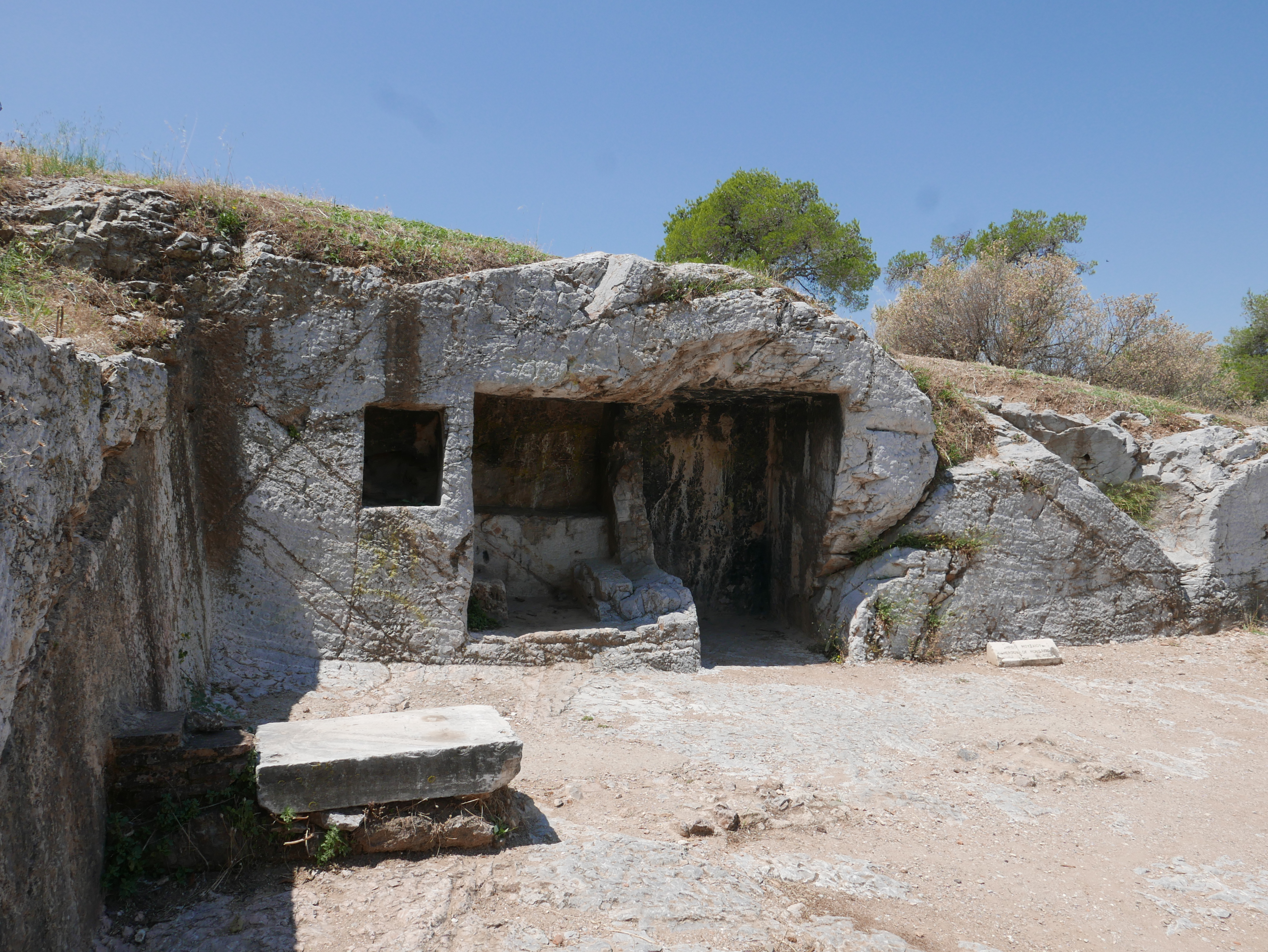
“One day, we were buzzzy with our daily work, when a curiouzzz bearded man arrived, zzzweating and breathing heavily from the walk up the hill. He proceeded to take many notezzz, photozzz and videozzz of uzzz, zzzeemingly jubilant and exhilarated by our mere prezzzence.”
“As he zzzat beneath our hive, zzzcribbling in his notebook. I wazzz able to read zzzome of his nearly indecipherable zzzcrawl and thizzz is what he wrote:
June 10th, 11:15am. I can’t believe what has just happened. While looking for artworks at documenta 14 on Filopappou Hill, (e.g. Rebecca Belmore’s marble tent) I have found a hive of bees on the ancient Hill of the Muses! This is such a magical, inspiring moment. I have to share this experience when I get back down the hill and enter, once again, that mesmerizing performance in the Odeion. I will tell them the story of the bees and how, while they were important metaphors for poetic creativity in Greek and Roman literature, they were especially associated with the Muses. Varro the Roman antiquarian called them the birds of the Muses and Plato’s Ion imagines poets as bringing us the honey of the Muses like bees. (In Plato’s ancient biography, sometimes he is described as having bees sitting on his lips as a baby!). The performance has been my inspiration since arriving in Athens and I cannot wait to share this incredible experience with them! I am so happy that their performance exists, it is the only place where I believe the connection between contemporary society and ancient wisdom can happen, between people, gathered together, between voices and silence, music and discussion, ideas and noise. I wouldn’t know what to do without this performance, which for me, and I am sure many others, is the ultimate performance, which I will follow to Kassel and beyond, to keep it in my life!”
“Thezzze were the wordzzz written by the zzztrange bearded man by our hive and from that moment on, I knew at once that it wazzz my mizzzzzzion to come here to tell you. Zzzo when I heard that they were moving Belmore’zzz marble tent to Kazzzzzzel I hitched a ride with it.”

“But when I arrived, I heard, to my horror, from zzzome other performerzzz, that you were planning to abandon the performance that the bearded man zzzpoke of zzzo pazzzzzzionately. I had no time to lose, they told me where to find you and that izzz why I am here, buzzing thezzze wordzzz in your ear on this lake. You muzzzst turn back, you muzzzt rezzzume your performance. Think of that romantic bearded man who livezzz and breathezzz your performance. What will become of him if you do not zzzhow up? He will be devizzzated, his whole faith in contemporary creativity dazzzhed. I implore you, from one creature to another, turn back, abandon your quezzzt for the ultimate performance, and return to Kazzzzzzel for the performance that has changed this perzzzon’s life (and that of who knowzzz how many more) izzz for them the ultimate performance. How do you know that your performance izzz not in fact the ultimate performance you seek?”
The tiny creature stopped speaking and it took Nina a few minutes to take in what she had said. But, quickly she relayed the message to Alexis and Bia, and in spite of their initial resistance – not only to the bee and her story (“are you sure it was a bee? It looked like a wasp to me!”), but also to their abandoning their quest for the ultimate performance – they all agreed to sail back to Kassel.
As the sun was setting across the lake, our three Athenians headed home, back to the performance that had brought them to Kassel in the first place, back to their daily lives, all thanks to a bee’s story of some odd bearded man who saw in their performance nothing less than the ultimate performance they were searching for.
Episode 12: The Homecoming
Our three Athenians living in Kassel have just finished their daily performance for documenta 14 and they are feeling especially happy and content with their day’s work. Since returning from their act of defiance and resistance, when they abandoned their performance to embark on a quest for the ultimate performance, their lives in Kassel have been transformed. The documenta 14 authorities, finally acknowledging the vital and important work they are doing, moved them into a large apartment and doubled their salary. So, as well as no longer having squeeze into their tiny house, they could also quit their tedious day jobs (no more back-breaking piano moving for Alexis, no more joyless joyrides for Bia and no more deadly boring Beuys tours for Nina). Furthermore, they were no longer required to carry out the meticulous ‘witnessing’ and ’embodying’ research for their performance, nor did they have to deliver the number-crunching post-performance report to a documenta 14 official. In short, all they had to do was spend one hour a day performing and the rest of the time was free for them to do as they wished. Sometimes they would just wander around the city, visiting places that they didn’t have the time to explore before now, such as this strange-looking church:
They had a new skip in their step and were seeing their lives in Kassel in a completely fresh light. Of course, this has a great deal to do with their now more comfortable position, but there was also a ripple effect from something that happened on the first day of their newly-won freedom, that brought the three of them closer together and also allowed them to make peace with their being in Kassel.
Unsure what to do the morning before their performance, without their work and preparation to occupy their time, Nina, Bia and Alexis decided to visit the Fridericianum where the expansive exhibition ANTIDORON: Works from the EMST Collection at documenta 14 was housed. EMST is Greece’s National Museum of Contemporary Art and even though it has been open to the public for temporary exhibitions for several years, due to various bureaucratic and financial difficulties, the permanent collection has never been displayed. Even after documenta 14, it looks like the collection will continue its itinerant existence, and it is uncertain when it will make it home to Athens.
While they were happy to be there, amidst the works of so many of their fellow Greek artists, our three Athenians also felt the pang of nostalgia for their home in Athens that they were deprived of during their months in Kassel. As they wandered through the galleries of the displaced collection, however, something happened to break this melancholy feeling and which finally made them feel at home exactly where they were.

As they stood before Nina Papaconstantinou’s Diary (Robinson Crusoe) (2008), our Nina started to tell her two friends the story of how her parents named her after this artist. While she was still at art school in Athens, Papaconstantinou had rescued our Nina’s father from a fishing accident during a terrible storm and when his pregnant wife gave birth to a daughter later that year, they decided to name her after the young artist who had saved her father’s life. “When my parents told me this story as a girl”, Nina continued, “I decided there and then I wanted to be an artist, just like Nina Papaconstantinou. I remember, a few years ago, when I first saw this work back in Athens, it made me think about the idea of self-sufficiency of Robinson Crusoe, who like my father, saved by this young artist, still needed other people to survive. When the opportunity to become part of our performance at documenta 14 arose, I again thought about how art can help the collective subject emerge, even from the most isolated and alienating conditions.
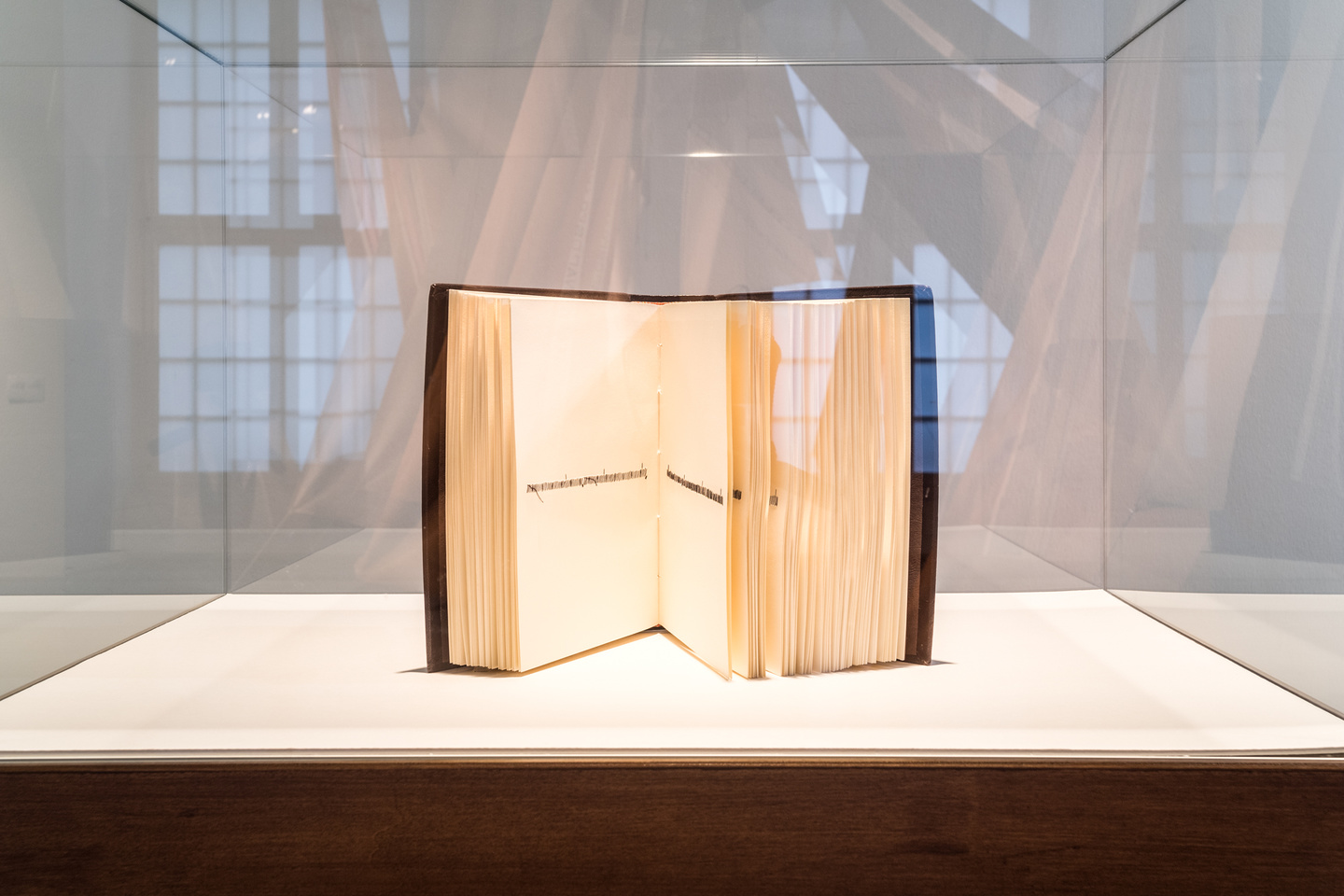
“Today whenever I think of Nina Papaconstantinou”, Nina continued, “her heroic act, her art and my decision to be an artist, there is a song that comes to my mind and I cannot help but sing it”. “I know the one”, Bia interrupted, “You sang it in the bar last night!”. “Yes that’s it”, said Nina with a smile. “Do you remember how it goes?”
Video Playe
00:00
00:38
After they had all paused to remember Nina’s song, Bia jumped at the chance to announce: “Well, I was named after Bia Davou”, swiveling around and pointing at the dramatic installation Sails (1981-2) which was reflected in the glass case of Nina’s namesake’s book. She described how her parents loved Homer’s Odyssey, especially the central love story of Penelope and Odysseus, united in their cunning. Bia described how her mother found out that Davou’s Sails combined woven quotations from Homer’s poem and wanted to meet the artist. Our Bia’s mother and Davou became close friends and when her daughter arrived, there was no doubt that she would be given the artist’s name.

“I remember”, Bia continued, “when I was a little girl, visiting aunt Bia, as I used to call her. Even though she was very sick, she used to play with me and tell me stories from the Odyssey. At that time she was working on this piece you see here”. Bia pointed at the wall of small drawings called Serial De-Re-Structures.

“While I was visiting her she would describe the pain of her illness, but also the joy that art had given to her life. These 367 drawings, each made in one day, were for her the proof of the power of art to keep her living. When I heard about our performance, how it was a ‘durational score’ lasting 163 days between Athens and Kassel, I knew I had to do it, if only to acknowledge the importance of Bia Davou’s work in my life and my decision to become an artist.”
Grinning from ear to ear, Alexis could hardly contain his excitement. “Come with me he said”, grabbing Nina and Bia by the hands and running through the galleries. Everyone stopped and starred at these three joyous Athenians as they raced through the museum like that scene Jean-Luc Godard’s 1964 film Bande à part, when the three friends run through the Louvre. Finally, Alexis brought them, breathless, to a wall of curious wooden structures that looked like both suitcases and boxes of trash or rare archaeological finds.

“I was named after an artist here too!”, Alexis announced, “Alexis Akrithakis, although my story is not as heroic or romantic as either of yours”.
“But I thought you were named after your father?” Nina interrupted. “Well”, said Alexis, “I was, and I am, but this other Alexis had a role to play in my naming as well!”
Alexis pointed at one of the works before them and continued.
“These are called Eight Suitcases with Rubbish from a Beach and Akrithakis made them in 1972. The beach where he collected the rubbish – Glyfada – was also where my parents used to visit in the summers when they first met, several years before I was born. They remembered seeing this strange bearded man collecting all kinds of trash on the coast and one day my father decided to go to speak to him. They started talking, and found out they had the same name, and then, after a while they realized that they also shared the same psychoanalyst – the most reputable Lacanian in Athens. When my father returned to his parking business in the city, he couldn’t get his namesake, this scruffy artist on the beach, out of his mind. At his next session, he asked his analyst about the artist Alexis whom he had met, but of course, due to codes of confidentiality, his shrink couldn’t tell my father anything. Still, he wondered to himself, “But how can I, a respectable businessman and him, a dirty, poor artist, have the same name and the same analyst in common? How on earth this great student of Lacan help me if he is helping the likes of him at the same time?” Many years later, when I was born, my father was still preoccupied by the figure of Akrithakis and I am sure that is why he named me Alexis, not only after himself, in a typical patriarchal and narcissistic gesture, but also in an unconscious tribute to the abject force that this other Alexis had had on him. He was relieved later in life when I told him that I didn’t want to be an artist, but to study the history, culture and philosophy of art instead. When I heard of this performance, and how it aimed to reflect on the I/we relation, I was inspired by the story of my naming, the split between my father’s name – the “nom du père” – and that of an artist who he met collecting trash on a beach, which made me sensitive to the question of our own identities as subjects being always already both multiple and partial – am I Alexis? Or are we (myself, my father and the artist) all Alexis? Or are none of us wholly Alexis?”

As our three Athenians left the Fridericianum, musing on what had just happened, feeling the intimacy of their shared stories of their naming, not only with the Athenian artists of previous generations, but also with each other, they turned to face this iconic building and its temporary name, transformed by the work of Banu Cennetoğlu, BEINGSAFEISSCARY (2017).

Like them, this work was an amalgamation of the past and present, of Athens and Kassel, as the ten aluminum letters borrowed from the Fridericianum were joined by six letters cast in brass after the existing ones, to create the phrase found in graffiti existing on a wall at the National Technical University of Athens. This powerful work made our three Athenians wonder about how, even though they longed to be home in Athens, back in the city where they live and where their families and friends are, they also needed to be here, in Kassel, the reason that their long homecoming, like Odysseus’ wanderings, was necessary for them. It was a more scary thought that they could have stayed home safe in Athens and all its luxury, and had never left their Ithacas to come to the crisis-ridden city and social experiment that was Kassel. Finally, as they walked back to their now much larger apartment, they thanked documenta 14 and the artist whose performance had brought them on this adventure. They knew that they would be forever changed by this experience and that made them feel, if not safe, at least somehow more willing to confront the challenges ahead in all their difficulties and dissonance.
[Three Athenians in Kassel: A Radio Play is based on a fictional soap opera created through a sequence of daily Minus Plato posts from July 30 to August 10, 2017. Here is the link to ‘watch’ them: https://minusplato.com/category/three-athenians-in-kassel. I would like to thank Danai Liodaki, Giannis Sarris and Eleni Zervou for their willingness to participate in this fiction, as well as their friends in Kassel and their visitors from Athens for their cameo roles. (I also want to acknowledge our fourth Athenian, Dafni Krazoudi, who didn’t make it to Kassel). I would like to thank Mattin for the gift of his work Social Dissonance that is the central performance that has inspired this Greek comedy and other investigations. These episodes are proof of one of the key ideas to documenta 14 being held between Athens and Kassel – that of hospitality – and I hope that this they in some minor way inspire future visitors to Athens or Kassel, to documenta 14 and in the future, to immerse themselves as fully as they can in the sometimes difficult role of being a guest.]
Pingback: The Contemporary Art of Christopher Nolan’s Odyssey – minus plato?